The life and work of vallenato musician Diomedes Díaz, better known as 'The Chief of the Junta'.
Social & External
The people behind it
Orlando Liñán
Diomedes Díaz
Juan Bautista Escalona
Diomedes Díaz (Niño)
Kimberly Reyes
Lucía Arjona
Laura Rodríguez
Lucía Arjona (Joven)
Adriana Ricardo
Elvira Maestre "Mama Vila"
Carlos G. Vergara Montiel
Rafael María Díaz
Emilia Ceballos
Rosa E. Díaz M. "Ocha"
Salomé Camargo
Rosa E. Díaz M. "Ocha" (Niña)
Yorneis García
Rafael Jr. Díaz M.
Jennifer Steffens
Rita
The series follows the life and work of Mihajlo Pupin, from his native Idvor, through schooling in Pančevo and Prague, emigration to New York, education at Columbia University, to his inventions without which today's telecommunications and modern lifestyle would not exist.
The story of the legendary martial arts icon Bruce Lee following him from Hong Kong to America and back again, leading up to his tragic death at the age of 32.
The life of the remarkable man who passed away after an extraordinary 26 year reign, and whose papal odyssey encompassed more than 120 countries and earned him the reputation of an international fighter for freedom.
Preciosa is a sweet and pretty 18-year-old girl who has a problem with one of her legs. Her life takes place in the strange and fascinating world of the circus that she loves so much. His life is full of vivacity and tenderness, but also of drama and lack.
Amor de nadie is a Mexican telenovela produced by Carla Estrada for Televisa and originally broadcast on Canal de las Estrellas from September 10, 1990, to June 14, 1991. Created by Eric Vonn, with literary editing by Marcia del Río, the telenovela stars Lucía Méndez, Saúl Lisazo, Fernando Allende, and Bertín Osborne. It was Lucía Méndez's final telenovela as a leading actress for Televisa during this period. The story follows Sofía Hernández, a young woman from a humble mining town who dreams of leaving her difficult life behind. After suffering betrayal and hardship, she moves to Mexico City to pursue a career as a model. Along the way, she faces jealousy, ambition, family conflicts, and complicated relationships while searching for love and a better future.
Dulce Amargo is a Venezuelan telenovela produced and aired on Televen in co-production with Mexican channel Cadena Tres and distributed internationally by Telemundo. It is a remake of the Chilean telenovela Los treinta which is adapted by Venezuelan writer Iris Dubs. Official production of Dulce Amargo began on June 11, 2012, and premiered on October 31, 2012 in the prime-time hours. Scarlet Ortiz and Erik Hayser star as the main protagonists with Fernando Noriega and Juliet Lima as the main antagonists. The co-protagonists include Roxana Díaz, Juan Carlos Martín del Campo, Alejandra Ambrosi, Carlos Guillermo Haydon, Alejandra Sandoval, Juan Carlos García and Anabell Rivero. It is the second telenovela produced in high definition by Televen after Nacer Contigo and the first to be co-produced with Cadena Tres. The cast is composed of Venezuelan, Mexican and Colombian actors.
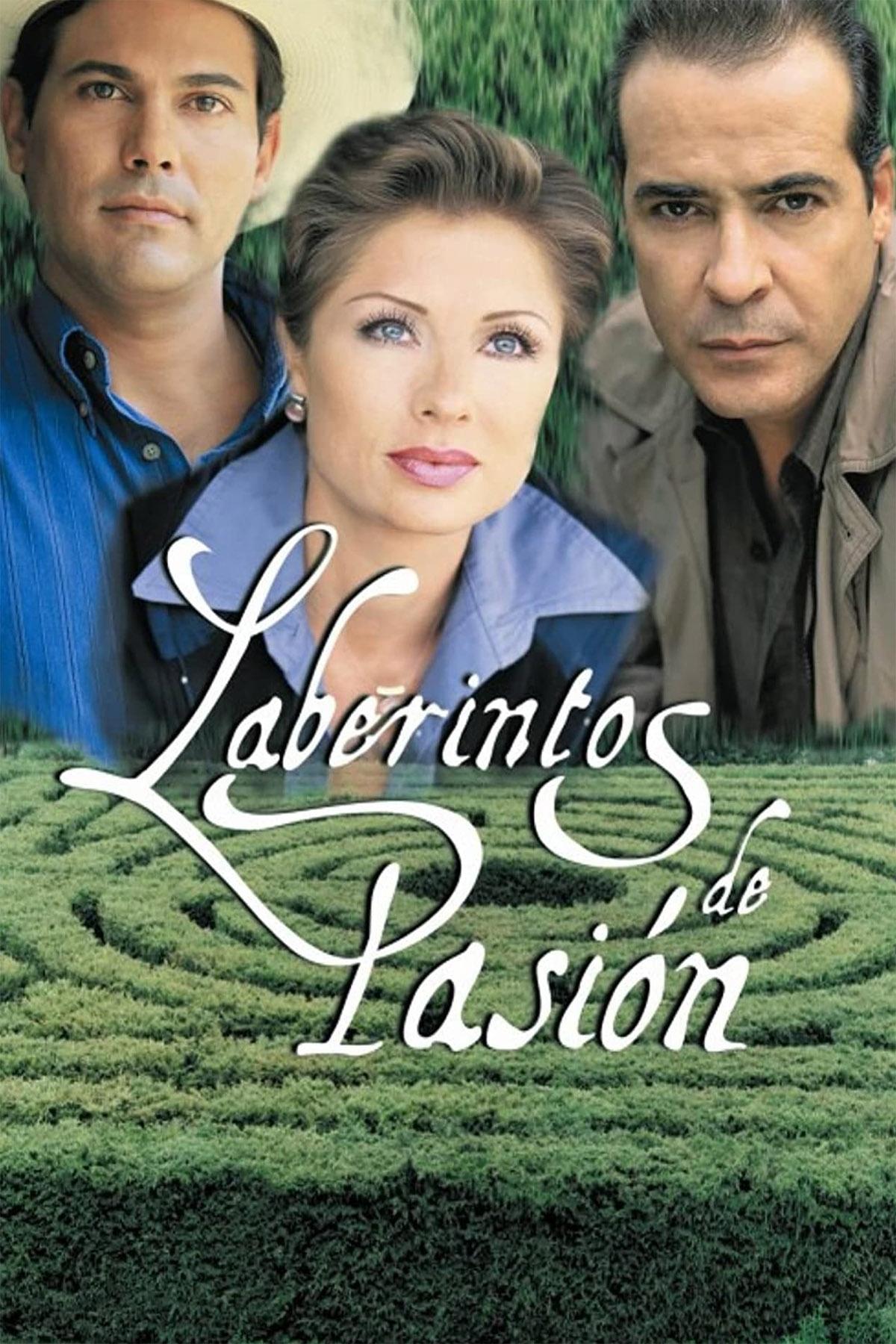
Laberintos de pasión is a Mexican telenovela produced by Televisa in 1999. Starring Leticia Calderon, Francisco Gattorno, César Évora, in addition to the participation of Manuel Ojeda, Monika Sanchez and Azela Robinson.
Paloma is a willful woman whose newborn baby is kidnapped by her own brother, Félix, who plans to become sole heir to the family’s fortune. Bruno is an honest man who, during the same night, loses his wife and son in childbirth and miraculously finds Paloma’s child in a dumpster. Destiny will unite their lives in a plot of secrets, revelations, and disputes, with the unpredictable consequences of lives based on a dangerous and surprising network of lies.
Sentimientos Ajenos is a Mexican telenovela produced by José Alberto Castro for Televisa and originally broadcast on Canal de las Estrellas from August 19, 1996, to January 3, 1997. It is based on the Chilean radio serial Dos mujeres y un hombre, created by Arturo Moya Grau and adapted for television by Lorena Salazar and Eduardo Quiroga. The story follows Sofía de la Huerta, a kind-hearted young painter who falls in love with Renato Aramendia, unaware that their relationship will awaken the jealousy and hatred of her own sister, Leonor. After a series of manipulations and betrayals tear her family apart, Sofía must fight to reclaim her life, protect her son, and find happiness while confronting the woman determined to destroy her.
Tenías que ser tú is a Mexican telenovela produced by Carlos Téllez for Televisa and originally broadcast on Canal de las Estrellas from November 23, 1992, to March 12, 1993. Created by Jorge Patiño and Gerardo Sánchez Luna, it was the last telenovela produced by Carlos Téllez. The story follows Gabriela Beltrán, whose life changes dramatically after the tragic death of her father leaves her family in poverty. As she and her family struggle to rebuild their lives, Gabriela falls in love with her childhood friend, Gorka Charachaga. Their romance is threatened by Santa, an ambitious young woman determined to separate them, leading to a story of love, sacrifice, and perseverance in the face of adversity.
El Niño que Vino del Mar is a Mexican children's telenovela produced by Mapat L. de Zatarain for Televisa and originally broadcast on Canal de las Estrellas from April 19 to August 27, 1999. Based on the radio serial El pequeño Lord by Olga Ruilópez, it was adapted for television by Lourdes Barrios, Georgina Tinoco, and Dolores Ortega. The telenovela stars Imanol Landeta, Natalia Esperón, and Enrique Ibáñez. The story follows Felipín, a young boy who survives a shipwreck while traveling to reunite with his father, the wealthy Duke of Oriol. Rescued by the kind-hearted Nisa, he begins a new life in a coastal town, unaware that powerful enemies are determined to keep him away from his family and inheritance. As secrets from the past emerge, Felipín's courage and innocence help reunite his loved ones and restore justice.
¡Válgame Dios! is a Spanish-language Venezuelan telenovela written by Mónica Montañéz for Venevisión. Sabrina Seara and Eduardo Orozco star as the main protagonists while Ricardo Alamo, Carlota Sosa and Raquel Yanez star as the main antagonists.
This dramatization depicts the life -- and loves -- of Venezuelan Gen. Simón Bolívar who helped liberate several Latin American countries from Spain.
María Mercedes, a poor girl who sells lottery tickets, meets a rich man who hates his own family and sees in María Mercedes an opportunity to make their lives miserable.
Popular telenovela produced in Mexico in 1979, starring Verónica Castro, Rogelio Guerra and Rocío Banquells. Castro also sang the theme Aprendí a Llorar, a song written by Lolita de la Colina. The telenovela was produced by Chilean Valentín Pimstein and Carlos Romero, it was directed by Rafael Banquells. The story was written by Inés Rodena and adapted by Valeria Philips.
A telenovela that dramatizes the romances and rivalries between two brothers and two sisters in Mexico between the years 1885 and 1900.
Story of love between Marimar and Sergio. Sergio is from a wealthy family, and Marimar lives with her poor grandparents in a hut in front of the ocean.
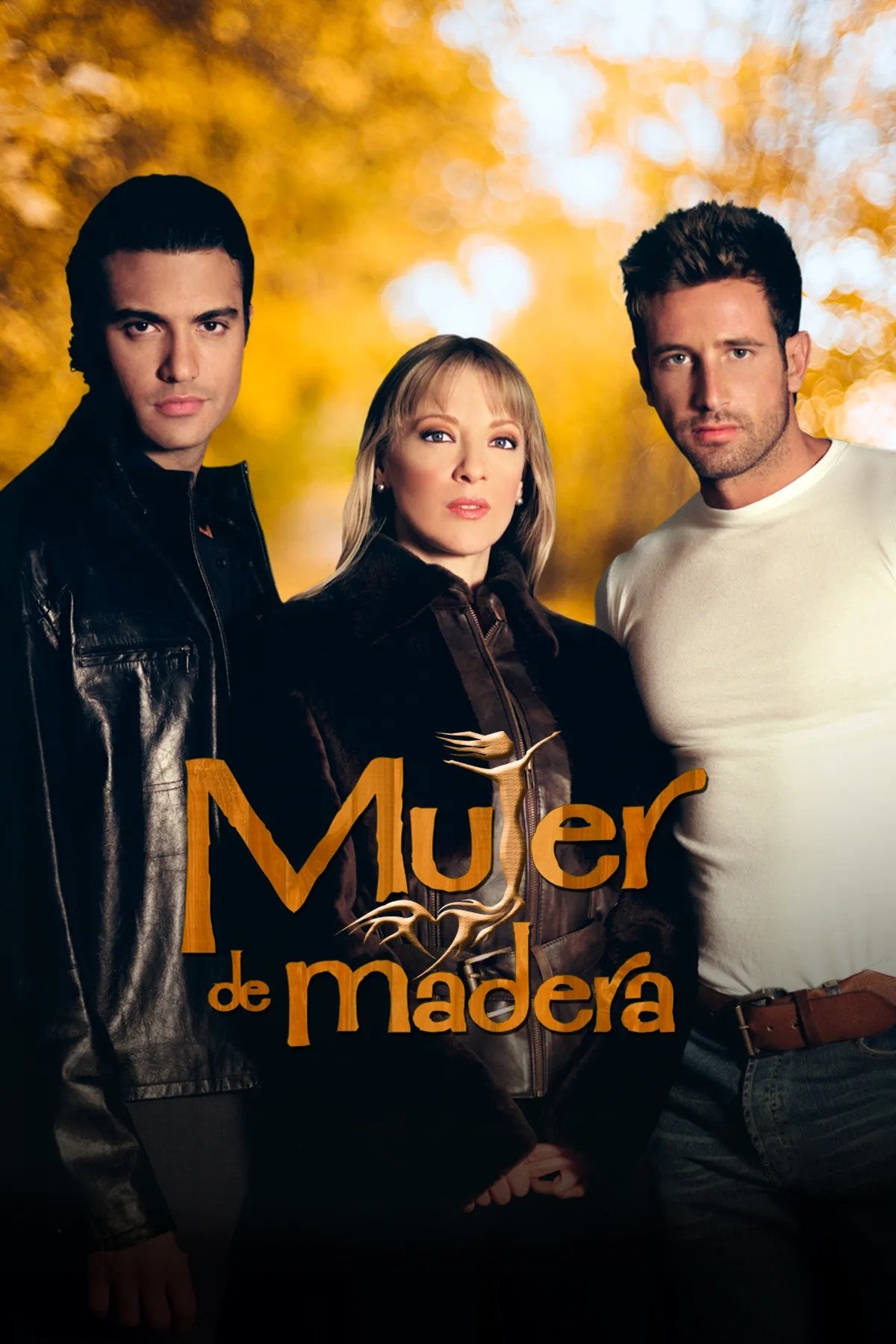
Mujer de Madera is a Mexican telenovela produced by Televisa in 2004. One unusual feature of this telenovela is that the main character is played by different actresses before and after her stay in hospital due to a forest fire.
Emiliano, a wealthy Mexican businessman, is ripped off by his friends and partners. Hidden in Bogotá, he receives help from Rosario, a mariachi singer. She does not know Emiliano’s background and that he is wanted by the police of two countries and by a criminal organization. With a new name and personality, he adapts well to his new life as a mariachi band member and finds in Rosario the love of his life. But he is afraid his secret will tear them apart. He needs to clear his name and resolve his case to avoid that fate. Meanwhile, he often finds his love tested and vulnerable to several rivals, but Rosario always trusts that he has been honest with her.
Mistreated by the Narváez family, the poor and innocent Maricruz is humiliated, abandoned, and imprisoned, losing everything. Upon discovering her true origins, she transforms into a wealthy and powerful woman. Driven by grief and the loss of her father, she vows revenge against everyone who made her suffer.
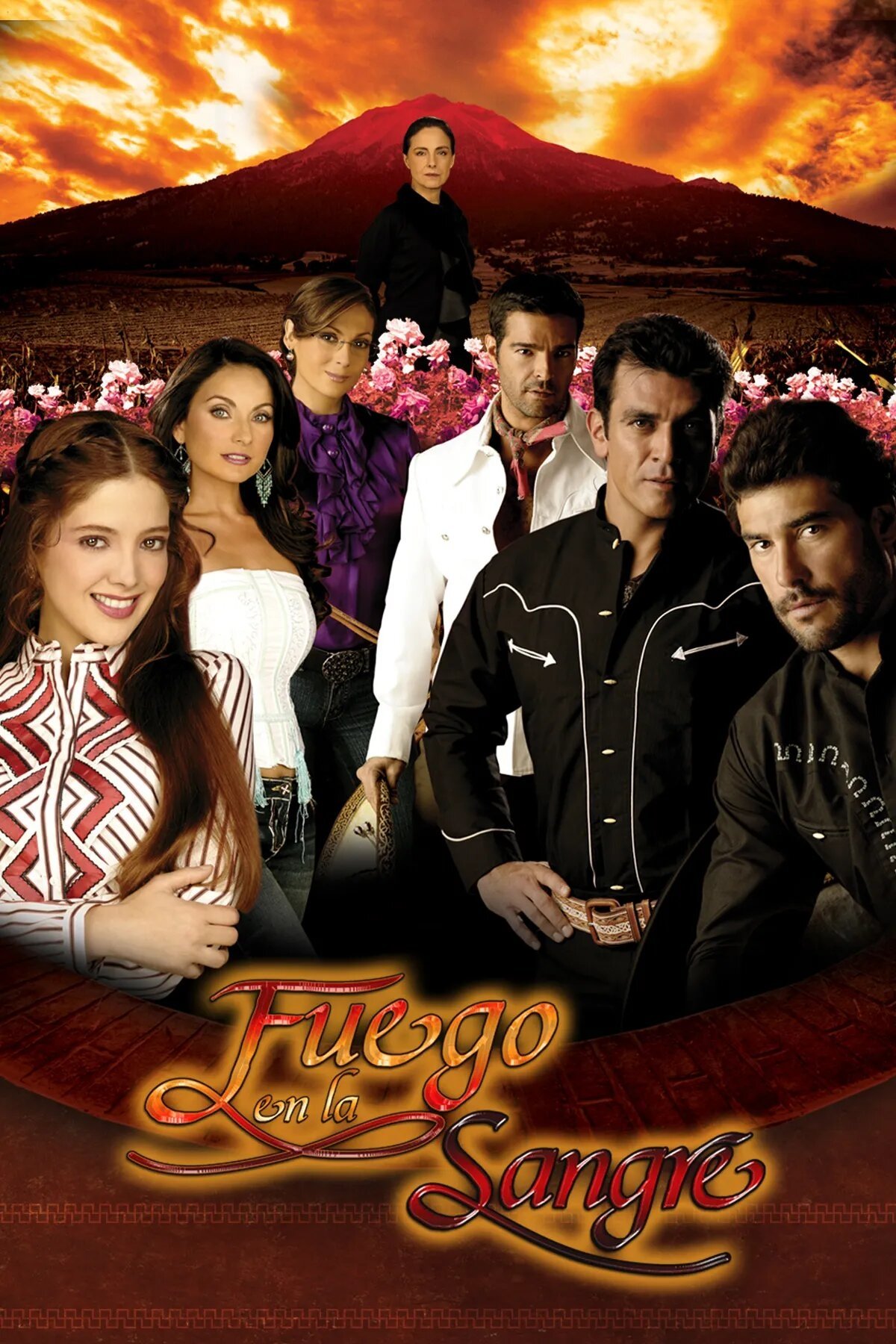
Fuego en la sangre is a telenovela that began transmissions on January 21, 2008, through Mexico's Canal de las Estrellas network. Starring Adela Noriega, Eduardo Yáñez, Diana Bracho, and Guillermo García Cantú. It is the Mexican remake of the Colombian soap operas Las Aguas Mansas and Pasion de Gavilanes. The theme song called "Para Siempre" is sung by Vicente Fernández. The telenovela received TVyNovelas Award for Best Telenovela, in 2009.
Esmeralda is a telenovela that was released by Televisa in 1997. It is a remake of a 1970 Venezuelan telenovela of that same name, and was itself remade in Brazil in 2004. Another version is Topacio from Venezuela in 1984. One of the most famous telenovela all the time.
Rebeca murders her sister Adriana to end up with the man she loved, and becomes the step mother of her niece Lucía. Nora, Lucía's half sister and daughter of Rebeca, resents Lucía for the same reasons Rebeca hated Adriana, as history repeats itself.
After their father's death, Sofía Ripoll, the oldest of three sisters, takes over the family's fictional successful chocolate factory. Though she is engaged to a man who uses her for money, she quickly falls in love with Salvador Cruz, a former racecar driver who takes a job as her chauffeur.
The adventures of Vicenta Acero, the feared coyote who now leads the dynasty of illicit dealings once under the control of her father.
Teresa Chavez is a young woman with an obsession for money and ambition. Despite her beauty and the fact that she was raised in the bosom of a loving family, she is resentful; her one desire is to leave her humble but poor neighbourhood.
When Marichuy was born, her mother—believing she was on the verge of death—handed her over to a priest, who took her to an orphanage. At the age of fourteen, Marichuy ran away from the institution and began wandering from place to place, scraping together a living however she could. Years later, she was attacked by a drunkard; the incident left her harboring resentment toward men and plagued by harrowing nightmares.
Against all odds, young Arelys Henao pursues her dream of becoming a singer in this music-filled drama, based on the beginnings of the iconic Colombian star.
When Refugio and her three sons—Patricio, Edmundo, and Ignacio—are forced out of their home, a twist of fate brings them to Mexico City, where they begin a new life. Eighteen years later, they are settled in a small apartment in a working-class neighborhood. Refugio holds a modest job; although she suffers from serious vision problems, she neglects her own health to attend to her sons' needs. Patricio is studying law and dreams of a comfortable, prosperous future; his mother admires him for his charitable nature. Meanwhile, Edmundo begins courting Lucero—unintentionally hurting Ignacio, who secretly loved her—while Refugio tries in vain to make Patricio understand that he will never be happy with Olga.
Fernanda Linares (Livia Brito) is a woman thirsty for revenge after the murder of her husband on their wedding night, where in addition, Fernanda was a victim of rape after the event occurred. However, Fernanda's life will change when she meets Rafael Toscano (José Ron), a handsome young man who recently just received his university degree with whom she will empathize and return to Fernanda the opportunity to love again.
The story of Renata Flores del Angel, a young woman from a wealthy family who falls for Pablo Ramos, the foreman of her father's estate.