
Las Juanas is a Colombian telenovela. It first aired in 1997 on the Colombian Network RCN. The show was written by Bernardo Romero Pereira, and was his most successful telenovela after the globally distributed series Café and Yo Soy Betty, La Fea.
Social & External
The people behind it
Xilena Aycardi
Juana Mani
Angie Cepeda
Juana Valentina
Catherine Siachoque
Juana Caridad
Rafael Novoa
Rubén Calixto
Miguel Varoni
Manuel F.
Susana Torres
Juana Bautista
Carolina Sabino
Juana Matilde
Pepe Sánchez
Calixto Salguero
Judy Henríquez
Doña Cuadrado
Amar a Muerte is a Mexican telenovela produced by W Studios for Televisa and originally broadcast on Las Estrellas from October 29, 2018, to March 3, 2019. It is based on the Colombian telenovela En Cuerpo Ajeno, created by Julio Jiménez. The story follows the extraordinary lives of three people whose souls are mysteriously reincarnated into different bodies after their deaths. As they adjust to their new identities, they confront love, revenge, family conflicts, and long-hidden secrets.
Popular telenovela produced in Mexico in 1979, starring Verónica Castro, Rogelio Guerra and Rocío Banquells. Castro also sang the theme Aprendí a Llorar, a song written by Lolita de la Colina. The telenovela was produced by Chilean Valentín Pimstein and Carlos Romero, it was directed by Rafael Banquells. The story was written by Inés Rodena and adapted by Valeria Philips.
Mar de Amor is a Spanish-language telenovela produced by Nathalie Lartilleux with protagonists Zuria Vega, Mario Cimarro and Mariana Seoane and antagonists Ninel Conde, Marcelo Córdoba and Manuel Landeta. This is a remake of the 1978 Venezuelan telenovela María del Mar.
Esmeralda is a telenovela that was released by Televisa in 1997. It is a remake of a 1970 Venezuelan telenovela of that same name, and was itself remade in Brazil in 2004. Another version is Topacio from Venezuela in 1984. One of the most famous telenovela all the time.
Mujer de Madera is a Mexican telenovela produced by Televisa in 2004. One unusual feature of this telenovela is that the main character is played by different actresses before and after her stay in hospital due to a forest fire.
Mi Pequeña Traviesa is a Mexican youth and family telenovela produced and directed by Pedro Damián for Televisa and originally broadcast on Canal de las Estrellas from December 8, 1997, to April 24, 1998. It is an adaptation of the Argentine telenovela Me llaman Gorrión, created by Abel Santa Cruz. The telenovela stars Michelle Vieth and Héctor Soberón. The story follows Julia González, a young woman whose dreams of pursuing a professional career are interrupted after her father is left paralyzed in an accident. To support her family, she disguises herself as a boy in order to find work. Along the way, she falls in love with Alberto Miranda, and together they must overcome social differences, family conflicts, and the many obstacles that stand in the way of their happiness.
A telenovela that dramatizes the romances and rivalries between two brothers and two sisters in Mexico between the years 1885 and 1900.
Rebeca murders her sister Adriana to end up with the man she loved, and becomes the step mother of her niece Lucía. Nora, Lucía's half sister and daughter of Rebeca, resents Lucía for the same reasons Rebeca hated Adriana, as history repeats itself.
¡Válgame Dios! is a Spanish-language Venezuelan telenovela written by Mónica Montañéz for Venevisión. Sabrina Seara and Eduardo Orozco star as the main protagonists while Ricardo Alamo, Carlota Sosa and Raquel Yanez star as the main antagonists.
Story of love between Marimar and Sergio. Sergio is from a wealthy family, and Marimar lives with her poor grandparents in a hut in front of the ocean.
Angela is a Mexican telenovela, which was produced by Televisa and broadcast on Canal de las Estrellas in 1998. The series was first debuted on May 17, 1999 on Univision in the United States, replacing that year's hit La Mentira, and ended on September 9, 1999, being replaced by Tres Mujeres. It aired a second and a third time on Galavisión on March 15, 2000 and May 8, 2001, and ended a second and a third time on July 1, 2000 and August 24, 2001. It aired a fourth time back to Univision's late night "Grandes Historias" lineup, aired on October 28, 2003, and ended on February 27, 2004. It aired a fifth time on TeleFutura on September 18, 2006, and ended on January 8, 2007. This telenovela contained 78 episodes.
La Patrona is a Spanish-language telenovela produced by United States-based television network Telemundo Studios, Miami and Mexican Argos Comunicación. The telenovela is a remake of the Venezuelan telenovela La Dueña, written by José Ignacio Cabrujas. The name reflects a local term or slang in Mexico to address a person recognized as the main boss. However, the title is also a reflection of both the protagonist and the antagonist struggle to conquer power, authority and respect in a labor field traditionally deemed to be a man's job.
Set in New York, the serial features the street-wise Ángel, who treats life as a game he plays to win. He tangles with the power-hungry Martín, who is engaged to a stunning, feisty lawyer named Manuela. She decides to defend Ángel, even though Martín wants to destroy him. Neither of the men know that Ángel is Martín's own son. Our hero learns that love is the only key to survival.
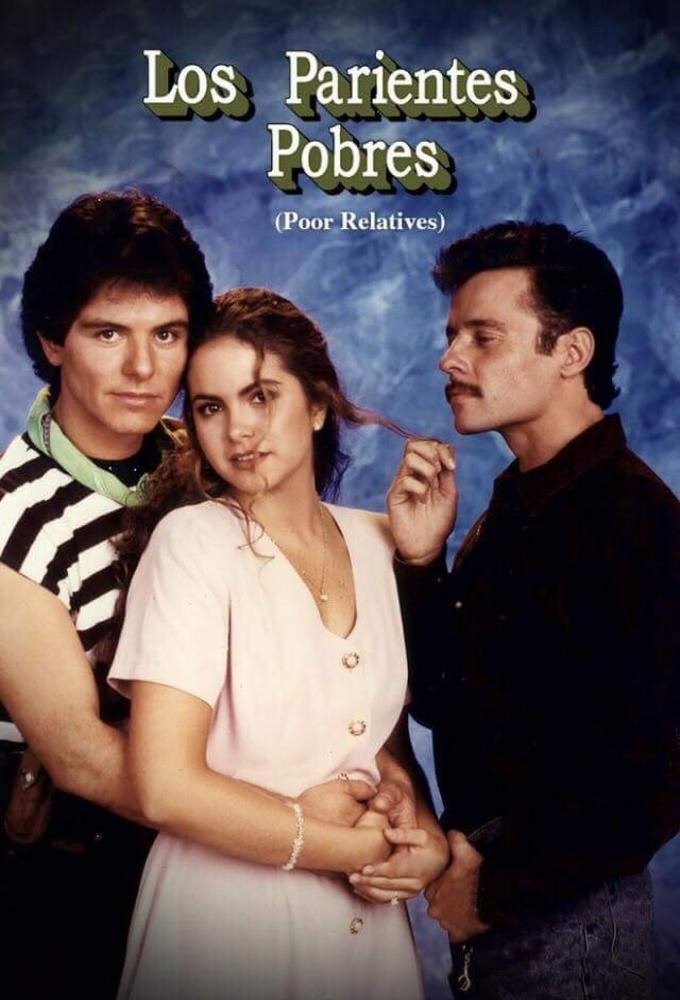
Los Parientes Pobres is a telenovela made by Mexican TV network Televisa. It is a telenovela set in Mexico. This telenovela was broadcast in 1993.
The beautiful young Montserrat is forced to marry a man she does not love in order to save her family from ruin and maintain their social standing.
1763. The life of Adriana, a brave and loyal woman, suffers an unexpected setback when she receives a devastating blow: her father has died, and, as a result of a secret pact, she must travel from the city of Madrid to Valle Salvaje, in northern Spain, to marry a stranger. A dark secret from her past follows her to the remote valley, home to her fiancé's family and her troubled aunt, Doña Victoria. There, her life will change forever. She will experience true love, betrayal, and danger as she tries to uncover the truth behind her father's death.
Lola... Érase Una Vez is a teen targeted Mexican melodrama telenovela produced by Televisa that is an adaptation of the Argentine global phenomenon and teenage telenovela Floricienta. The show tells the story of a modern Cinderella, Lola, a 20 year old girl, who works as a nanny and sings in a rock band and meets her so call Prince Charming. It debuted in Mexico on February 26, 2007, starring Aarón Díaz and Eiza González. The show had gained popularity among teens and children not only in Mexico but also internationally including Venezuela, Spain and the in United States. With concert performances filling major auditoriums and songs by the protagonist become radio hits. It debuted in the United States on Univision in March 2008 and ended on January 26, 2009. The series consisted of 224 episodes which aried Monday through Friday at 3 P.M, intentionally for teenagers to watch after school, as is typical for most teenage & children telenovelas in Spanish networks.
En tierras salvajes is a Mexican telenovela produced by Salvador Mejía Alejandre for Televisa and originally broadcast on Las Estrellas from July 31, 2017, to February 25, 2018. The story follows Isabel Montero, a young woman caught in a love triangle with brothers Daniel and Aníbal Otero. As rivalry, family conflicts, and hidden secrets come to light, their lives become intertwined in a struggle between love, ambition, betrayal, and redemption.
Dulce Desafío is a Mexican telenovela starring Adela Noriega and Eduardo Yáñez.
Fuego en la sangre is a telenovela that began transmissions on January 21, 2008, through Mexico's Canal de las Estrellas network. Starring Adela Noriega, Eduardo Yáñez, Diana Bracho, and Guillermo García Cantú. It is the Mexican remake of the Colombian soap operas Las Aguas Mansas and Pasion de Gavilanes. The theme song called "Para Siempre" is sung by Vicente Fernández. The telenovela received TVyNovelas Award for Best Telenovela, in 2009.