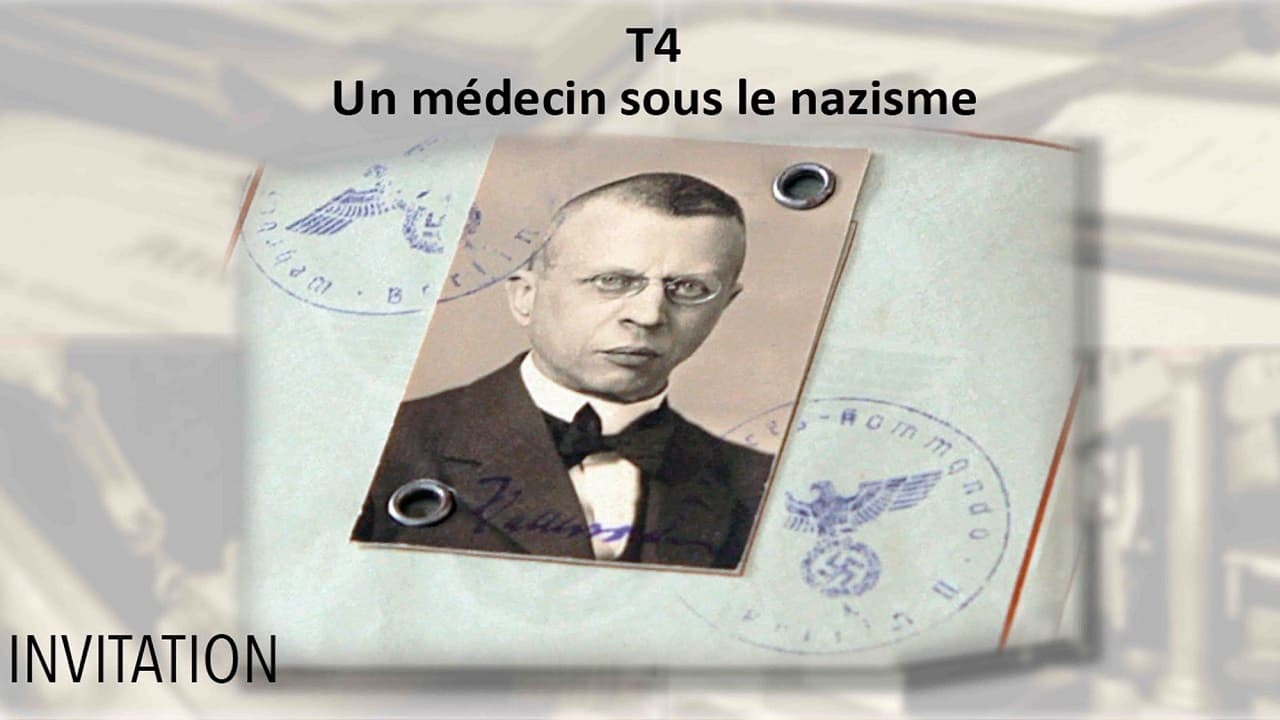
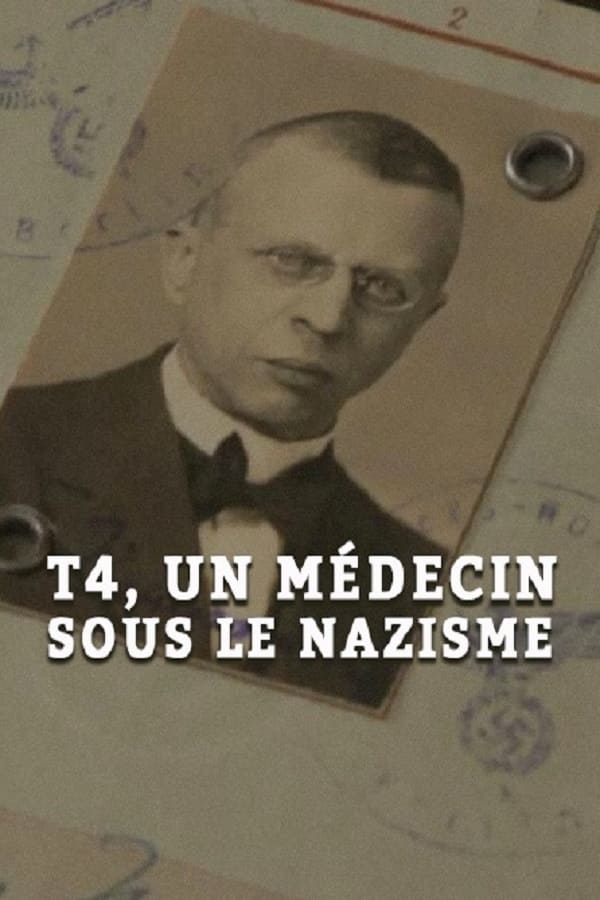
A reckoning of Nazi Germany’s planned execution of its own citizens with physical and mental disabilities whom they deemed useless to their society.

Social & External
The people behind it
Nathalie Richard
Narrator
Götz Aly
Self
Astrid Ley
A group of German boys are ordered to protect a small bridge in their home village during the waning months of the second world war. Truckloads of defeated, cynical Wehrmacht soldiers flee the approaching American troops, but the boys, full of enthusiasm for the "blood and honor" Nazi ideology, stay to defend the useless bridge. The film is based on a West German anti-war novel of the same name, written by Gregor Dorfmeister.
This documentary follows two long-lost Ukrainian friends, Arsalan and Nastya, as they reconnect in Germany after russia's full-scale invasion against Ukraine. Arsalan, an actor now in Frankfurt after time in a refugee camp, and Nastya, journalist and producer who stayed in Kyiv, reflect on the divergent paths their lives have taken due to the war. Through their conversations and therapy sessions, the film explores themes of displacement, identity, and the emotional impact of war on youth.
In 1943, as Hitler continues to wage war across Europe, a group of college students mount an underground resistance movement in Munich. Dedicated expressly to the downfall of the monolithic Third Reich war machine, they call themselves the White Rose. One of its few female members, Sophie Scholl is captured during a dangerous mission to distribute pamphlets on campus with her brother Hans. Unwavering in her convictions and loyalty to the White Rose, her cross-examination by the Gestapo quickly escalates into a searing test of wills as Scholl delivers a passionate call to freedom and personal responsibility.
In 1943, while the Allies are bombing Berlin and the Gestapo is purging the capital of Jews, a dangerous love affair blossoms between two women – one a Jewish member of the underground, the other an exemplar of Nazi motherhood.
What does it mean to “live” after experiencing war? Four Romanian survivors of the Afghanistan conflict share — for the first time — their invisible wounds and path to recovery.

A documentary about the corrupt health care system in The United States whose main goal is to make profit even if it means losing people’s lives. "The more people you deny health insurance, the more money we make" is the business model for health care providers in America.
Benjamin is in love with Manette, the innkeeper's beautiful daughter, but she has no intention of giving in to the young doctor until she sees the marriage contract, and marriage does not fit in with Benjamin's spirit of independence. For the same reason he resists the efforts of his sister Bettine to marry him off to Arabelle, the daughter of old Dr. Minxit. Benjamin does agree to go and meet the girl. But that evening his sister finds him at the inn together with Manette, who is arrested by her father. So she decides to go with Benjamin herself. But as result of an incident with the fat Marquis puts paid to the expedition. Benjamin is subjected by the Marquis to a humiliating practical joke. Benjamin is determined to got his revenge. He succeeds thanks to the gorgeous Vicomte Hector de Pont-Cassé, who also helps Manette with her problems against her father. But Benjamin is now arrested by the Marquis...
In April of 1945, Germany stands at the brink of defeat with the Russian Army closing in from the east and the Allied Expeditionary Force attacking from the west. In Berlin, capital of the Third Reich, Adolf Hitler proclaims that Germany will still achieve victory and orders his generals and advisers to fight to the last man. When the end finally does come, and Hitler lies dead by his own hand, what is left of his military must find a way to end the killing that is the Battle of Berlin, and lay down their arms in surrender.
The true story of how businessman Oskar Schindler saved over a thousand Jewish lives from the Nazis while they worked as slaves in his factory during World War II.
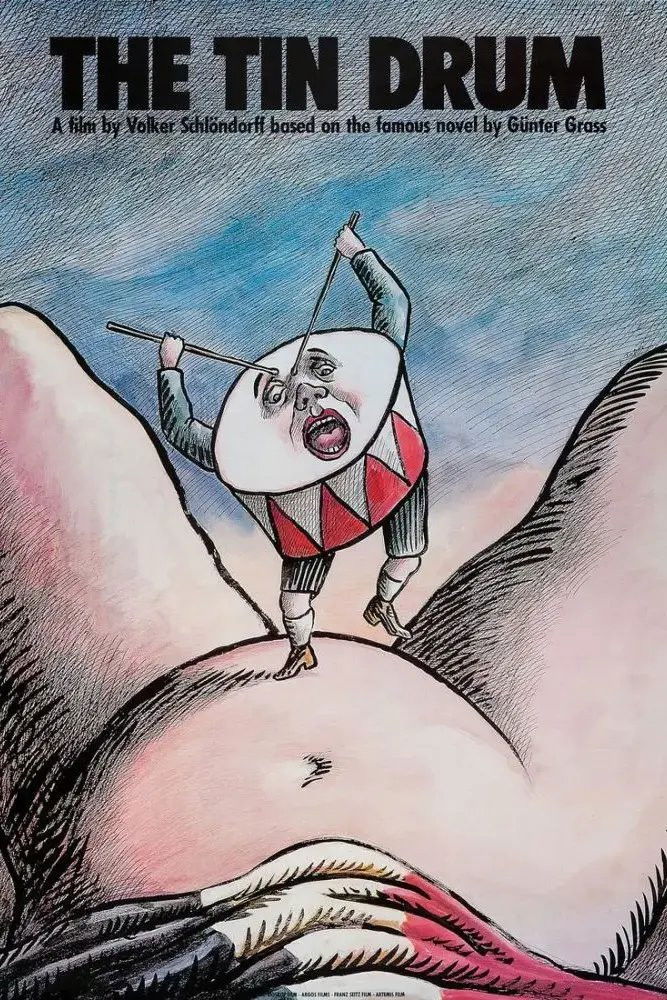
In 1924, Oskar Matzerath is born in the Free City of Danzig. At age three, he falls down a flight of stairs and stops growing. In 1939, World War II breaks out.
Part two of Leni Riefenstahl's monumental examination of the 1938 Olympic Games, the cameras leave the main stadium and venture into the many halls and fields deployed for such sports as fencing, polo, cycling, and the modern pentathlon, which was won by American Glenn Morris.
A powerful depiction of war in infamous global conflict zones. Directed by Oscar/Emmy documentary makers Buddy Squires and Graeme Scott (know for Sam Smith), this film provides a rare and powerful insight into humanity and hope in the depth of war and the greatest global humanitarian crisis of the last several decades.
Starting with a long and lyrical overture, evoking the origins of the Olympic Games in ancient Greece, Riefenstahl covers twenty-one athletic events in the first half of this two-part love letter to the human body and spirit, culminating with the marathon, where Jesse Owens became the first track and field athlete to win four gold medals in a single Olympics.
The true story of Victor of Aveyron. In a French forest circa 1798, an abandoned child — feral, filthy and mentally impaired — is found. Dr Jean Marc Gaspard Itard becomes interested in the case and patiently attempts to civilise the boy.
Dr. Laura Bowman is a young widow who's unwittingly drawn into political turmoil while vacationing in Burma in the late 1980s. Bowman initially left San Francisco with her sister in an attempt to escape painful memories of her husband and son's violent deaths. But her fight to escape to Thailand could prove just as harrowing.
Dmytro Komarov's documentary project The Year. Kharkiv Region. Dmytro Komarov will show Kharkiv in the first months of the full-scale invasion of Ukraine by Russian troops. Viewers will hear the stories of people who found themselves in the epicentre of the brutal attacks: at the air defence base destroyed by a Russian missile, in the residential area of the city - Northern Saltivka - which was ravaged by shelling. The journalist will talk to those who played a key role in the liberation of the Kharkiv region. One of these people is Roman Hryshchuk, the commander of the 127th separate territorial defence brigade of Ukraine. He told us how the military practice of the past - using decoys in the form of dummies - helped to identify and destroy the occupiers. How did the full-scale war begin for Kharkiv? What plans did the enemy have for Kharkiv? What united people and gave them hope in the most difficult times? Find out in the documentary project "Year. Kharkiv Region".
What would your family reminiscences about dad sound like if he had been an early supporter of Hitler’s, a leader of the notorious SA and the Third Reich’s minister in charge of Slovakia, including its Final Solution? Executed as a war criminal in 1947, Hanns Ludin left behind a grieving widow and six young children, the youngest of whom became a filmmaker. It's a fascinating, maddening, sometimes even humorous look at what the director calls "a typical German story." (Film Forum)
A story about a German family during World War II with every family member having a different approach to Jews, raging from hatred to compassion.
Documents the major trial of the Nazi war criminals and the violent acts that they were accused of.
Reality in Ukraine was divided into two periods - before the war and after. Every citizen tries to be useful in this national resistance. Ukrainians change their professions and adapt to the needs of wartime. In art workshops, sculptors make anti-tank obstacles. Silent figures of Ukrainian figures, angels, Cossacks and multiple copies of Jesus Christ, like a terracotta army, froze in anticipation of new creations. Masters weld metal defenses for the Armed Forces of Ukraine.
Filmmaker Alain Resnais documents the atrocities behind the walls of Hitler's concentration camps.
Director Claude Lanzmann spent 11 years on this sprawling documentary about the Holocaust, conducting his own interviews and refusing to use a single frame of archival footage. Dividing Holocaust witnesses into three categories – survivors, bystanders, and perpetrators – Lanzmann presents testimonies from survivors of the Chelmno concentration camp, an Auschwitz escapee, and witnesses of the Warsaw Ghetto Uprising, as well as a chilling report of gas chambers from an SS officer at Treblinka.
“The Soviet Story” is a story of an Allied power, which helped the Nazis to fight Jews and which slaughtered its own people on an industrial scale. Assisted by the West, this power triumphed on May 9th, 1945. Its crimes were made taboo, and the complete story of Europe’s most murderous regime has never been told. Until now...
Prelude to War was the first film of Frank Capra's Why We Fight propaganda film series, commissioned by the Pentagon and George C. Marshall. It was made to convince American troops of the necessity of combating the Axis Powers during World War II. This film examines the differences between democratic and fascist states.
A string of threatening emails escalates into a revenge plot involving a newly married US marshal and his ex-girlfriend.
Over 35 years after Bob Lazar's revelations, this documentary exposes secrets of a facility the government still denies. Featuring Lazar's testimony, recreations, and new evidence, it reopens a case that continues to spark global curiosity
A documentary examining possible historical and modern conspiracies surrounding Christianity, the 9/11 terrorist attacks, and the Federal Reserve bank.
This revealing documentary honors the legendary Sidney Poitier—iconic actor, filmmaker, and civil rights activist. Featuring interviews with Denzel Washington, Spike Lee, Halle Berry, and more.
The film is based on interviews with 2,000 women from 50 countries, and covers the status of women all over the world. The topics covered include forced marriages, sexual assault, female genital mutilation, acid attacks, motherhood, sexuality, menstruation, education and the professional success of women.
The Captains is a feature-length documentary film written and directed by William Shatner. The film follows Shatner as he interviews the other actors who have portrayed starship captains in the Star Trek franchise.
When Allied forces liberated the Nazi concentration camps in 1944-45, their terrible discoveries were recorded by army and newsreel cameramen, revealing for the first time the full horror of what had happened. Making use of British, Soviet and American footage, the Ministry of Information’s Sidney Bernstein (later founder of Granada Television) aimed to create a documentary that would provide lasting, undeniable evidence of the Nazis’ unspeakable crimes. He commissioned a wealth of British talent, including editor Stewart McAllister, writer and future cabinet minister Richard Crossman – and, as treatment advisor, his friend Alfred Hitchcock. Yet, despite initial support from the British and US Governments, the film was shelved, and only now, 70 years on, has it been restored and completed by Imperial War Museums under its original title "German Concentration Camps Factual Survey".
The history of cinematic sound, told by legendary sound designers and visionary filmmakers.
An in-depth look at the prison system in the United States and how it reveals the nation's history of racial inequality.
The life and career of one of comedy's most inimitable modern voices, Mr. Gilbert Gottfried.
A documentary highlighting the Soviet Union's legendary and enigmatic hockey training culture and world-dominating team through the eyes of the team's Captain Slava Fetisov, following his shift from hockey star and celebrated national hero to political enemy.
An inside look at one of the most anticipated movie sequels ever with James Cameron and cast.
A real-life undercover thriller about two ordinary men who embark on an outrageously dangerous ten-year mission to penetrate the world's most secretive and brutal dictatorship: North Korea.
"Trinity and Beyond" is an unsettling yet visually fascinating documentary presenting the history of nuclear weapons development and testing between 1945-1963. Narrated by William Shatner and featuring an original score performed by the Moscow Symphony Orchestra, this award-winning documentary reveals previously unreleased and classified government footage from several countries.
In the Realms of the Unreal is a documentary about the reclusive Chicago-based artist Henry Darger. Henry Darger was so reclusive that when he died his neighbors were surprised to find a 15,145-page manuscript along with hundreds of paintings depicting The Story of the Vivian Girls, in What is Known as the Realms of the Unreal, of the Glodeco-Angelinnian War Storm, Cased by the Child Slave Rebellion.
Through deeply personal interviews with her siblings and an examination of the photographs, letters, and belongings left behind, Mariska assembles a new portrait of her mother Jayne Mansfield, an extraordinary and complex woman.