A "What if?" alternative history sees Nazi Germany prevailing in the second World War. First the occupiers establish their power bases, before they find themselves under attack from the underground resistance.
Social & External
The people behind it
Diego Matamoros
Narrator
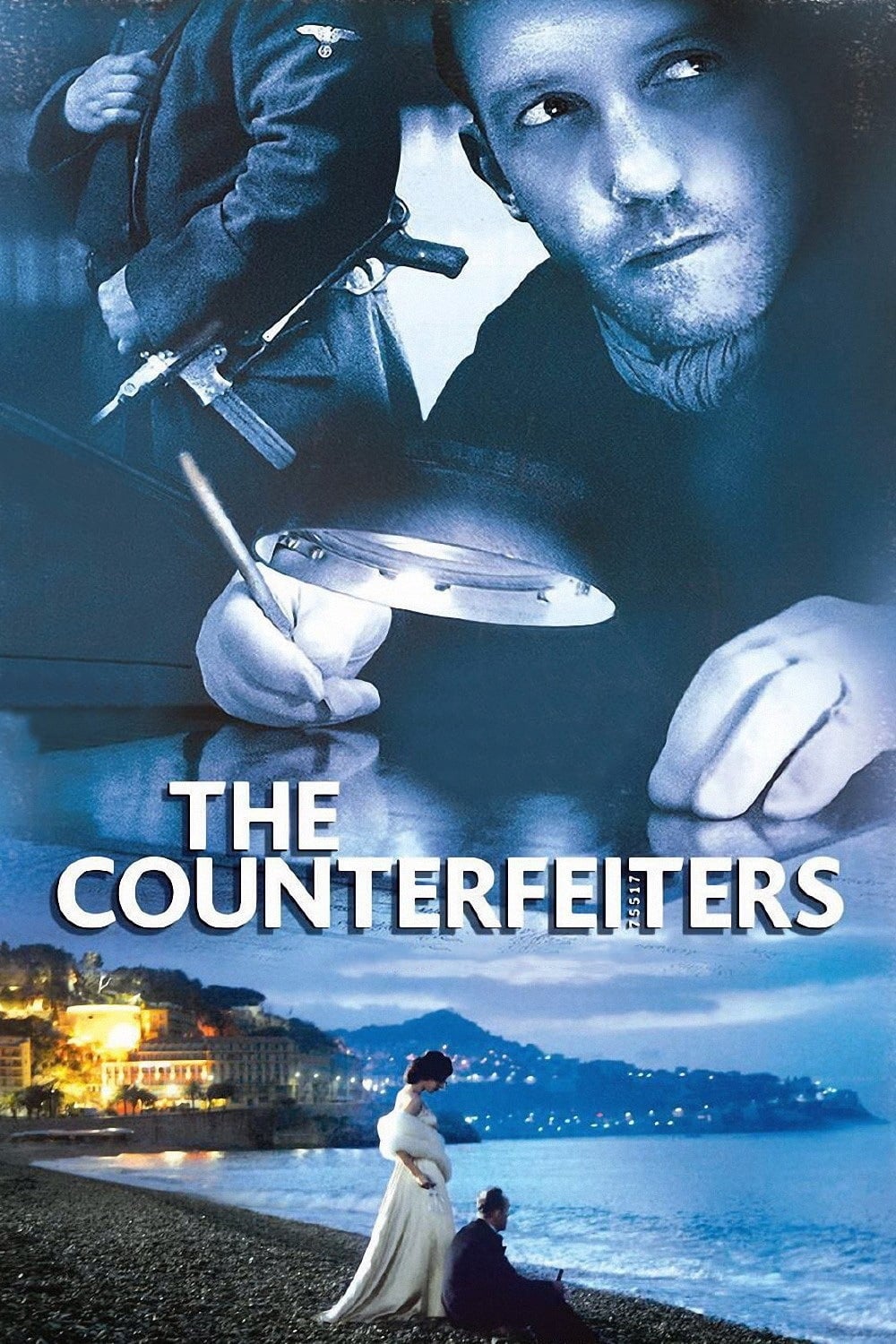
The story of Jewish counterfeiter Salomon Sorowitsch, who was coerced into assisting the Nazi operation of the Sachsenhausen concentration camp during World War II.
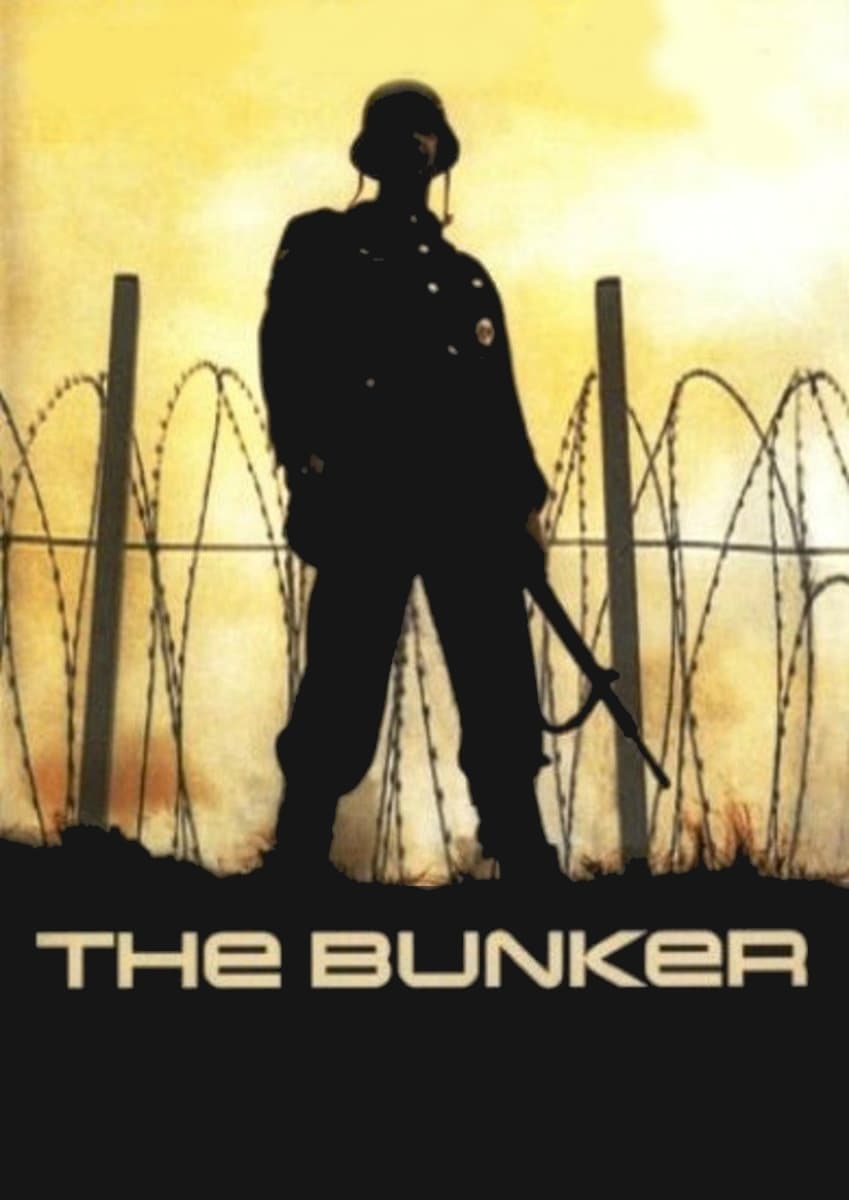
In 1944, in the Belgian - German border, seven German soldiers survive an American attack in the front and lock themselves in a bunker to protect the position. Under siege by the enemy and with little ammunition, they decide to explore underground tunnels to seek supplies and find an escape route. While in the tunnel, weird things happen with the group.

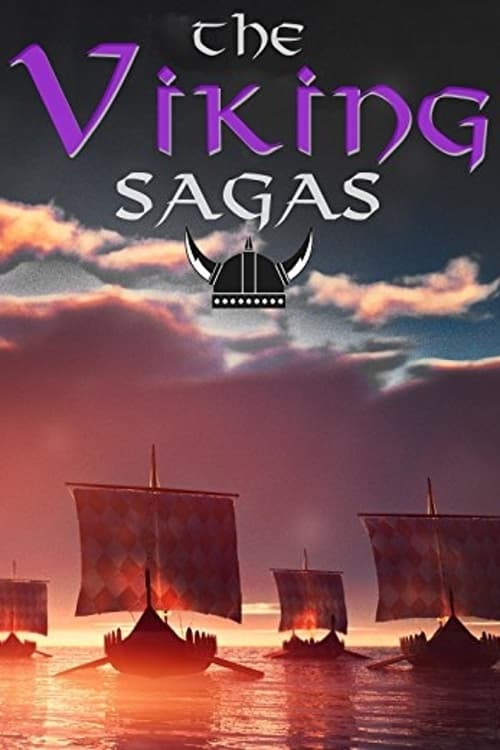
Dr Janina Ramirez travels across glaciers and through the lava fields of Iceland to find out about one of the most compelling of the great Viking stories - the Laxdaela Saga. This hour-long film explores how the unique literary achievements of the Saga writers were possible at a time of such immense cultural, political and religious upheaval.
In the ruins of post-WWII Berlin, a twelve-year-old boy is left to his own devices in order to help provide for his family.
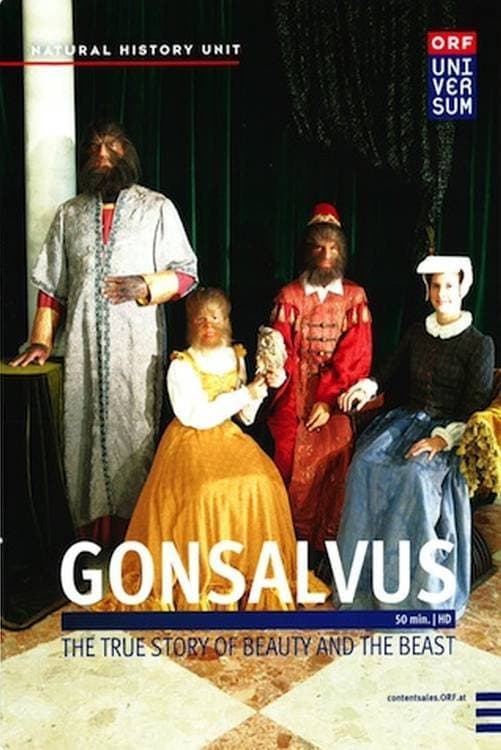
It's a condition known as "hypertrichosis" or "Ambras Syndrome," but in the 1500s it would transform one man into a national sensation and iconic fairy-tale character. His name: Petrus Gonsalvus, more commonly known today as the hairy hero of Beauty and the Beast.
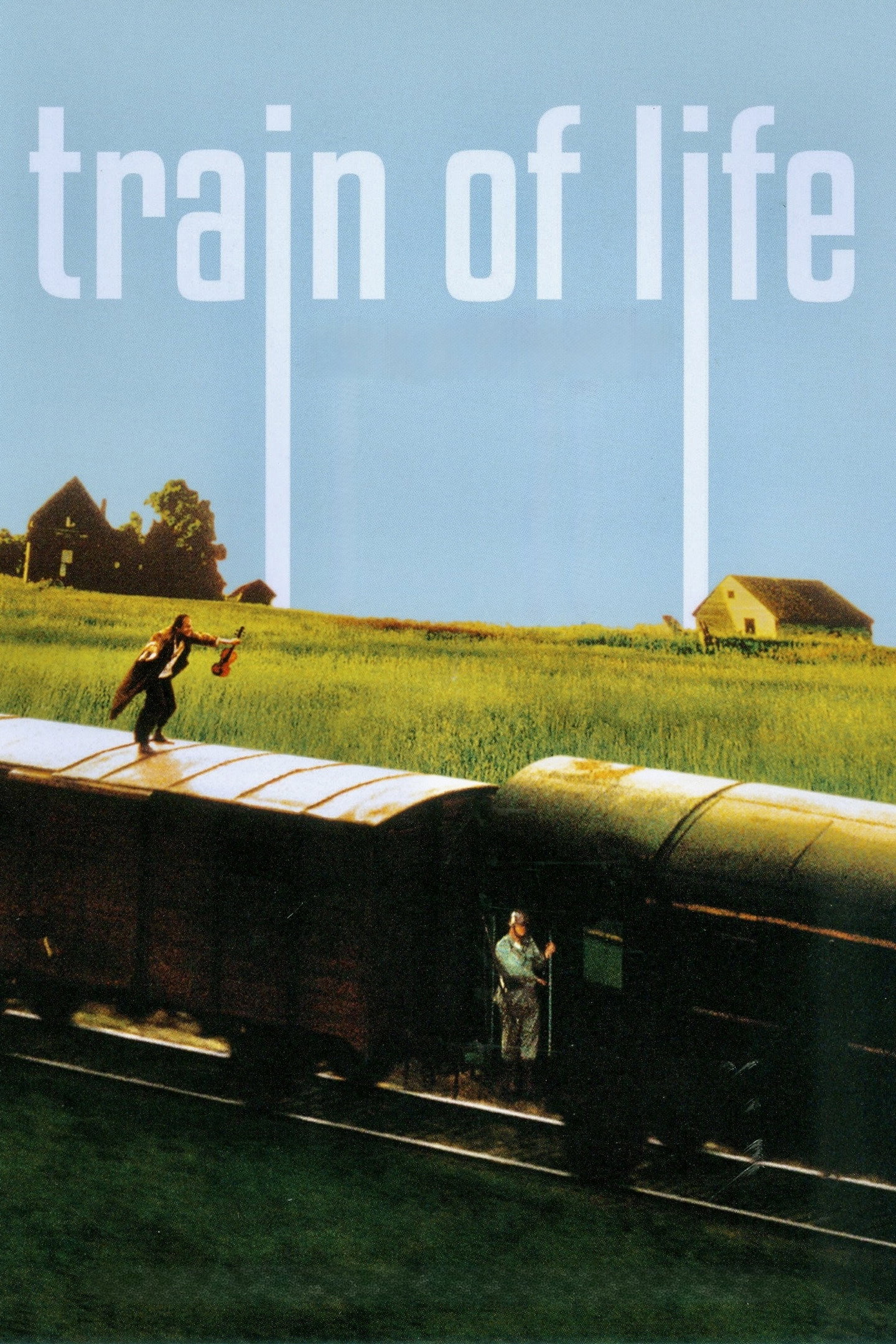
In 1941, the inhabitants of a small Jewish village in Central Europe organize a fake deportation train so that they can escape the Nazis and flee to Palestine.
HISTORY brings you an all-encompassing documentary event cantered around the 25th anniversary of the LA Riots, the most destructive riot in American history that left 53 people dead and caused over a billion dollars in damage.
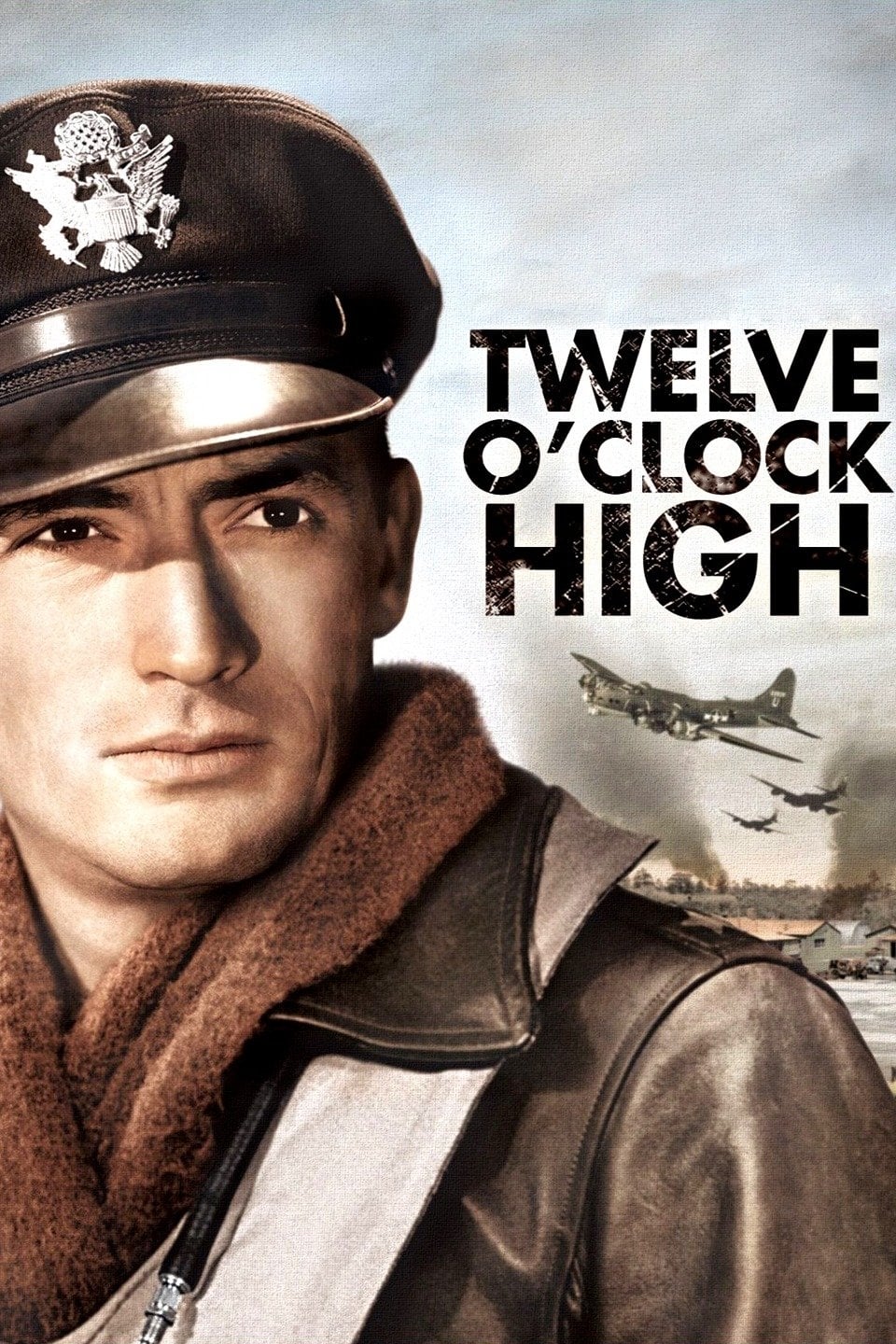
In the early days of daylight bombing raids over Germany, General Frank Savage must take command of a 'hard luck' bomber group. Much of the story deals with his struggle to whip his group into a disciplined fighting unit in spite of heavy losses, and withering attacks by German fighters over their targets.
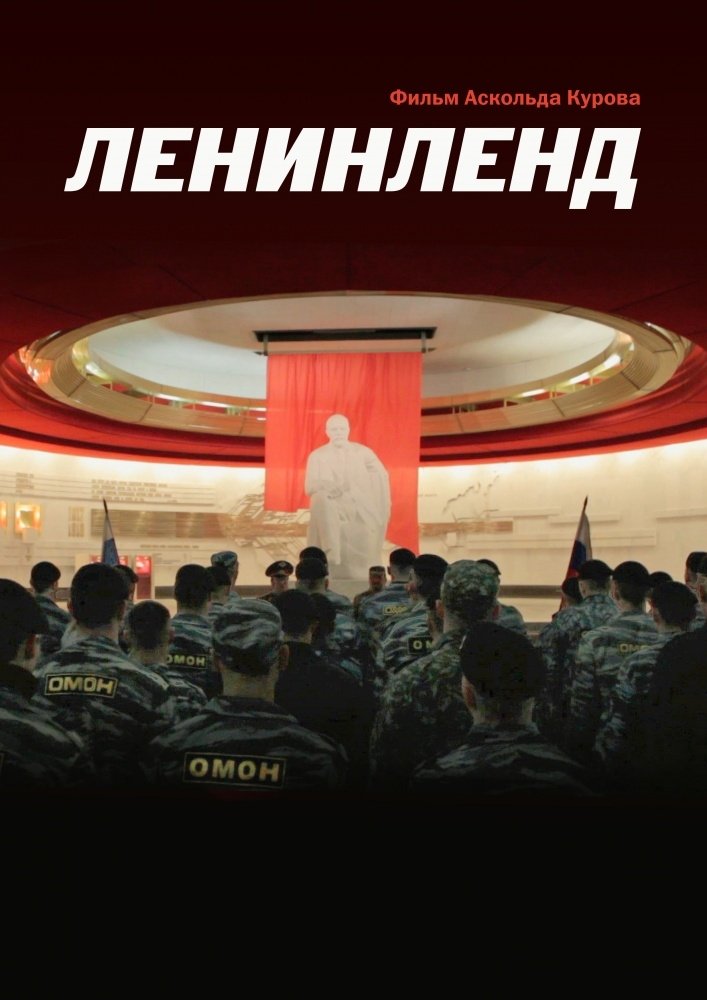
At the peak of Perestroika, in 1987, in the village of Gorki, where Lenin spent his last years, after a long construction, the last and most grandiose museum of the Leader was opened. Soon after the opening, the ideology changed, and the flow of pilgrims gradually dried up. Despite this, the museum still works and the management is looking for ways to attract visitors. Faithful to the Lenin keepers of the museum as they can resist the onset of commercialization. The film tells about the modern life of this amazing museum-reserve and its employees.
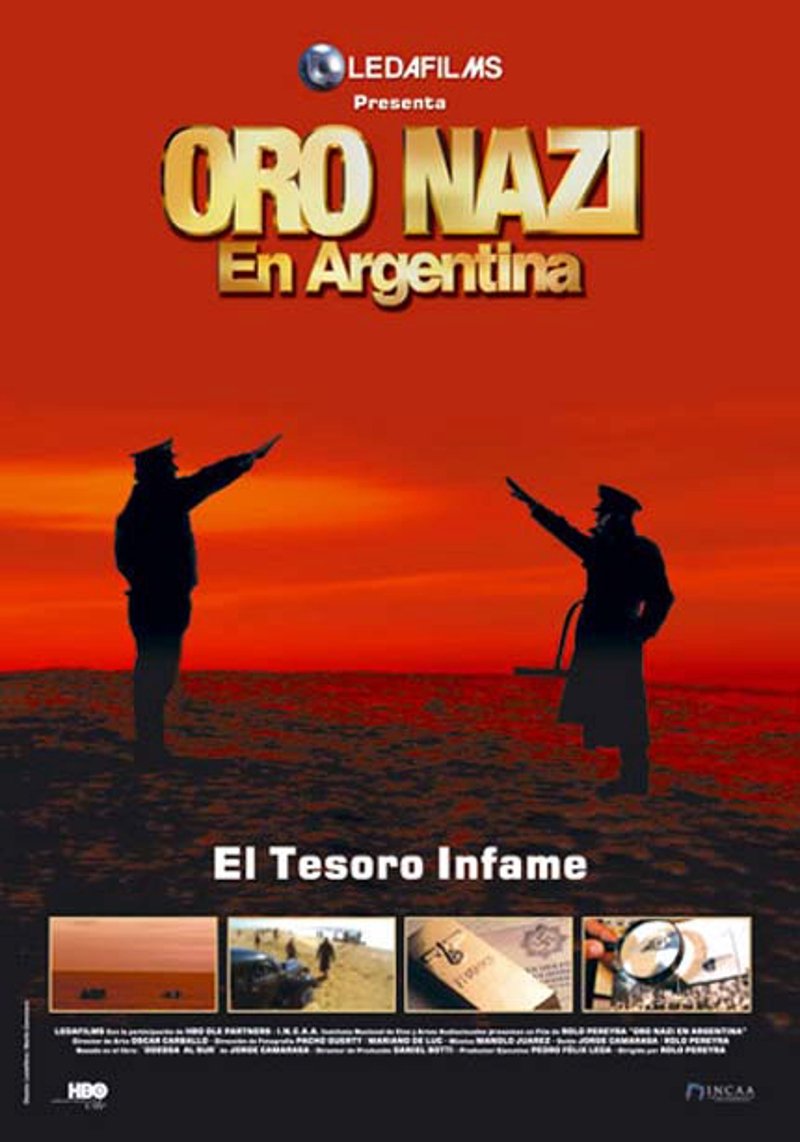
The story begins in Patagonia, deep south in Argentina, where researchers look for the remains of a German U-boat landing. This search leads them to Argentina during the '30s before Second World War, a time when anti-Semitism flourished in the country.
OSS agent, working with the French underground, ambushes Nazi convoy with high-ranking general, who escapes. Later they take him from a Nazi prison and smuggle him to England.
The Hobbit Enigma examines one of the greatest controversies in science today: what did scientists find when they uncovered the tiny, human-like skeleton of a strange creature, known to many as the Hobbit, on the Indonesian island of Flores in 2003?
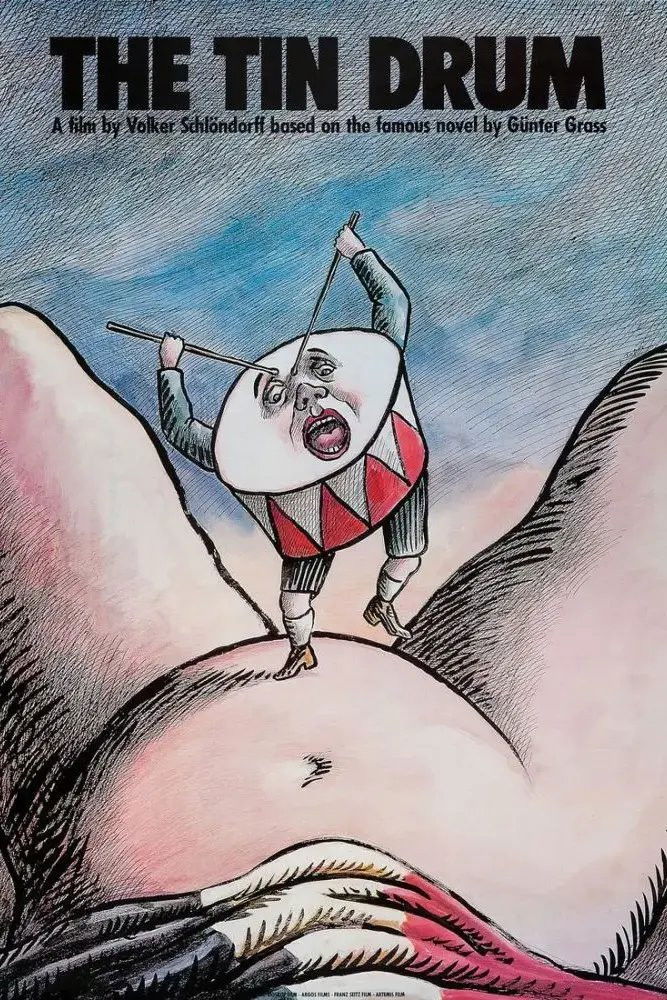
In 1924, Oskar Matzerath is born in the Free City of Danzig. At age three, he falls down a flight of stairs and stops growing. In 1939, World War II breaks out.
The Castro revolution was just consolidating its power when, in 1961, over 100,000 students were sent from their schools into the countryside to teach the peasants there how to read. Coinciding with the Bay of Pigs invasion, in this docudrama, 15-year-old Mario (Salvador Wood) has come to a tiny village in the Zapata swamps and gradually wins the villagers over to his task. At the same time, he receives an education in the realities of rural life from the hard-working peasants.
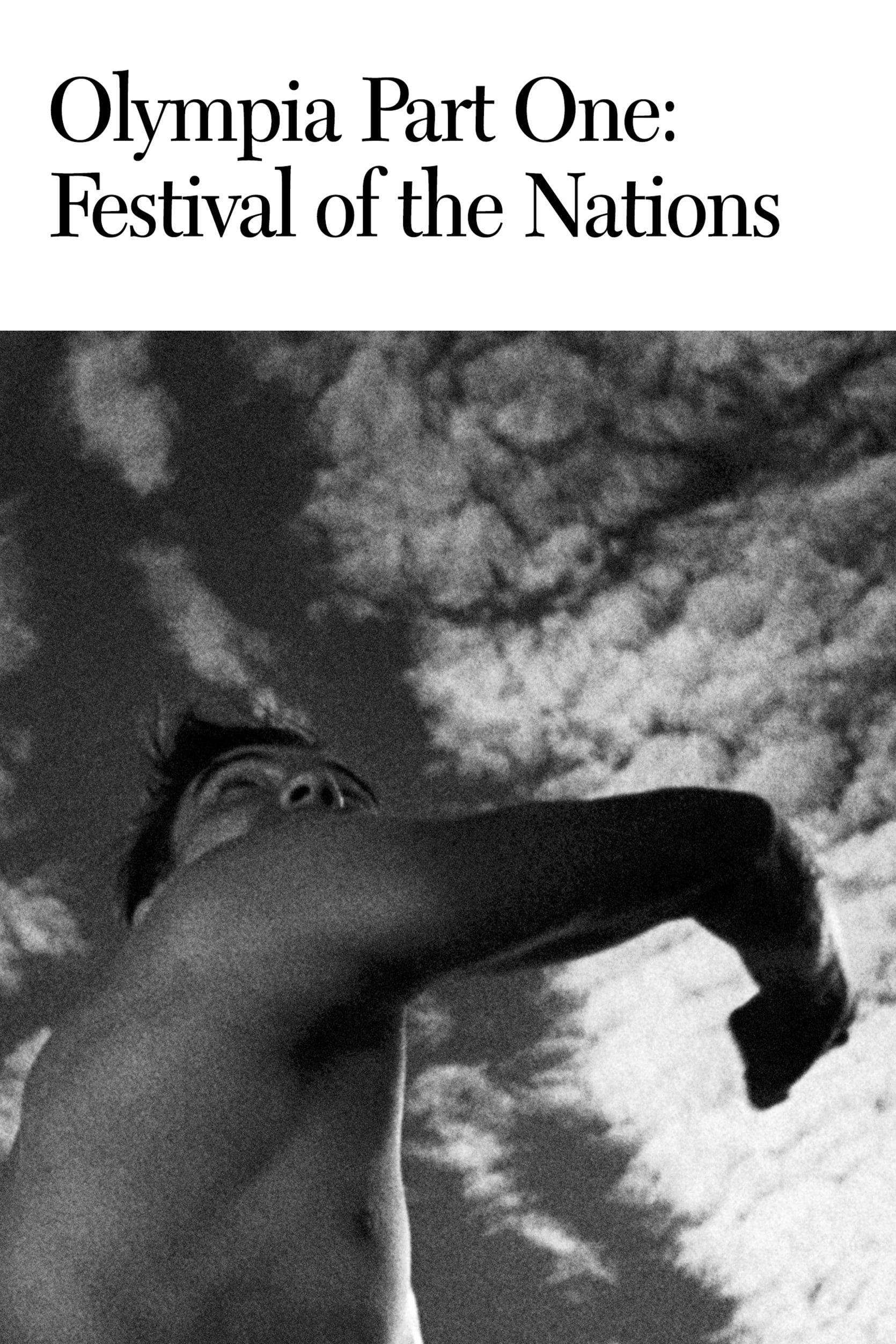
Starting with a long and lyrical overture, evoking the origins of the Olympic Games in ancient Greece, Riefenstahl covers twenty-one athletic events in the first half of this two-part love letter to the human body and spirit, culminating with the marathon, where Jesse Owens became the first track and field athlete to win four gold medals in a single Olympics.
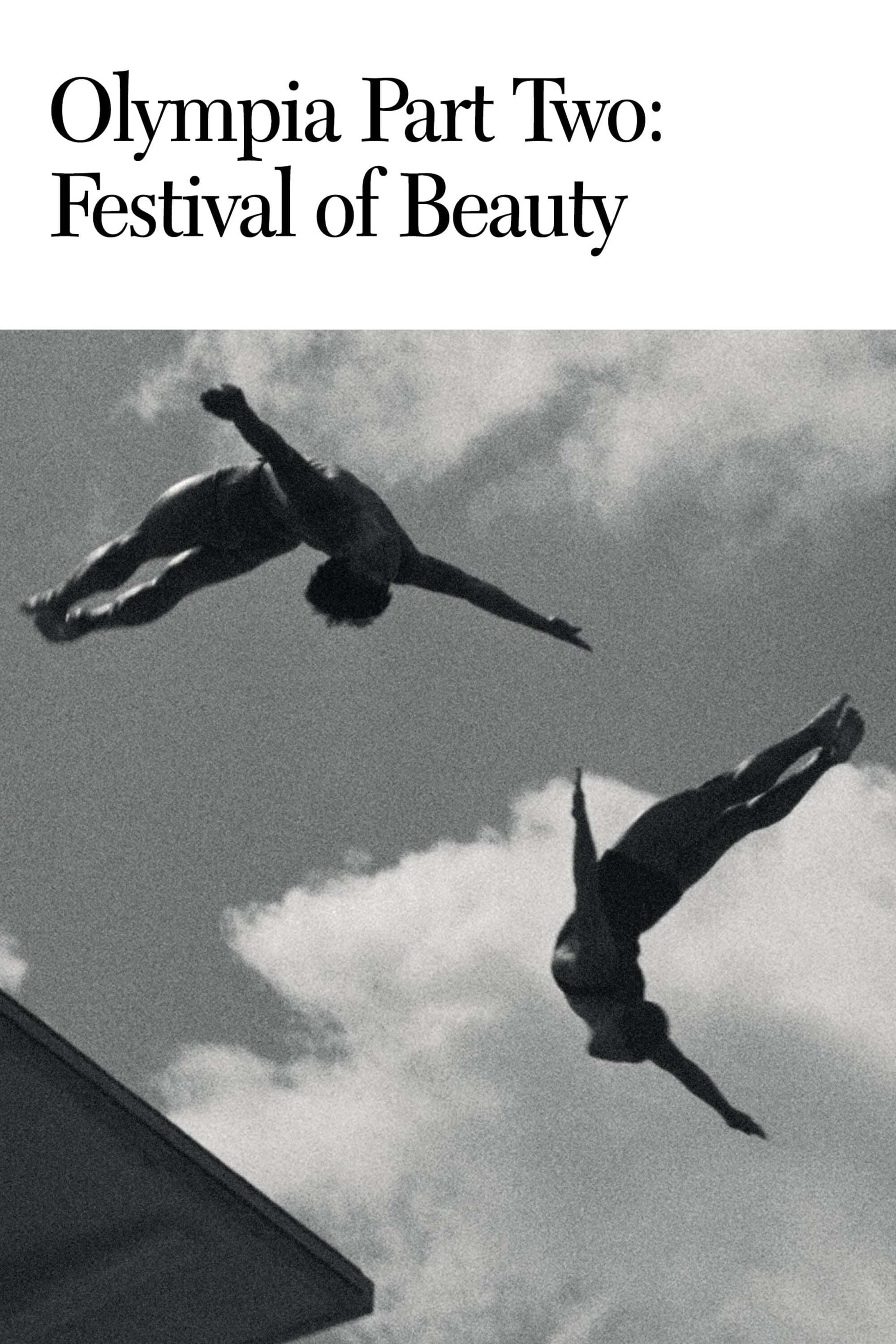
Part two of Leni Riefenstahl's monumental examination of the 1938 Olympic Games, the cameras leave the main stadium and venture into the many halls and fields deployed for such sports as fencing, polo, cycling, and the modern pentathlon, which was won by American Glenn Morris.
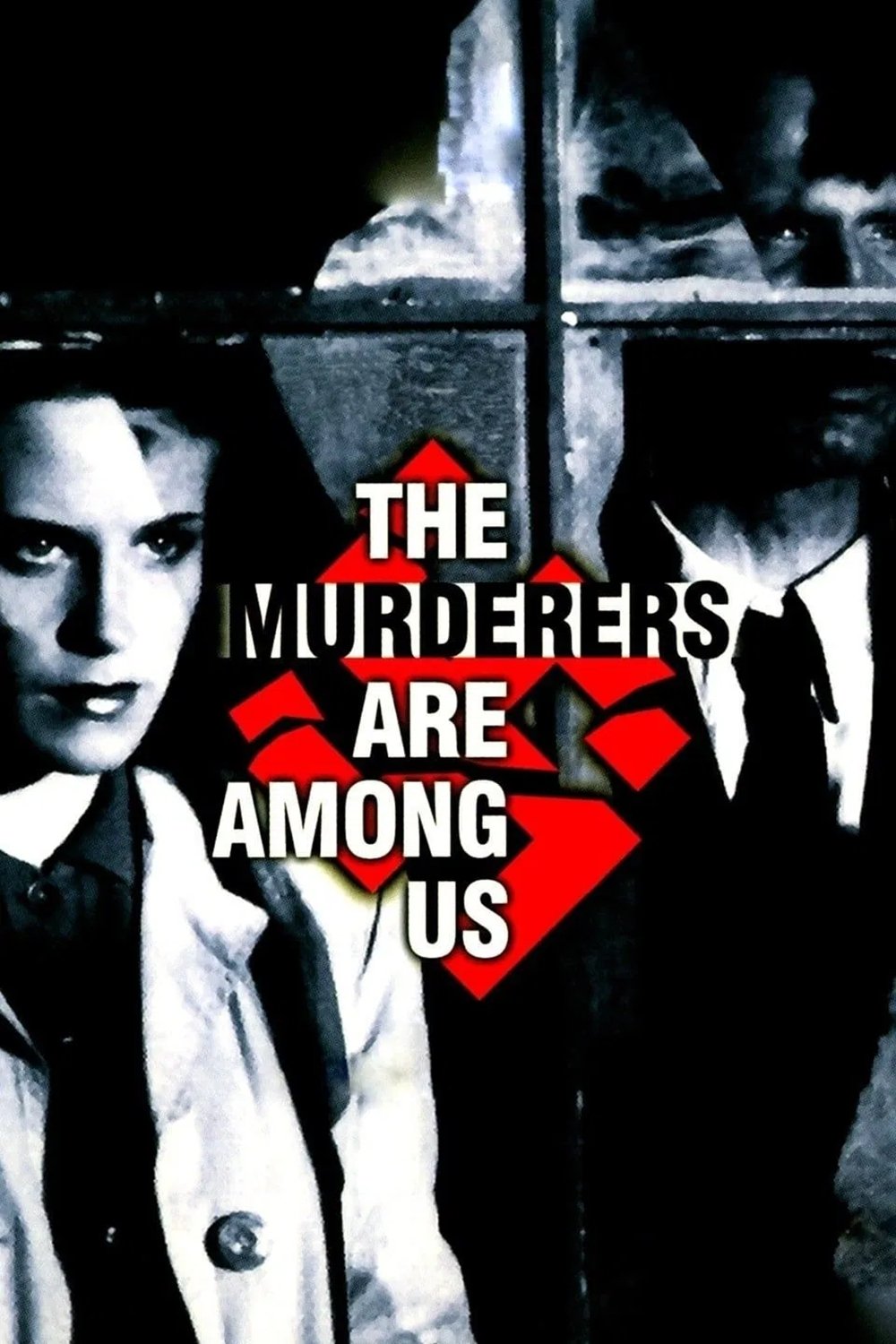
After returning from a concentration camp, Susanne finds a traumatized ex-soldier living in her apartment in bombed out Berlin. Together the two try to move past their experiences during WWII.
Filmmaker Alain Resnais documents the atrocities behind the walls of Hitler's concentration camps.
In 1947, four German judges who served on the bench during the Nazi regime face a military tribunal to answer charges of crimes against humanity. Chief Justice Haywood hears evidence and testimony not only from lead defendant Ernst Janning and his defense attorney Hans Rolfe, but also from the widow of a Nazi general, an idealistic U.S. Army captain and reluctant witness Irene Wallner.
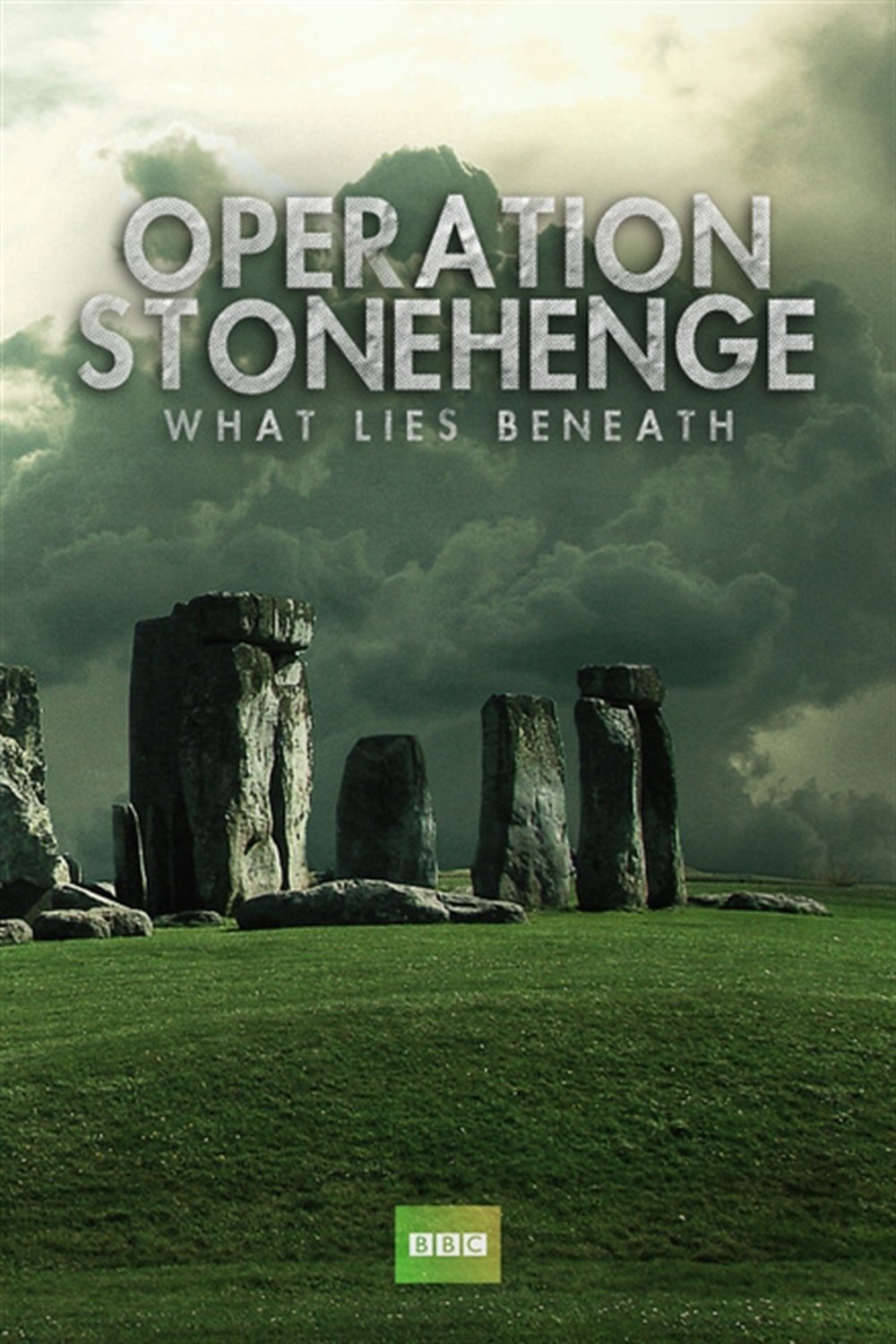
Stonehenge is an icon of prehistoric British culture, an enigma that has seduced archaeologists and tourists for centuries. Why is it here? What is its significance? And which forces inspired its creators? Now a group of international archaeologists led by the University of Birmingham and the Ludwig Boltzman Institute in Vienna believe that a new state-of-the-art approach is the key to unlocking Stonehenge's secrets. For four years the team have surveyed and mapped every monument, both visible and invisible, across ten square kilometres of the sacred landscape to create the most complete digital picture of Stonehenge and the surrounding area over millennia. Operation Stonehenge takes the viewer on a prehistoric journey from 8000BC to 2500BC as the scientists uncover the very origins of Stonehenge, learning why this landscape is sacred, preserved and has been revered by following generations.
"Trinity and Beyond" is an unsettling yet visually fascinating documentary presenting the history of nuclear weapons development and testing between 1945-1963. Narrated by William Shatner and featuring an original score performed by the Moscow Symphony Orchestra, this award-winning documentary reveals previously unreleased and classified government footage from several countries.
“The Soviet Story” is a story of an Allied power, which helped the Nazis to fight Jews and which slaughtered its own people on an industrial scale. Assisted by the West, this power triumphed on May 9th, 1945. Its crimes were made taboo, and the complete story of Europe’s most murderous regime has never been told. Until now...
The history of cinematic sound, told by legendary sound designers and visionary filmmakers.
This Oscar-winning documentary recounts the harrowing stories of five Hungarian Jews who endured the horrors of the Holocaust and Hitler's reign.
WWII from Space delivers World War II in a way you've never experienced it before. This HISTORY special uses an all-seeing CGI eye that offers a satellite view of the conflict, allowing you to experience it in a way that puts key events and tipping points in a global perspective. By re-creating groundbreaking moments that could never have been captured on camera, and by illustrating the importance of simultaneity and the hidden effects of crucial incidents, HISTORY presents the war's monumental moments in a never-before-seen context. And with new information brought to the forefront, you'll better understand how a nation ranked 19th in the world's militaries in 1939 emerged six years later as the planet's only atomic superpower.
A documentary about World War I with never-before-seen footage to commemorate the centennial of Armistice Day, and the end of the war.
A documentary examining possible historical and modern conspiracies surrounding Christianity, the 9/11 terrorist attacks, and the Federal Reserve bank.
One single Anne Frank moves us more than the countless others who suffered just as she did but whose faces have remained in the shadows-Primo Levi. The Oscar®-winning Helen Mirren will introduce audiences to Anne Frank's story through the words in her diary. The set will be her room in the secret refuge in Amsterdam, reconstructed in every detail by set designers from the Piccolo Theatre in Milan. Anne Frank this year would have been 90 years old. Anne's story is intertwined with that of five Holocaust survivors, teenage girls just like her, with the same ideals, the same desire to live: Arianna Szörenyi, Sarah Lichtsztejn-Montard, Helga Weiss and sisters Andra and Tatiana Bucci. Their testimonies alternate with those of their children and grandchildren.
Oliver Stone charts the history of the United States from the Second World War to the present.
With the departure of the Bush Administration and the arrival of an “era of transparency,” opportunities are arising for the disclosure of new information that may shed more light on the events that took place before and after 9/11/2001. Loaded with powerful, new footage and in-depth interviews this documentary presents a wide array of evidence both known and unknown…until now.
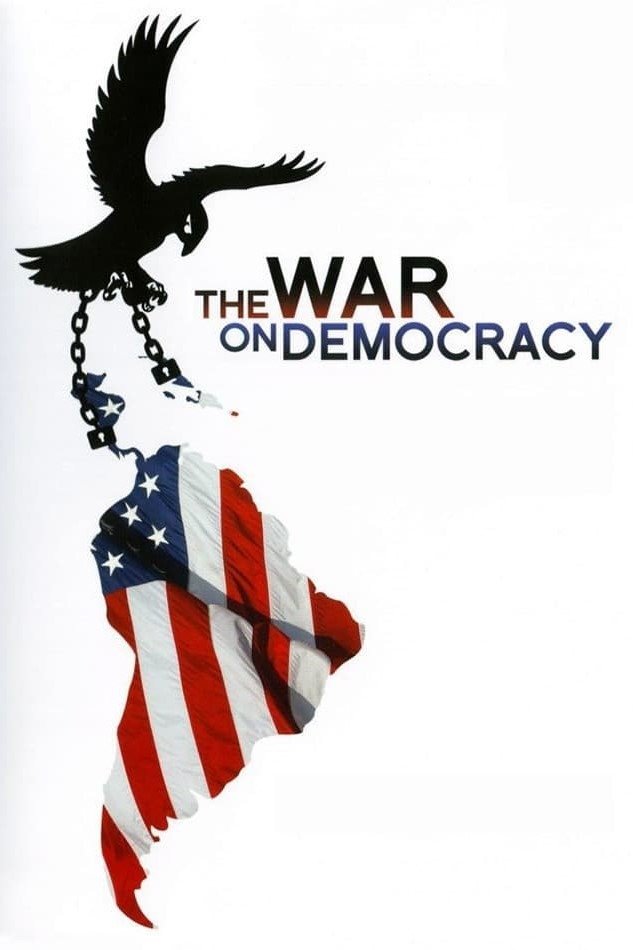
Set both in Latin America and the United States, the film explores the historic and current relationship of Washington with countries such as Venezuela, Bolivia and Chile. Pilger says that the film "...tells a universal story... analysing and revealing, through vivid testimony, the story of great power behind its venerable myths. It allows us to understand the true nature of the so-called "war on terror". According to Pilger, the film’s message is that the greed and power of empire is not invincible and that people power is always the "seed beneath the snow".
Filmed over 14 months with unprecedented access into the inner circle of the man and the sport, this is the first official and fully authorised film of one of the most celebrated figures in football. For the first time ever, the world gets vividly candid and un-paralleled, behind-closed-doors access to the footballer, father, family-man and friend in this moving & fascinating documentary. Through in-depth conversations, state of the art football footage and never before seen archival footage, the film gives an astonishing insight into the sporting and personal life of triple Ballon D'Or winner Cristiano Ronaldo at the peak of his career. From the makers of ‘Senna’ and ‘Amy’, Ronaldo takes audiences on an intimate and revealing journey of what it’s like to live as an iconic athlete in the eye of the storm.
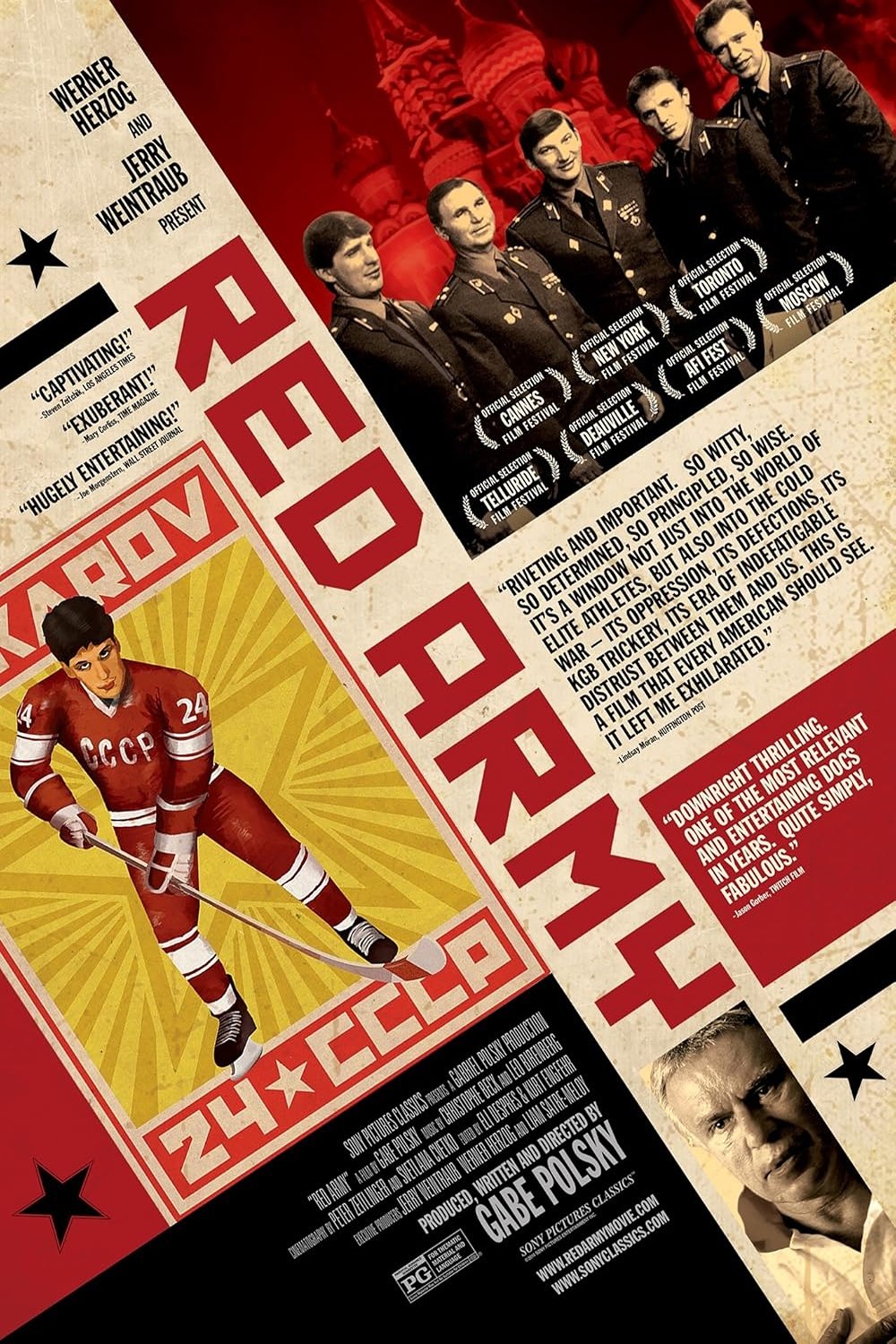
A documentary highlighting the Soviet Union's legendary and enigmatic hockey training culture and world-dominating team through the eyes of the team's Captain Slava Fetisov, following his shift from hockey star and celebrated national hero to political enemy.
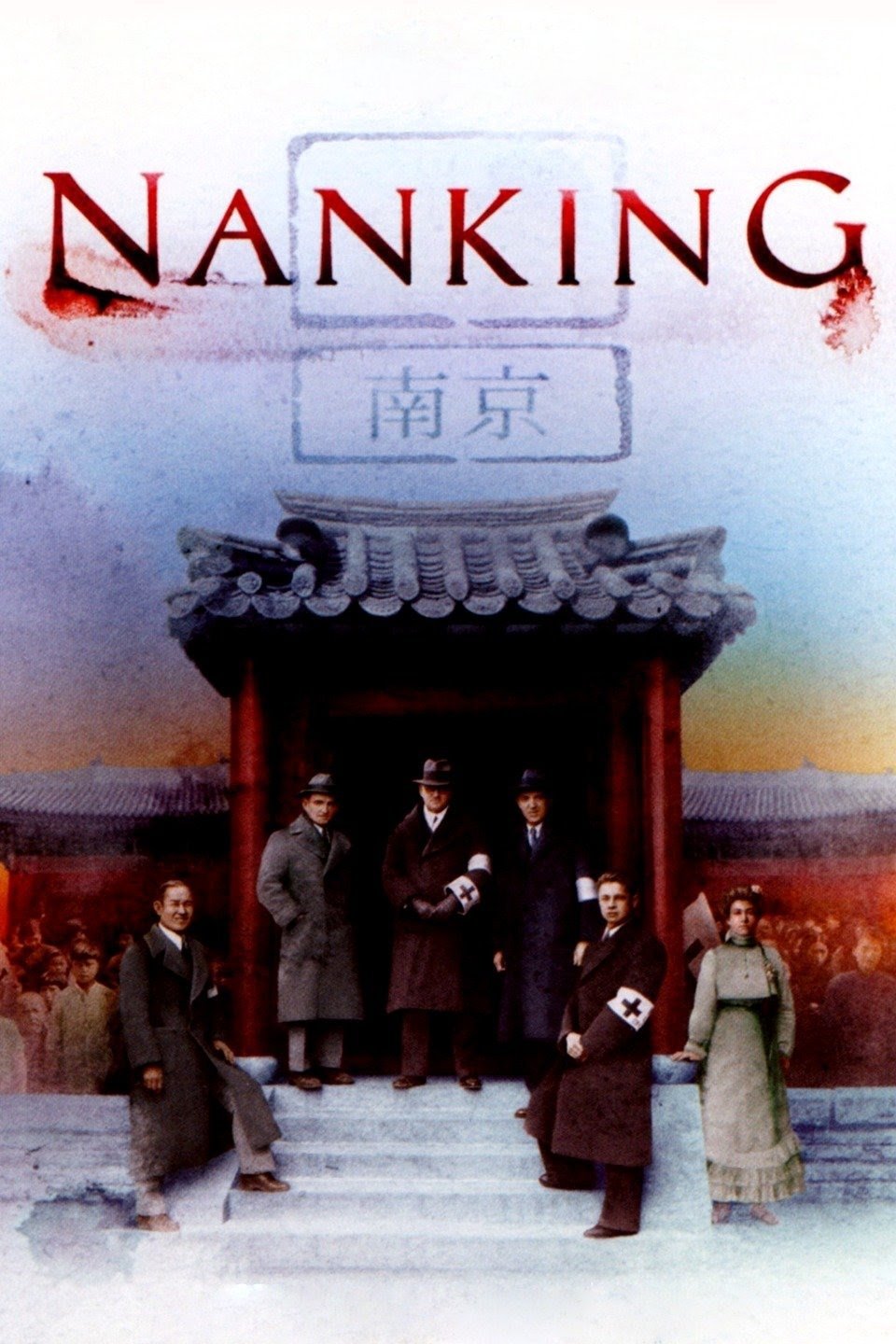
The story of the rape of Nanking, one of the most tragic events in history. In 1937, the invading Japanese army murdered over 200,000 and raped tens of thousands of Chinese. In the midst of this horror, a small group of Western expatriates banded together to save 250,000. Nanking shows the tremendous impact individuals can make on the course of history.
Experience the events of September 11, 2001 through the eyes of President Bush and his closest advisors as they personally detail the crucial hours and key decisions from that historic day.
An unprecedented and intimate look at the life, work and enduring legacy of British actress Audrey Hepburn (1929-1993).
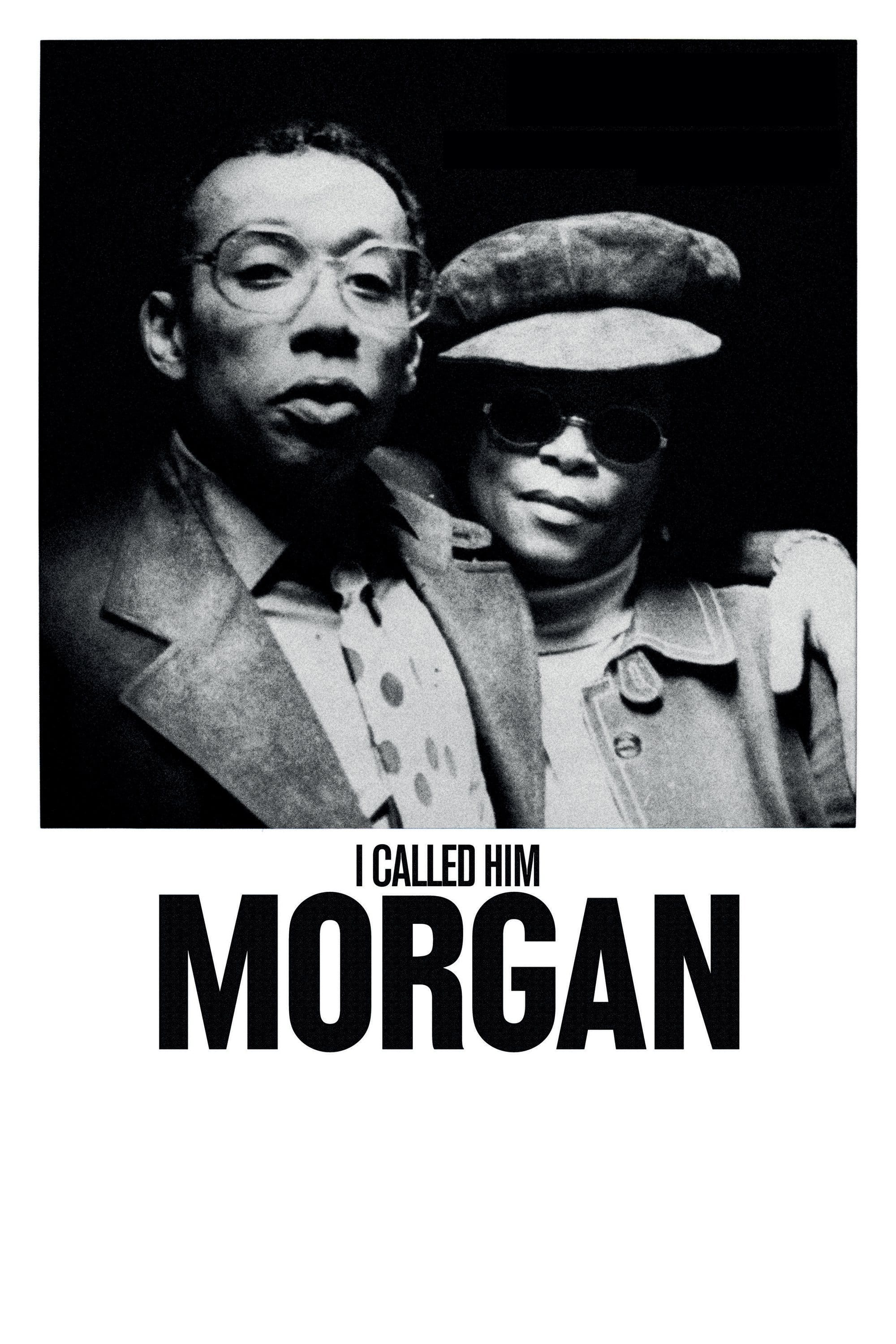
Part jazz history, part true-crime tale, Kasper Collin’s new documentary employs extensive archival footage and new interviews to tell the tragic story of the magnificently talented trumpeter Lee Morgan and his common-law wife Helen, who murdered him in a New York bar in 1972.
He's devoted his career to uncovering stories the powerful want buried. From My Lai to Abu Ghraib, dig into the life's work of journalist Seymour Hersh.
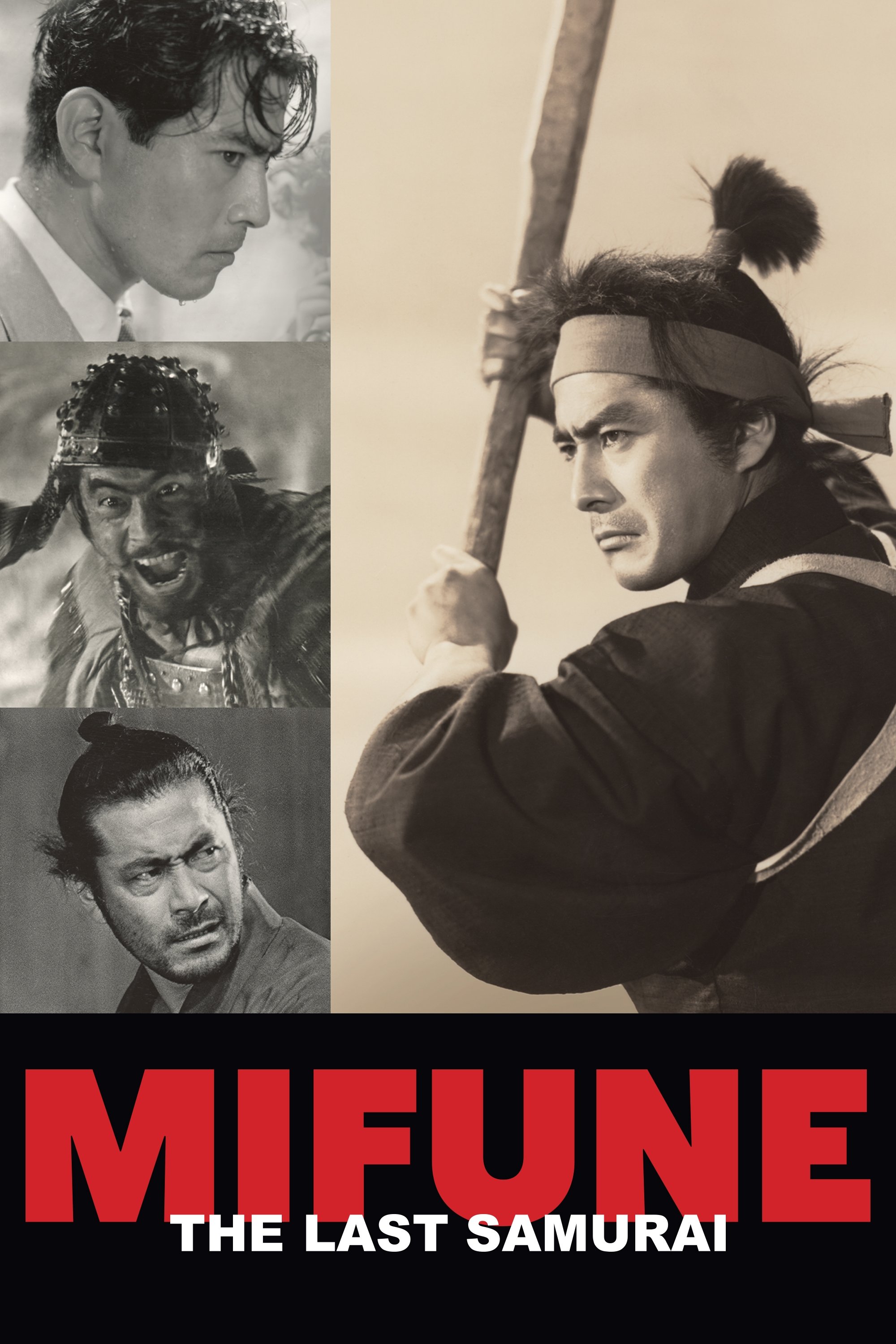
An account of the life and work of legendary Japanese actor Toshirō Mifune (1920-97), the most prominent actor of the Golden Age of Japanese cinema.
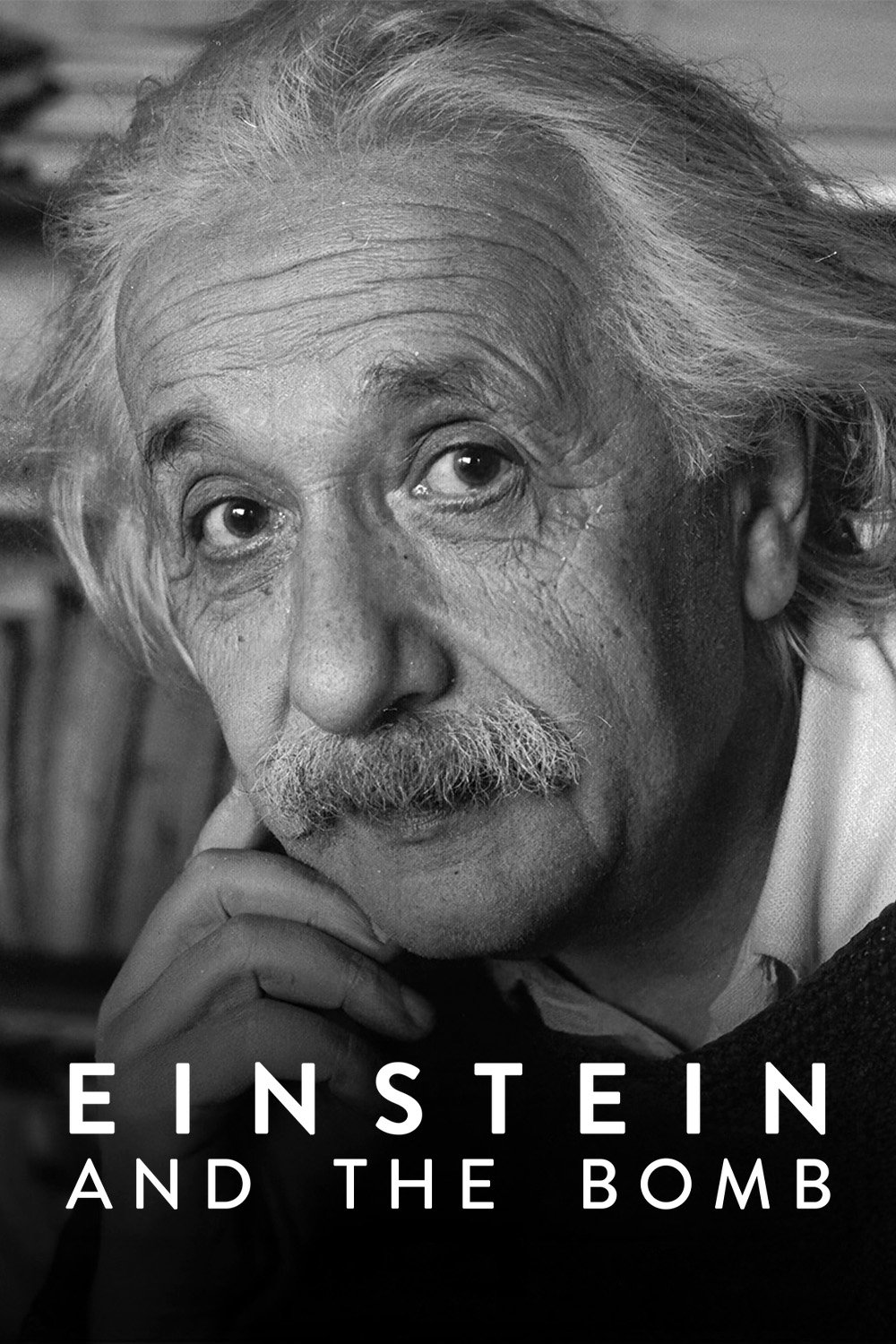
What happened after Einstein fled Nazi Germany? Using archival footage and his own words, this docudrama dives into the mind of a tortured genius.