Social & External
The people behind it
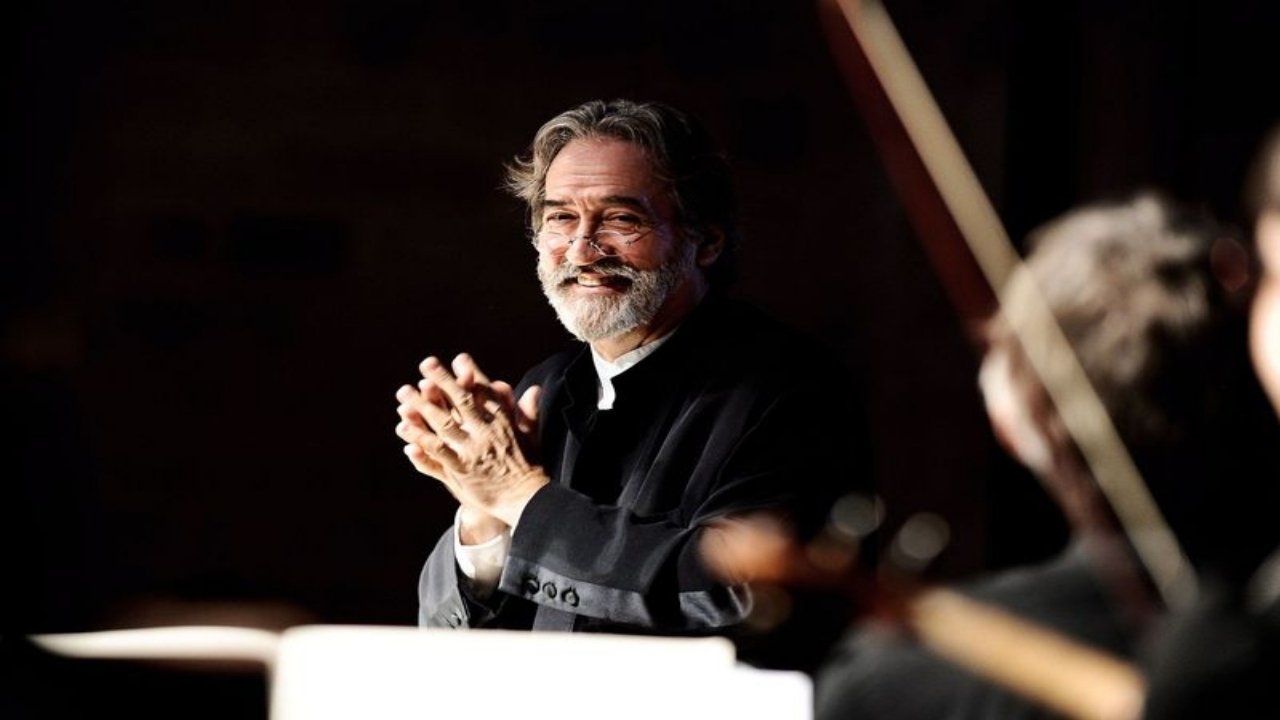
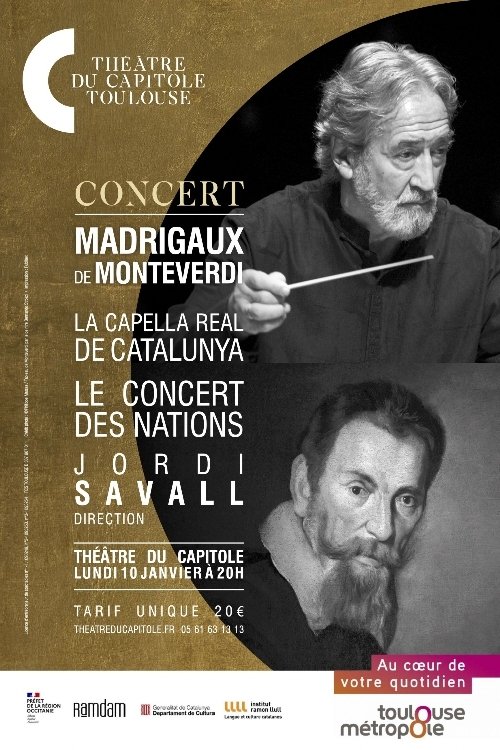
Jordi Savall
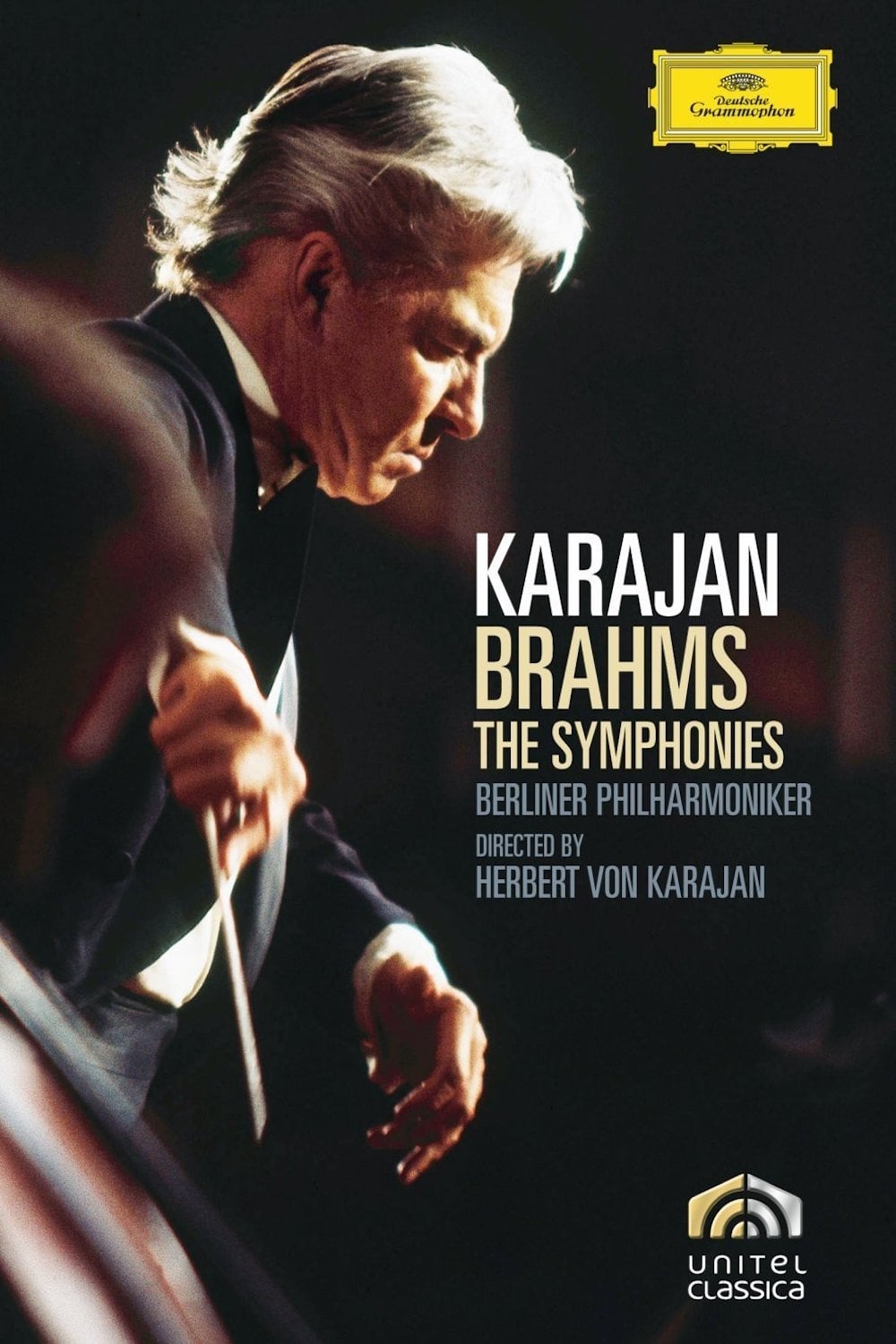
Karajan conducts these symphonies with eyes closed, often intently enraptured by the music, smiling occasionally when a passage or solo sounds just right to his ear. He conducts Brahms with a greater sense of urgency than does Bernstein: the First symphony is 11 minutes shorter as conducted by Karajan! Nothing is rushed but there is what can only be described as emotional compression, an intensity of expression that sounds quicker than Bernstein's performances.
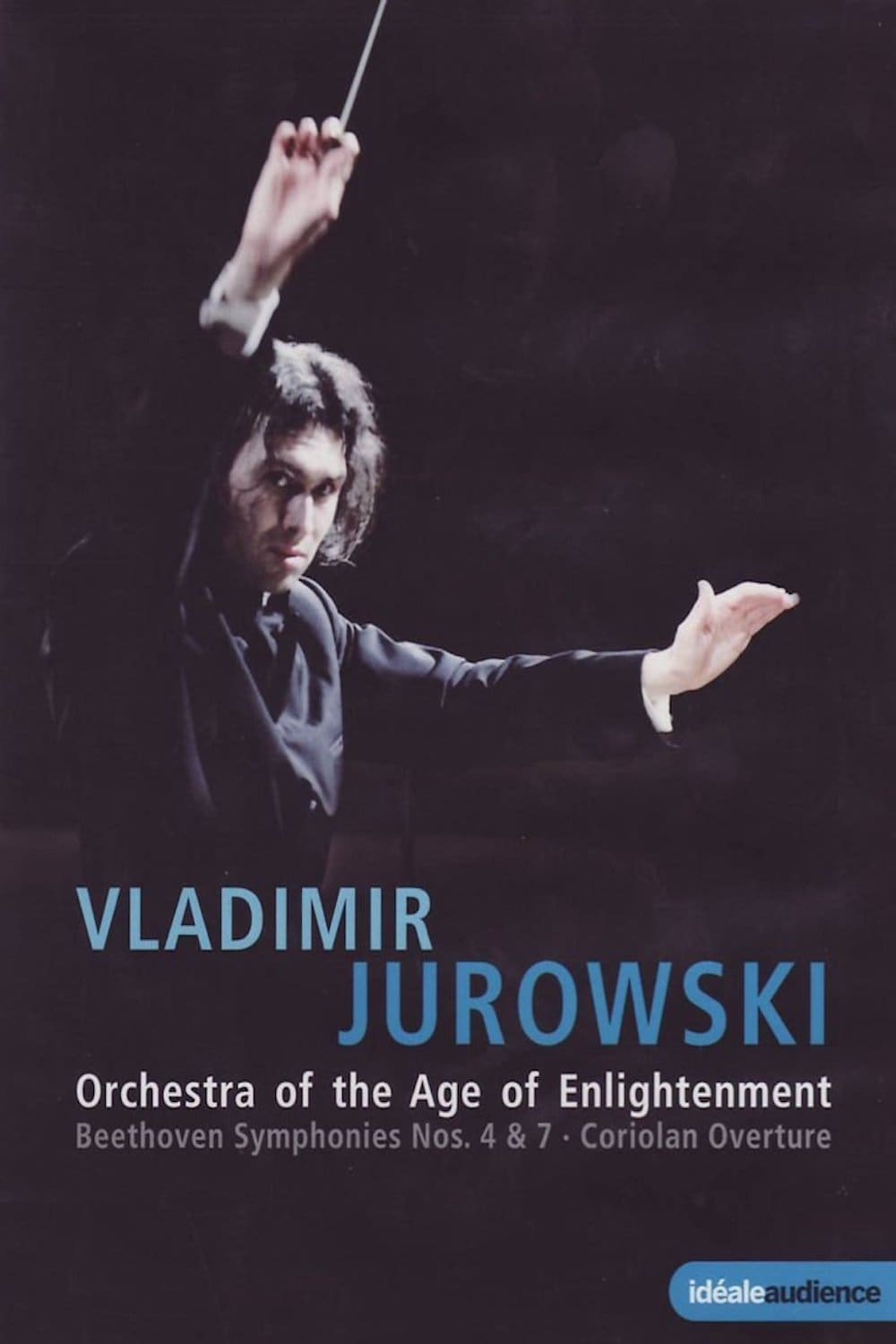
From the very first bars of the Coriolan Overture, it is apparent that this is Beethoven at his very best. Vladimir Jurowski and his absolutely brilliant Orchestra of the Age of Enlightenment give us a new reading of old favorites that may well blow you out of your chair. There is plenty to discover: sounds and textures never heard before, an orchestral timbre as the composer himself may have envisaged and heard, incredible strength and cohesion and, on the other hand, sensitive nuances that often disappear under a blanket of massed strings in more traditional interpretations.
The production itself is quite beautiful: recorded in the Basilica di San Marco in Venice in November 2007, it highlights the cathedral's splendor, the reverent audience, the soloists, orchestra and chorus with near-perfect cinematography. The soundtrack is also acceptable, which may have been quite a task to achieve, given the Basilica's over-reverberant acoustics. Alas, the performance itself does not rise to the occasion. Despite the occasional minor insecurity in ensemble and a visible lack of joy, the Symphonica Toscanini musicians play well, the Coro del Maggio Musicale Fiorentino members sing equally well, and the soloists are more than adequate, almost tangibly trying to excel.
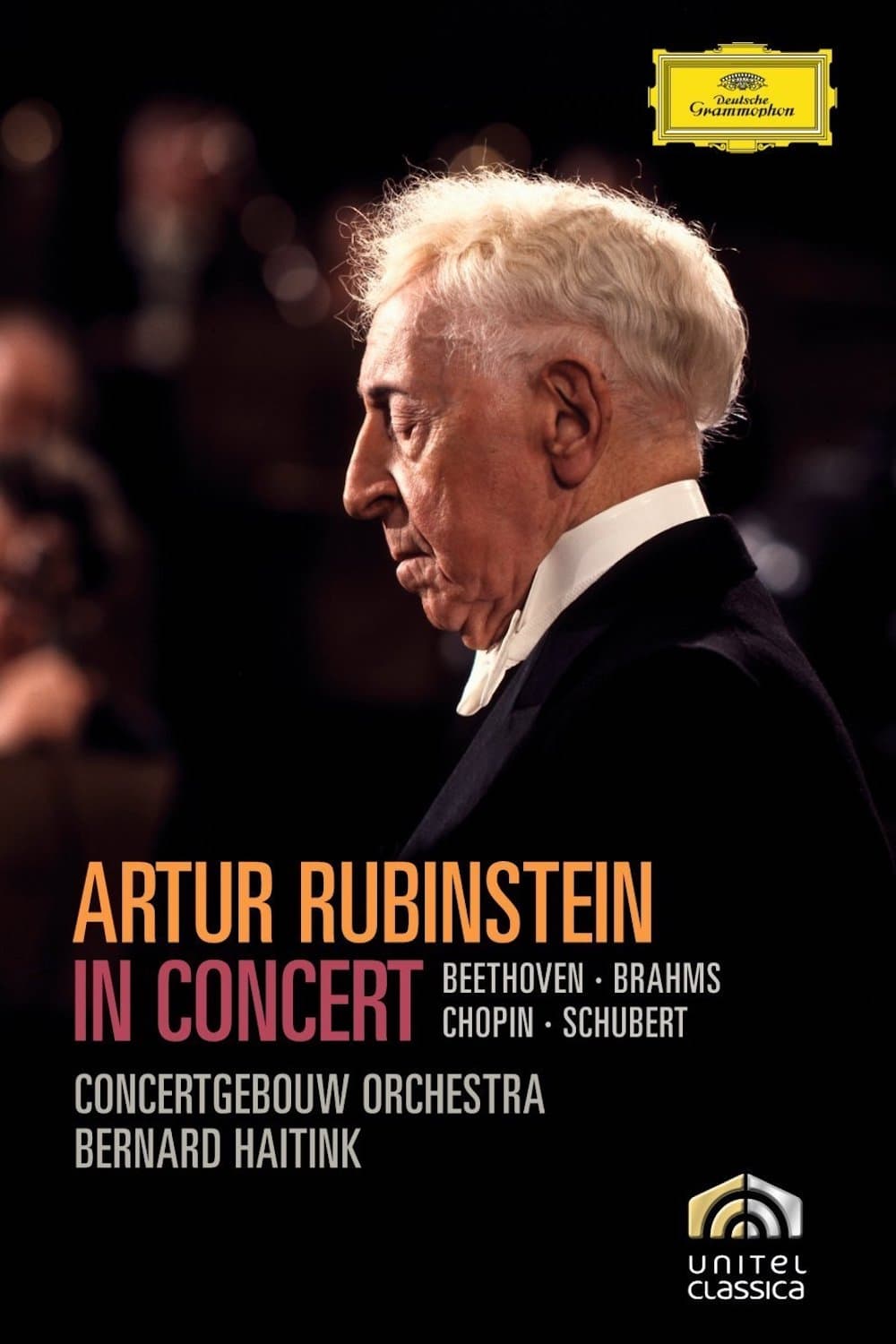
Live 1973 concert performances by celebrated Polish-American virtuoso concert pianist Arthur Rubinstein, with the Concertgebouw Orchestra under conductor Bernard Haitink. Filmed in August 1973 at the Concertgebouw in Amsterdam, the performances include Beethoven's Third Piano Concerto, in C minor, op. 37; and Brahms's First Piano Concerto, in D minor, op. 15. These are followed by four short pieces for solo piano, by Schubert, Brahms, and Chopin. The 2008 DVD release by Deutsche Grammophon also includes a short documentary, "Rubinstein at 90", an interview with Robert MacNeil, filmed at Rubinstein's home in Paris in 1977.
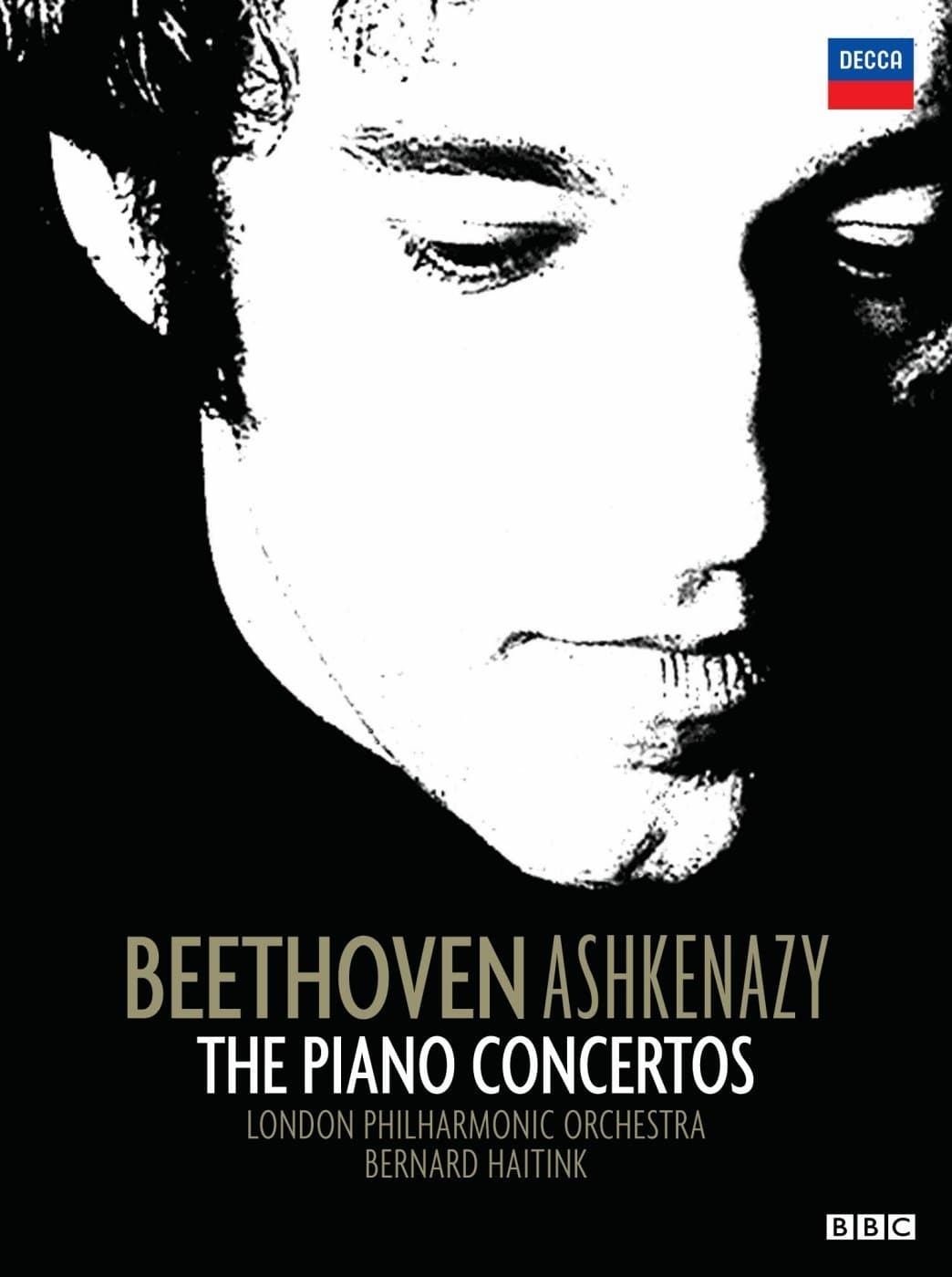
These recordings, filmed in March and April 1974 for the BBC, occurred at the tail end of the old performance era and the very start of the new. Vladimir Ashkenazy was a graduate of the same Soviet school of piano playing that produced Sviatoslav Richter, Emil Gilels, Lazar Berman and a host of others of that era. There are simularities that unite them, including a broad romanticism, a degree of Lisztian showmanship coupled with periods of introspection, powerful technique that occasionally borders on pounding and an intellectual streak that produces some deeply insightful playing. Ashkenazy was younger than the others, more modern in his playing.
A festive event marking the 10th anniversary of the Czech Republic's accession to the European Union, during which the Brno Philharmonic Orchestra will perform a live broadcast of L. van Beethoven's popular Symphony No. 9 in D minor, Op. 125, with Ode to Joy.
Performed by the Czech Philharmonic Orchestra conducted by J. Bělohlávek. Slavonic Dances are among the most popular works by Antonín Dvořák and Czech Romantic music in general. The first series, originally composed for four-hand piano and later orchestrated for symphony orchestra, is inspired mainly by Czech folk dances. The orchestral version of Slavonic Dances is considered a groundbreaking work, thanks to which Dvořák attracted attention abroad and launched his international career. A television recording of this outstanding performance was made in 2014. The Czech Philharmonic Orchestra is conducted by Jiří Bělohlávek.
Karajan conducts rehearsal and performance of Schubert's Symphony No. 4 with the Vienna Symphony in Vienna, Nov. 1965, and Beethoven's Symphony No. 5 with the Berlin Philharmonic, January 1966. Henri-Georges Clouzot directs.
In April 1981 violinist Gidon Kremer performed Vivaldi's Four Seasons leading the English Chamber Orchestra recorded in the baroque library of the monastery in Polling, near Munich. It is, as one would expect from a master violinist, a superbly insightful performance. The sound is resonant and satisfying although surely not true 5.1, and those who wish to have this music on video might well investigate it.
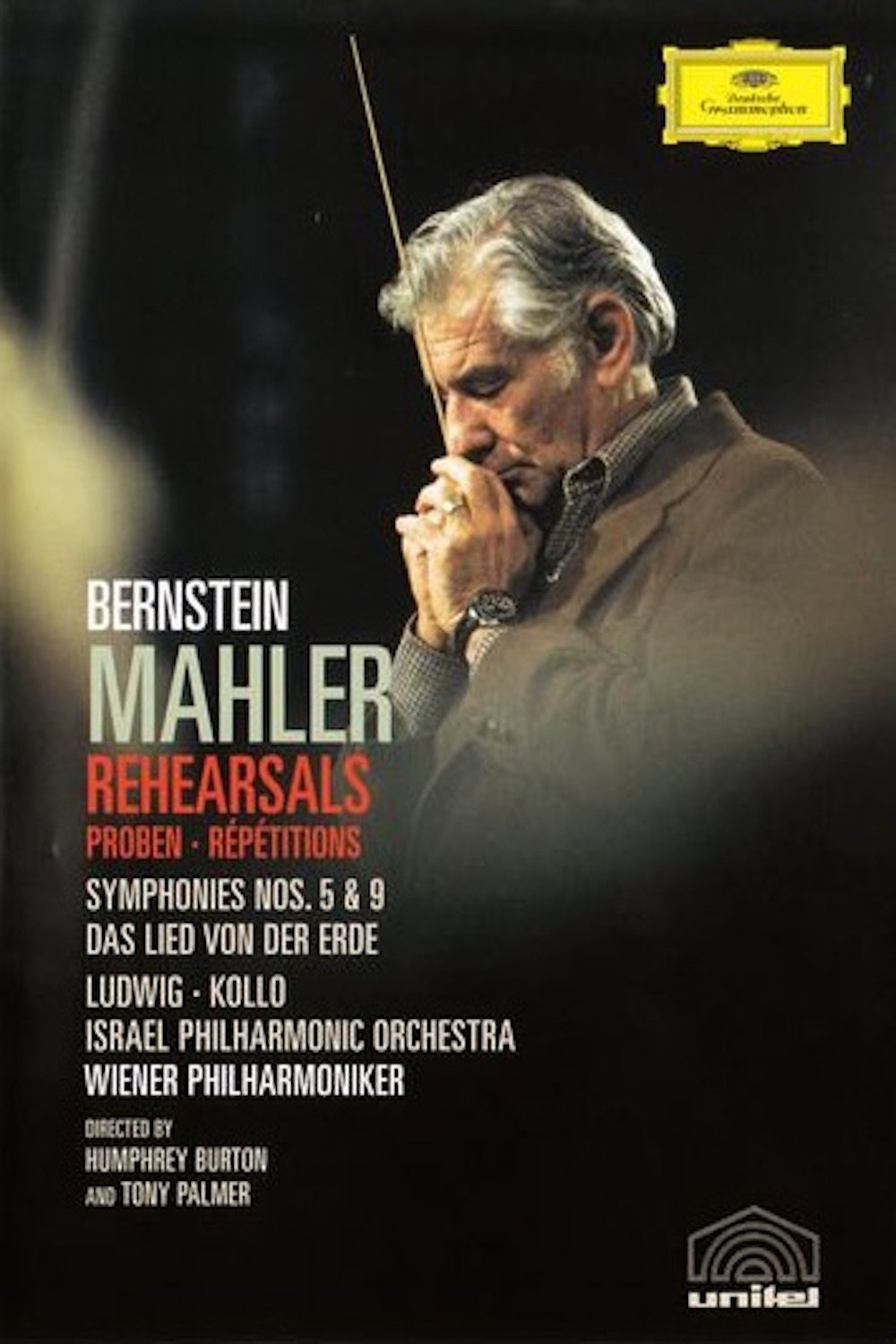
"Four Ways to Say Farewell" is a personal introduction to Mahler and his Ninth Symphony, during which Leonard Bernstein is seen and heard rehearsing the Vienna Philharmonic Orchestra. Filmed in 1971, this rehearsal was directed by Humphrey Burton,
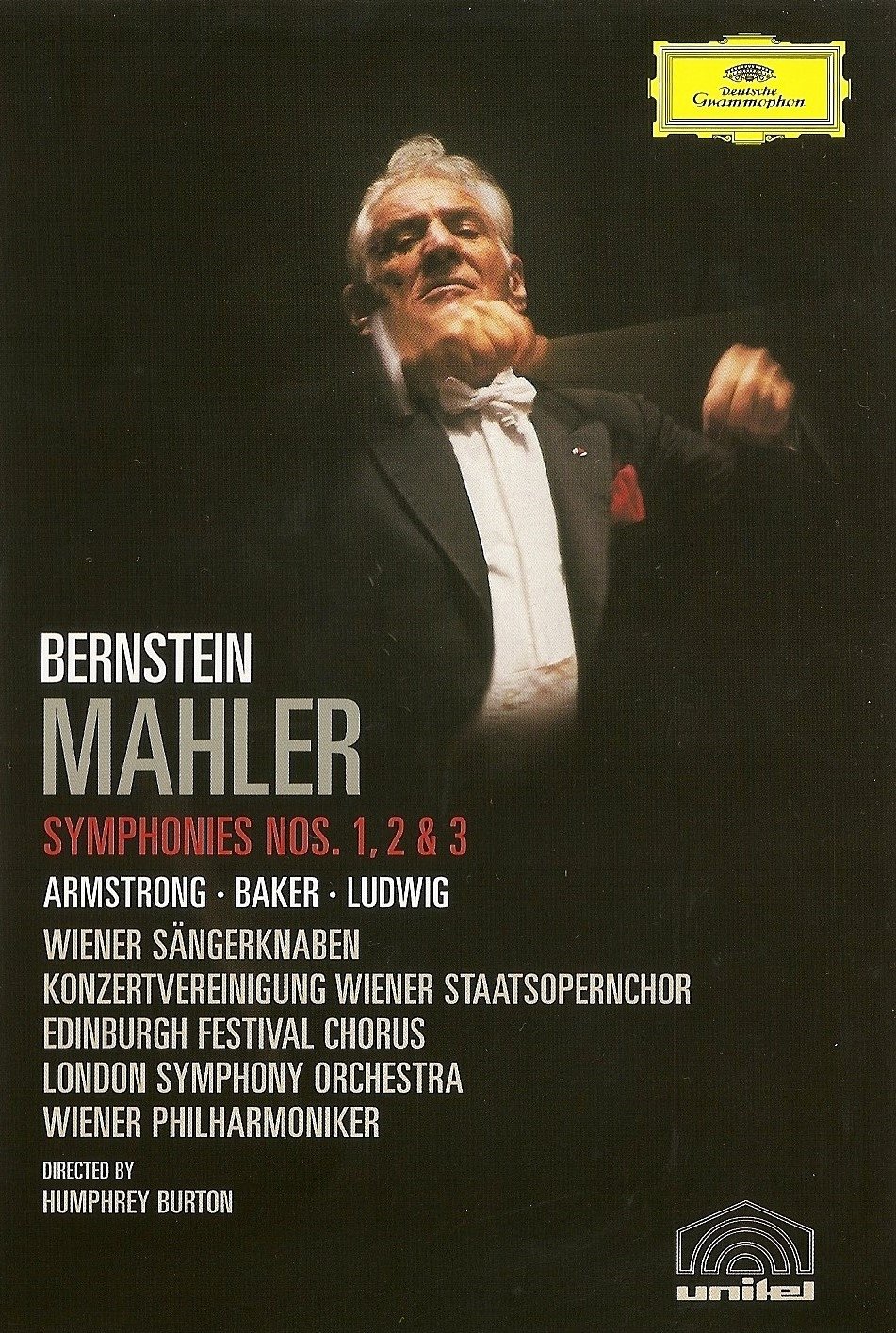
Beginning with the First Symphony, Bernstein reveals Mahler's position at the hinge of modernism, while emphasizing his emotional extremism. The uplifting Second "Resurrection" Symphony, with which Bernstein had an especially long and close association, is recorded here in a historic performance from 1973, set in the Romanesque splendor of Ely Cathedral. In the Third, Bernstein encompasses the symphony's spiritual panorama like no other conductor, with the Vienna Philharmonic players alive to every nuance.
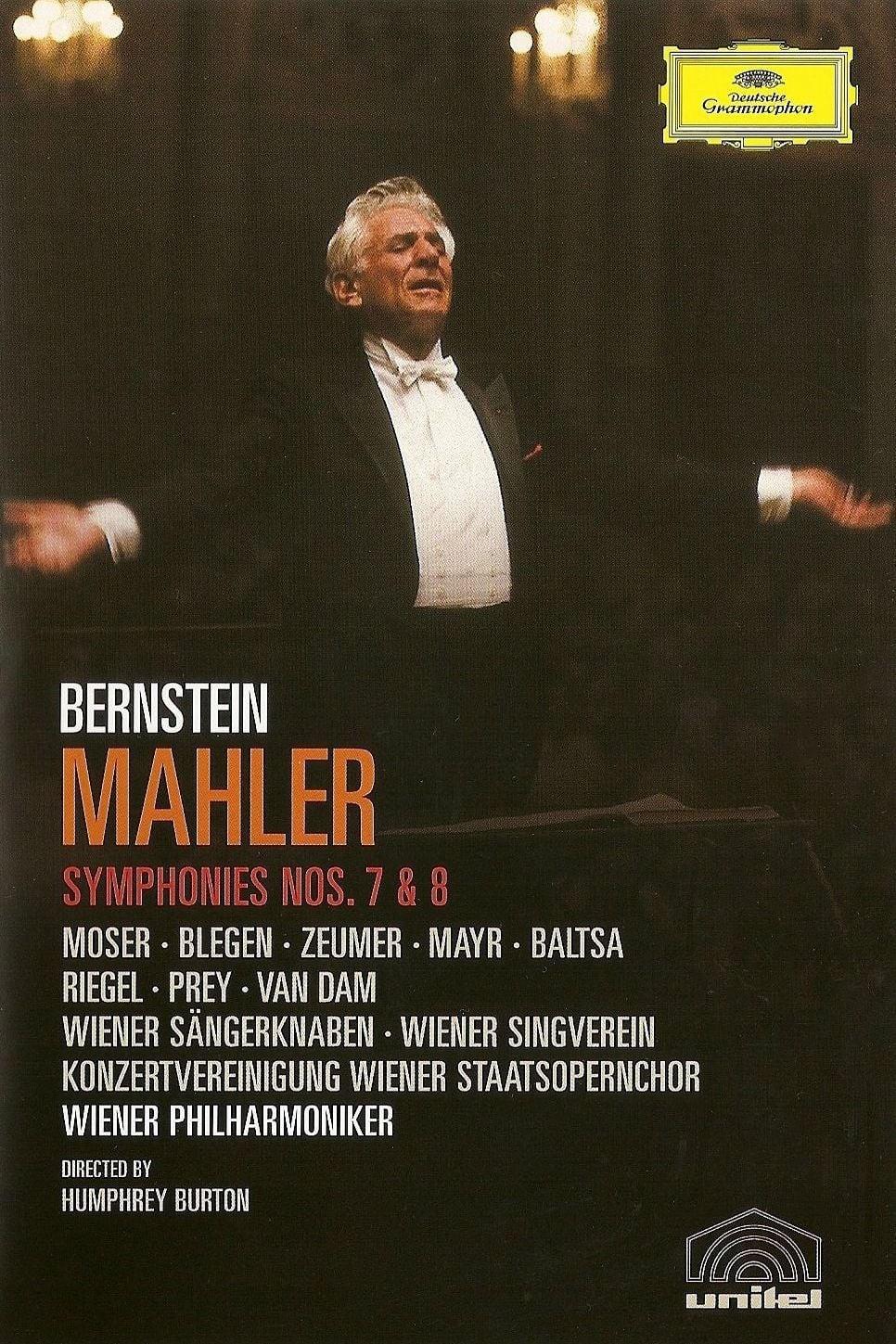
Leonard Bernstein made these recordings during his wonderfully productive collaboration with the Wiener Philharmoniker in the mid-1970s when he was at the peak of his career. Humphrey Burton's direction is, as always, very fine, giving the viewer/listener both the larger picture and highlighting individual soloists, players or groups of musicians and, of course, the maestro. The video and audio tracks show their age, but are quite acceptable even for today's standards. Bernstein's Seventh is everything one could desire: dark and spooky, highly sensual, but also structurally strong and assertive where needed. Bernstein's reading does not gloss over breakdowns in tonality and the foreshadowing of later musical developments.
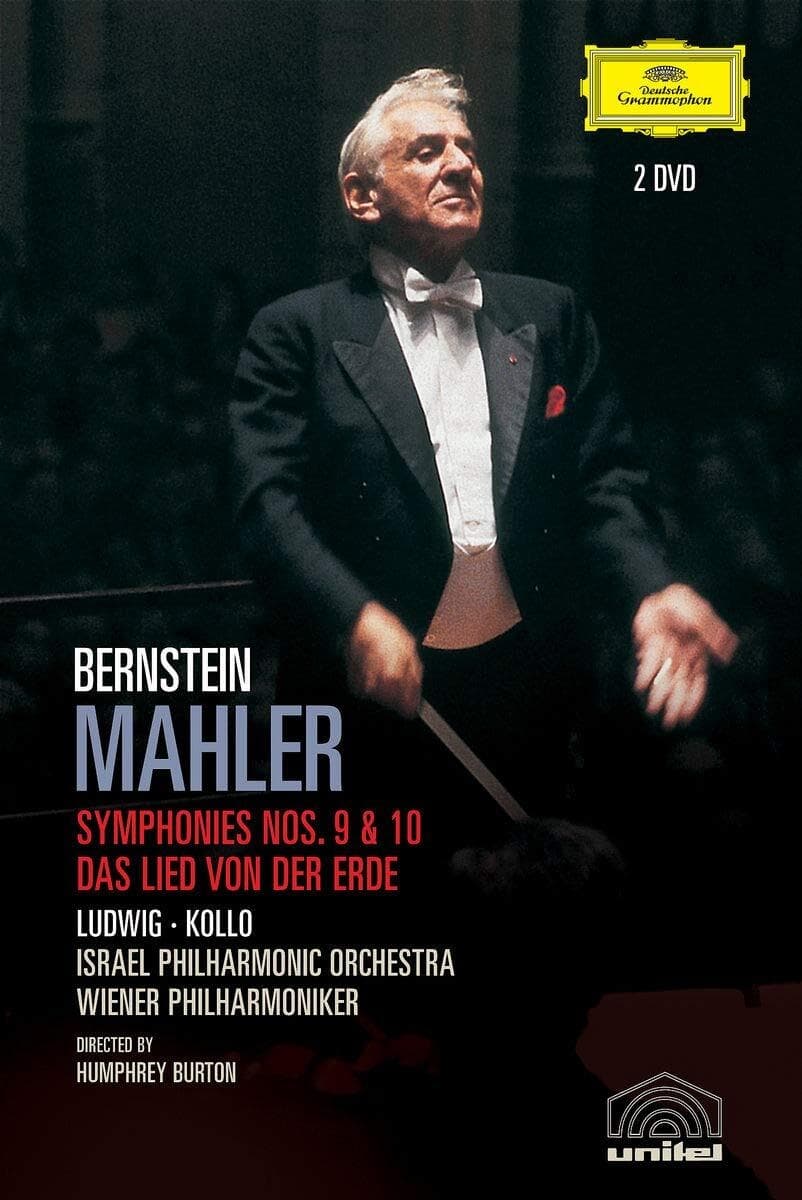
Filmed on tour at Berlin's Philharmonie, this account of the valedictory Ninth Symphony is an intense interpretation, expressing Bernstein's conviction that modern man had at last caught up with the message encoded in Mahler's last completed work. Having made his famous 1966 studio recording of "Das Lied von der Erde" in Vienna, Bernstein re-recorded this in Israel with the same searing subjectivity. René Kollo draws on the voice of a great Wagner tenor, while Christa Ludwig, the greatest exponent of the contralto songs at the time, is unbearably poignant in the final movement's fusion of elation and sadness.
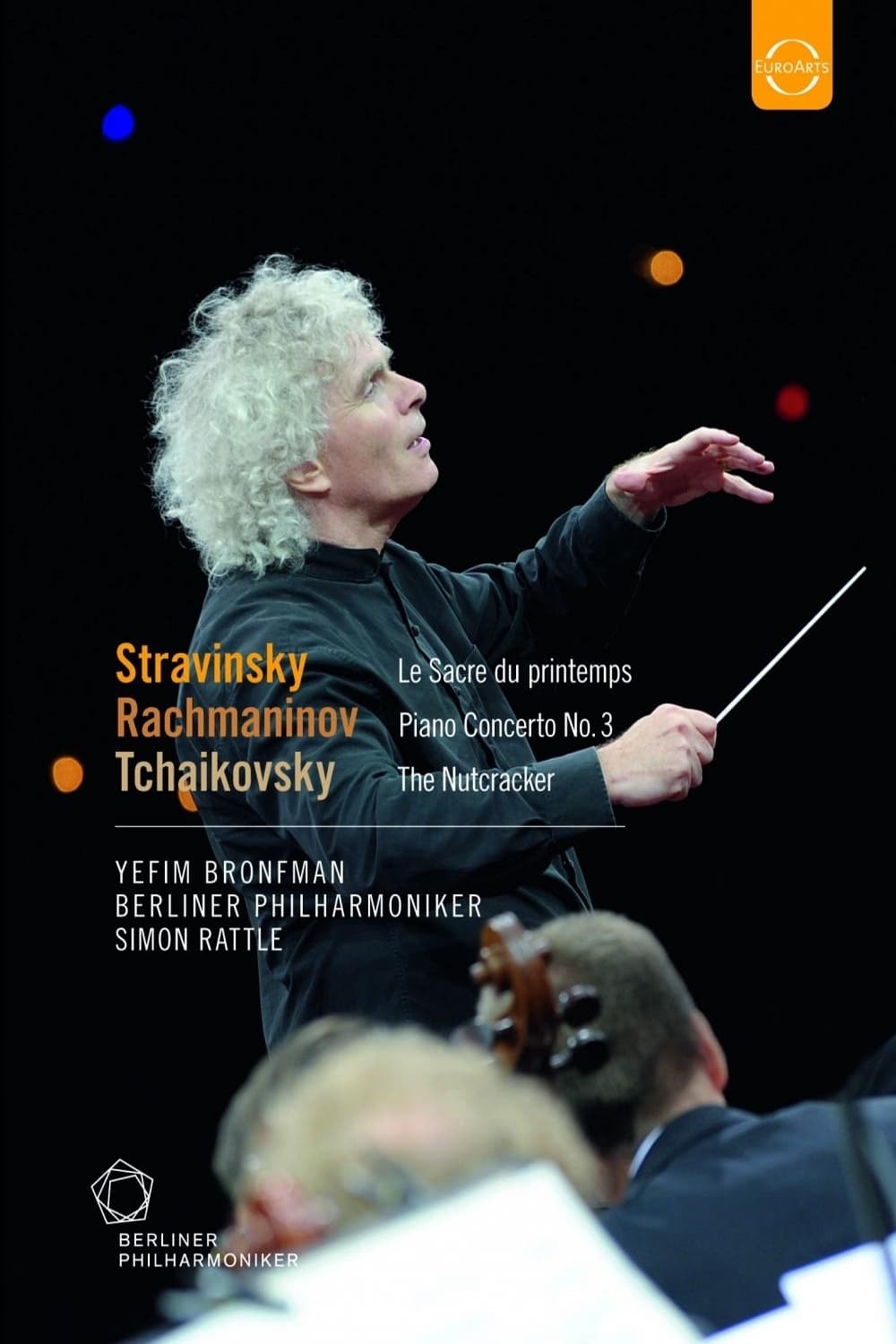
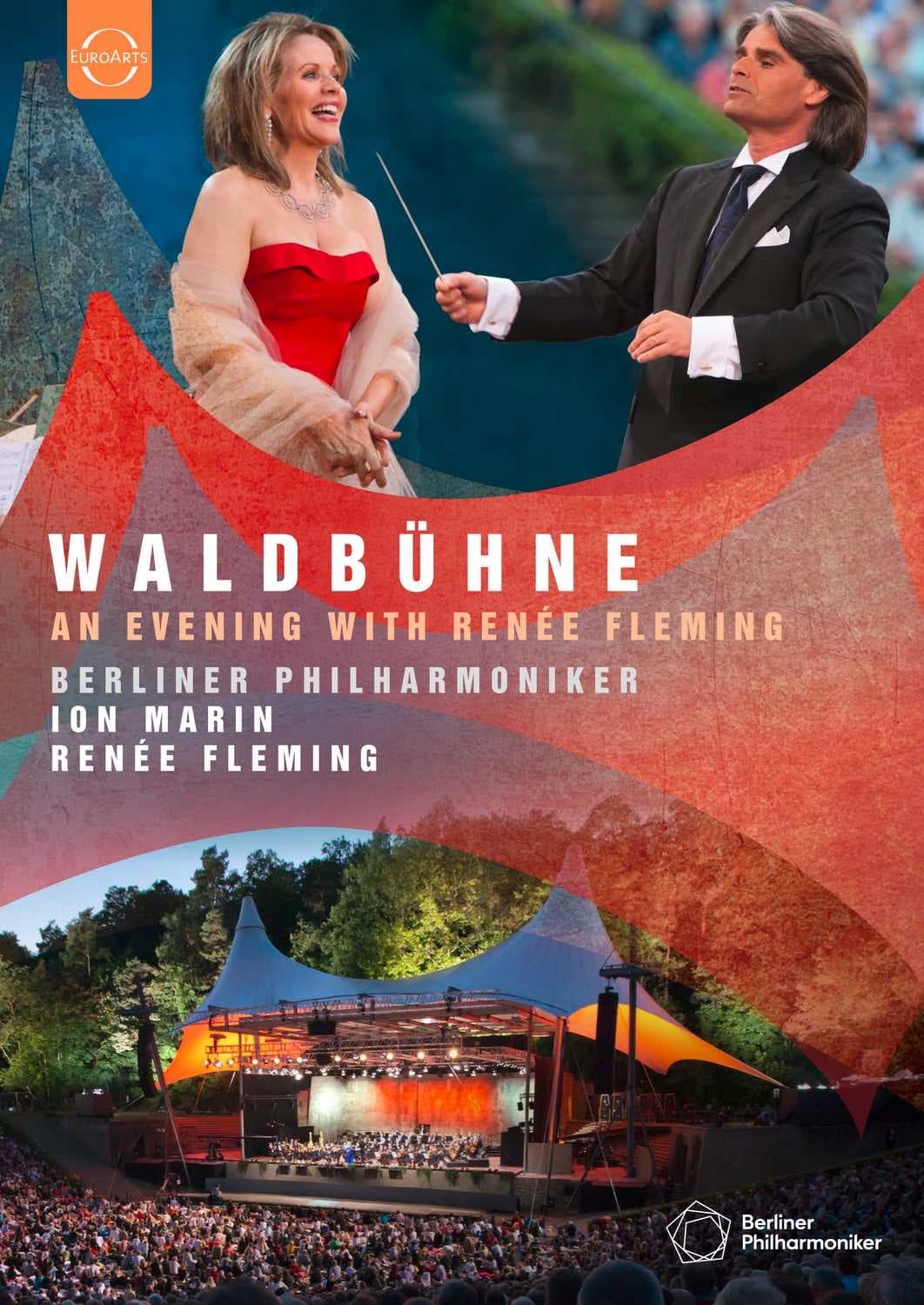
Every year, the Berliner Philharmoniker hold a kind of classical-music fête with a bright, cheerful concert to end the season. In 2009 about 22,000 people had come together at the Berlin Waldbühne to enjoy the traditional summer picnic concert. The theme of the evening was “Russian rhythms”, and star conductor Sir Simon Rattle, the Berliner Philharmoniker and Yefim Bronfman, one of the most famous pianists in the world today, presented a superb selection of Russian music. Repertoire Tchaikovsky: The Nutcracker, op. 71, Overture, The Christmas Tree, March, Pas de deux (Intrada) Rachmaninoff: Piano Concerto No.3 in D minor, op. 30 Stravinsky: Le Sacre du printemps Lincke: Berliner Luft
Repertoire Modest Mussorgsky: Night on Bald Mountain; Antonín Dvořák: Song to the Moon from “Rusalka”, Op. 114; Aram Chatschaturjan: Adagio from “Spartacus”; Richard Strauss: Final Scene from “Capriccio”, Op. 85; Richard Wagner: Overture to “Rienzi, der Letzte der Tribunen”; E. W. Korngold: Mariettas Lied from “Die tote Stadt”; Richard Strauss: Zueignung, Op. 10 No. 1; Sir Edward Elgar: Salut d’amour; Giacomo Puccini: Donde lieta uscì from “La bohème”; Tu che di gel sei cinta from “Turandot”; Ruggero Leoncavallo: Musette svaria sulla bocca viva from “La bohème”; Mimì Pinson, la biondinetta from “La bohème”; Piotr Tchaikovsky: “Romeo and Juliet” (Fantasy Overture)
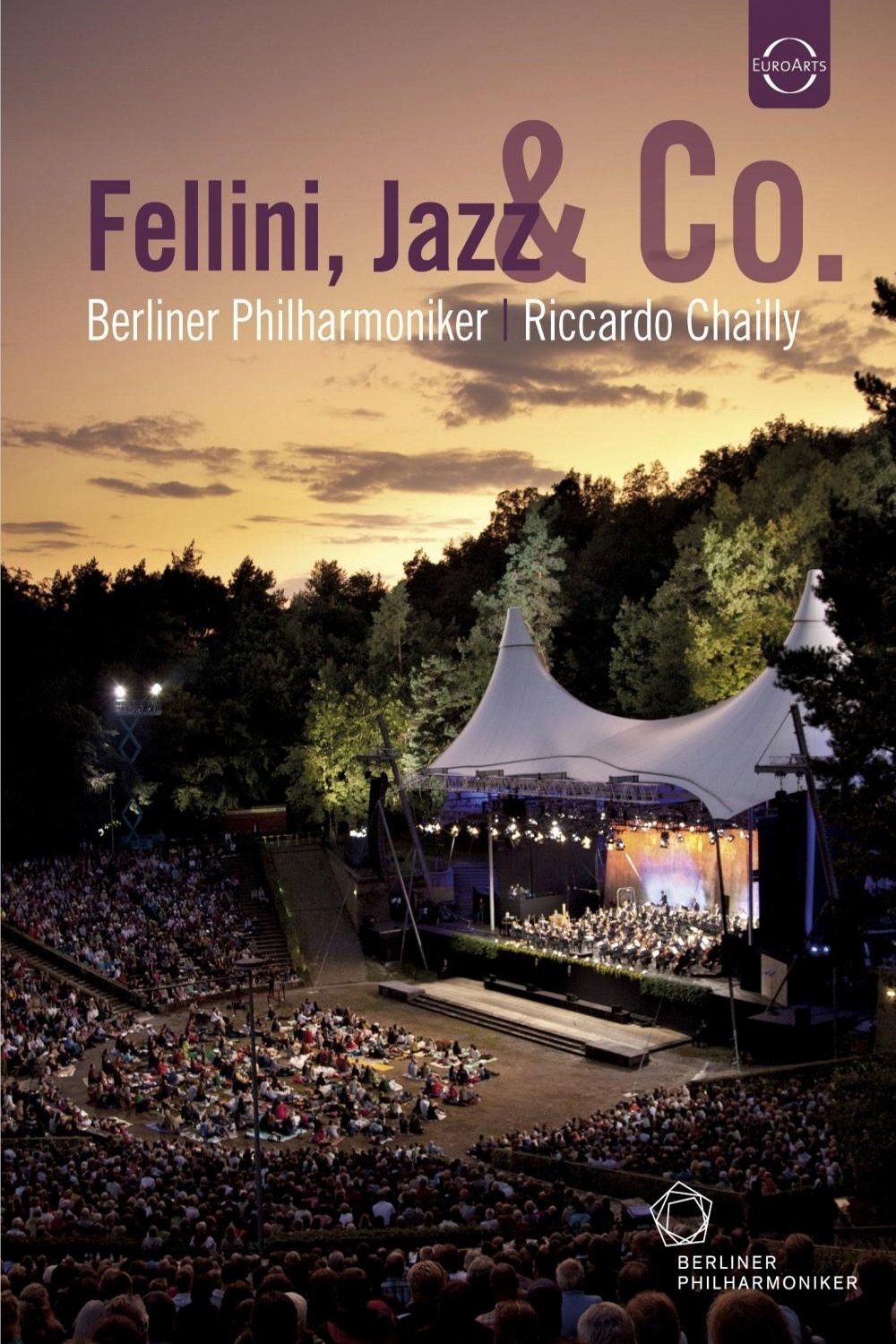
The Waldbühne in Berlin, one of the most appealing outdoor amphitheatres on the European continent, is the home of the Berliner Philharmoniker’s summer concerts. With audiences of more than 20,000, these are some of the most popular classical music concerts in the world. Riccardo Chailly is famous for having one of the broadest and most eclectic repertoires. Here, under his baton, the orchestra presents perennial favourites by Shostakovich, Rota and Respighi. Live recording from the Waldbühne, Berlin, 23 August 2011, directed by Kasten Henning, produced by Jan Bremme. TV Producer: Dorothea Diekmann, RBB. Repertoire Dmitry Shostakovich: Suite No. 2 for Jazz Orchestra (Suite for Variety Orchestra), Lady Macbeth of Mtsensk Suite – Allegretto; Nino Rota: ‘La Strada’ Ballet Suite; Ottorino Respighi: Fountains of Rome • Pines of Rome • Danza gueresca ‘Belkis’; Paul Lincke: Berliner Luft
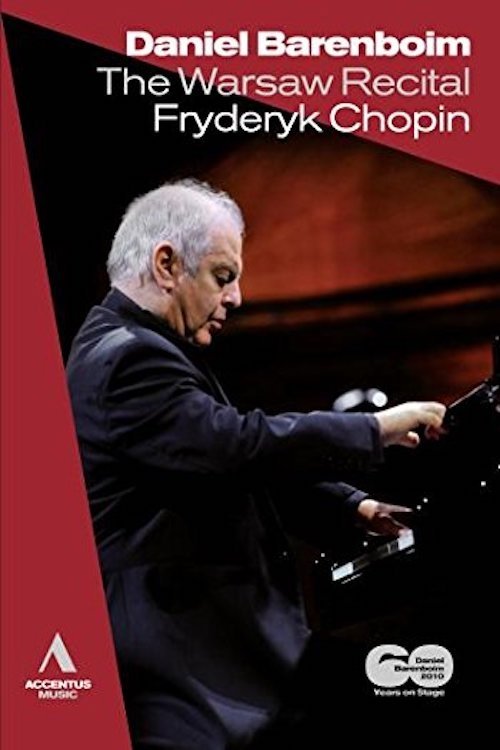
Chopin Year 2010 coincides with the 60th anniversary of Daniel Barenboims stage début, and as a pianist he has decided to devote this year to the great Romantic master of the keyboard. Fryderyc Chopin was born on 1 March 1810 in a small village near Warsaw, and on the eve of the 200th anniversary of this date Barenboim gave this wildly acclaimed Warsaw recital as part of an extensive European tour. Recorded live at the National Philharmonic Hall, Warsaw, the programme presents some of the composers best-known works, including the great B flat minor Sonata with its famous Funeral March, which sounded to many as the composer may well have imagined it. Ive been playing Chopin ever since I was a little boy. On the advice of my father, who was also my teacher, I performed some of his pieces in my very first concert, when I was just seven. At that point I was playing the Etudes and the Nocturnes obviously I didnt try and tackle the larger scale Sonatas or the Fantasy until later.
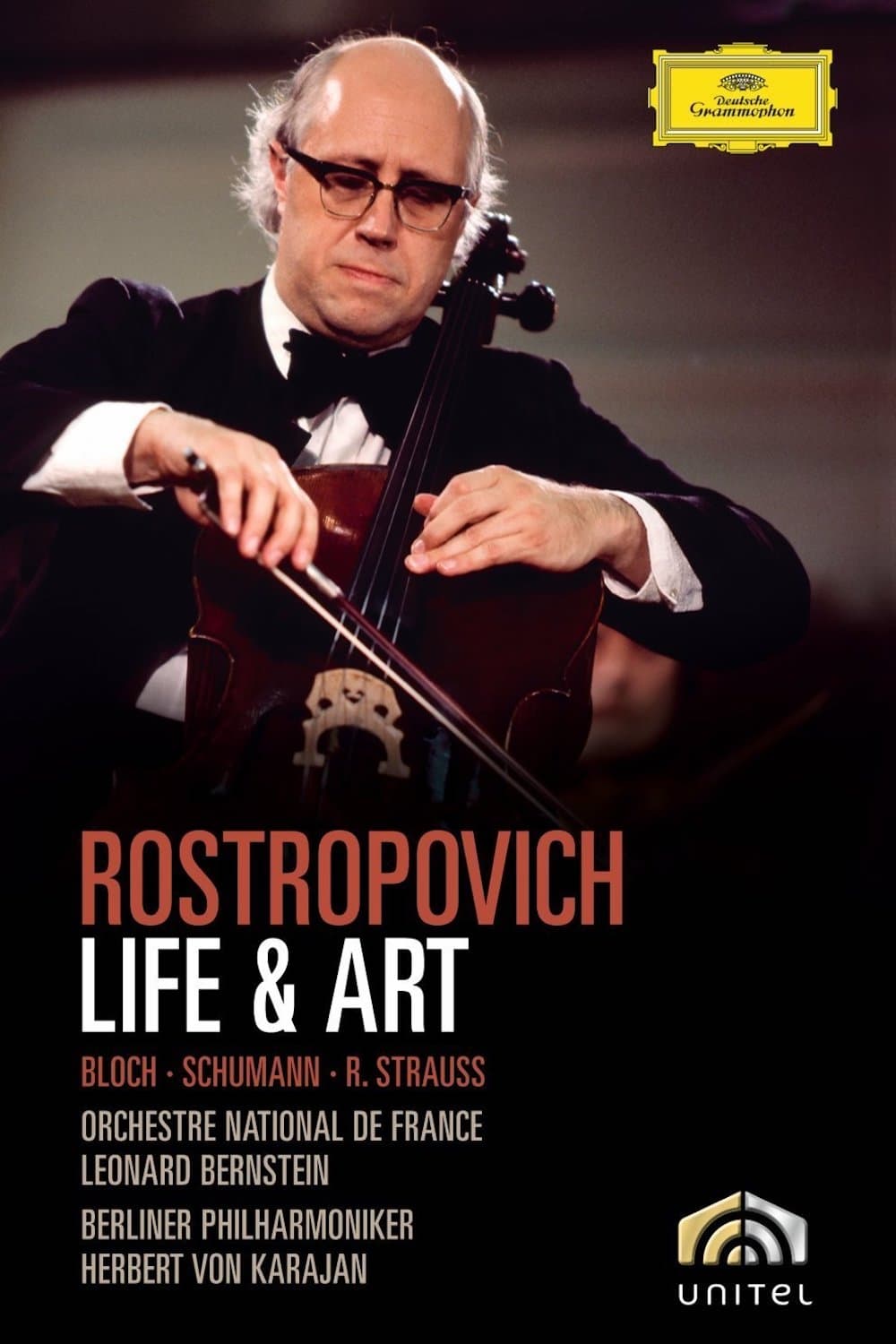
Released as a memorial for the great Russian cellist Mstislav Rostropovich, who passed away on 27 April 2007, this DVD contains one bonafide cello concerto, the Schumann Cello Concerto in A minor, and two tone poems with prominent cello parts, Ernest Bloch's Schelomo and Richard Strauss' Don Quixote. Rostropovich mastered the Schumann in several famous recordings. Here, conducted by Leonard Bernstein, he provides a splendid performance. Featuring his trademark powerful technique, smooth legato and crisp vibrato, the Romantic roots of the concerto are never hidden for long, despite the relatively cool playing of the Orchestre National de France.
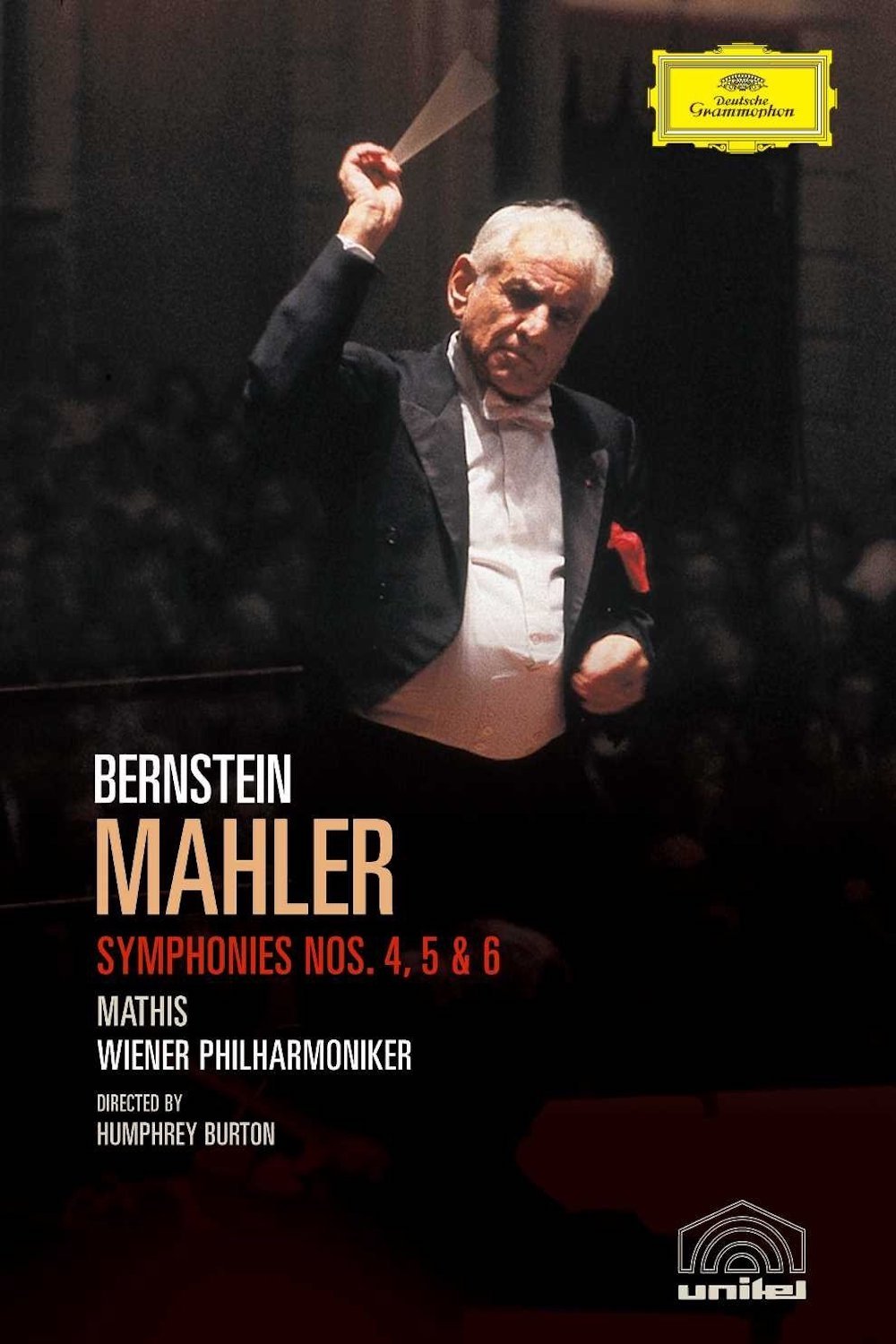
For Mahlerites, his symphonies are much more than musical performances--they can be an emotional or spiritual journey through the struggles, fears, and triumphs of life. This Sixth Symphony is a 1976 performance in the Vienna Musikvereinssaal with PCM stereo and DTS 5.1. The 2 dvd set also includes the 4th and 5th symphonies, which are performed as magnificently as the Sixth.
In the 1960s Karl Böhm (1894–1981) had made his mark as interpreter of Mozart with the the Berlin Philharmonic. Yet his recordings with the Vienna Symphony demonstrate a mutual sympathy and deep love for this timeless music. The musicians are razor-sharp in attack, harmony, and release. Böhm's style is minimalist: a firm downbeat, a ruffled hand here and there, a slight sway, no mugging. Occasionally, when quite excited, he gives a little hop but immediately pulls himself on a tight leash.
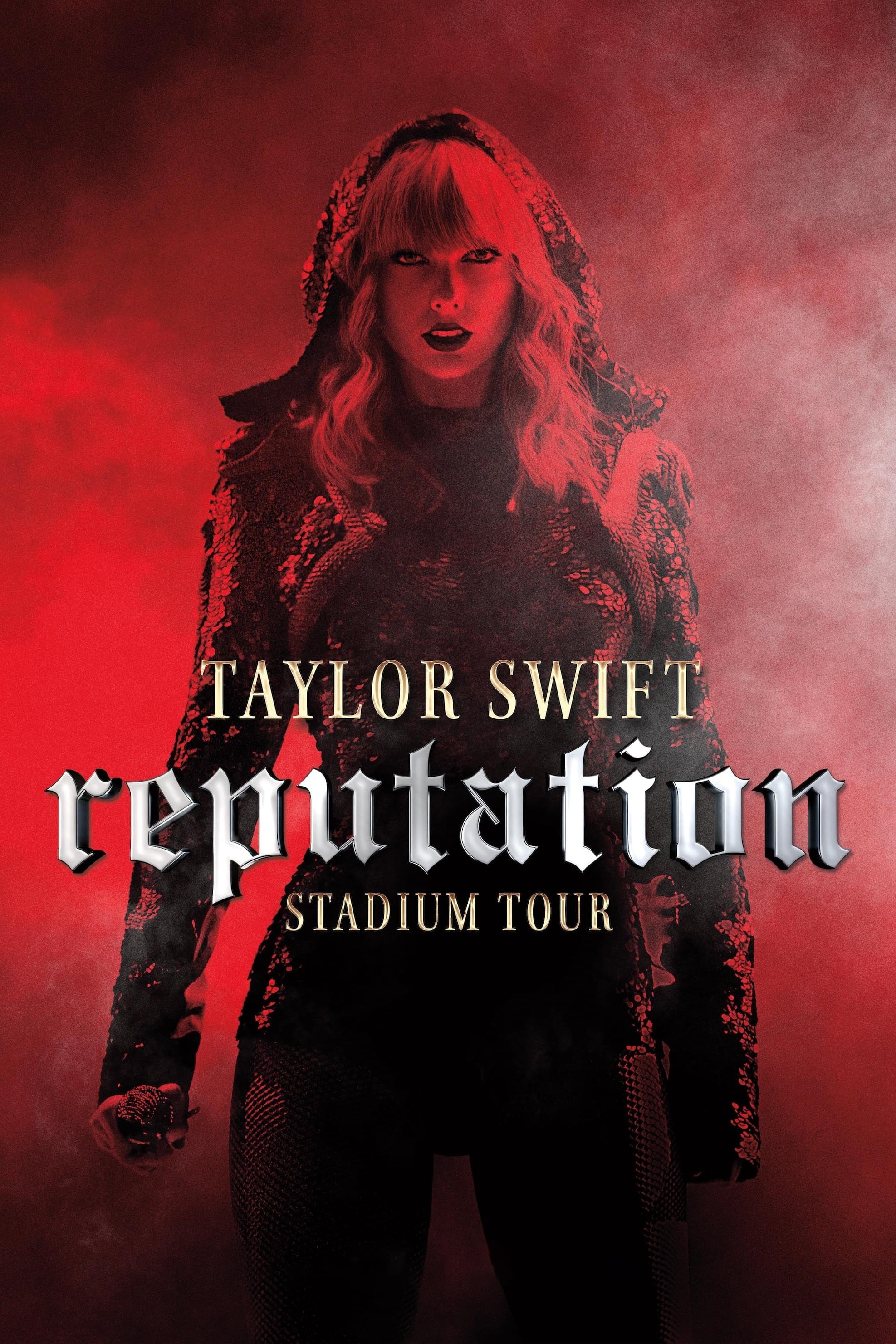
Taylor Swift takes the stage in Dallas for the Reputation Stadium Tour and celebrates a monumental night of music, memories and visual magic.
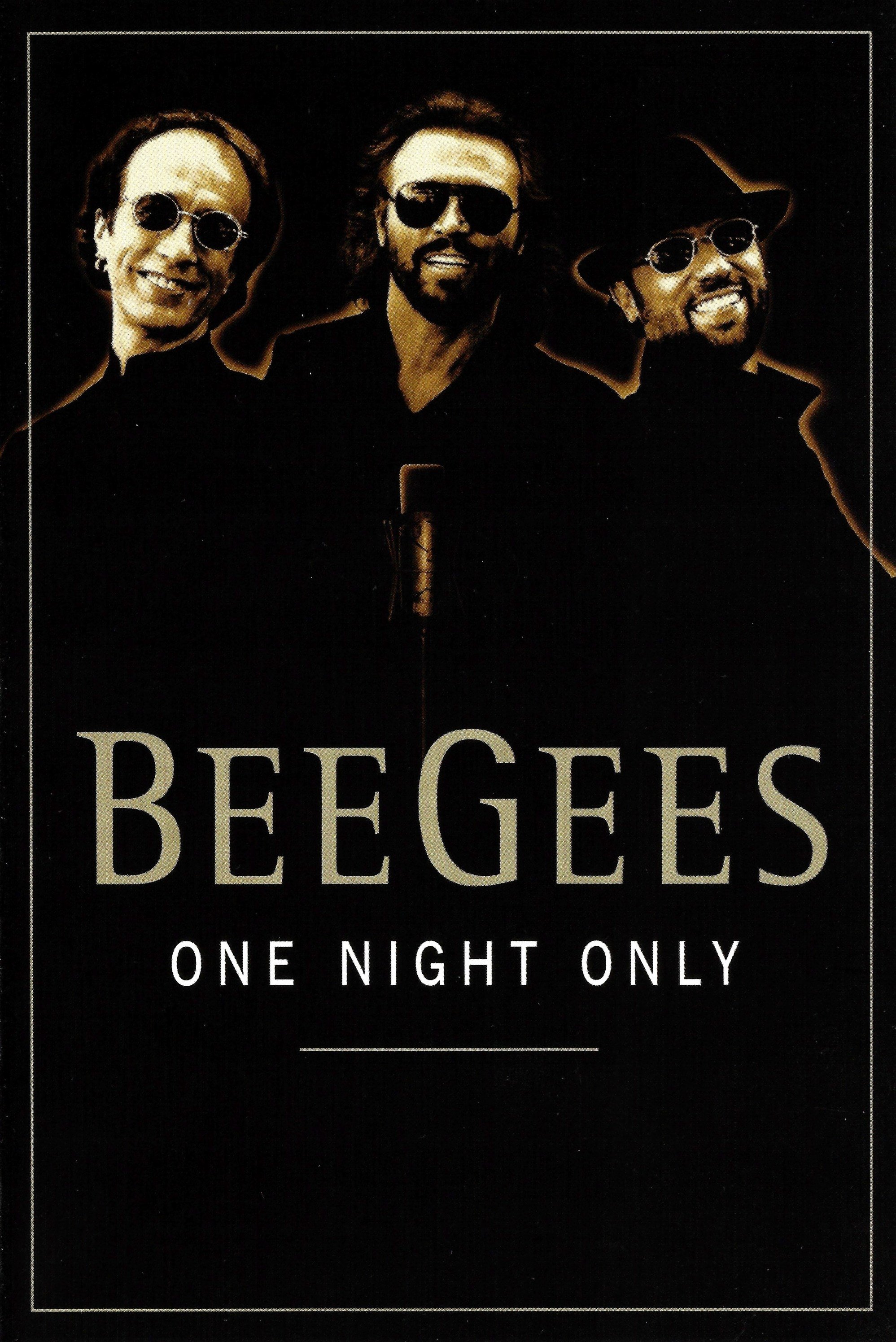
The brothers Gibb perform their greatest hits from the 60's, 70's, 80's and 90's including many songs written for and made hits by other artists but never recorded by the Bee Gees themselves.
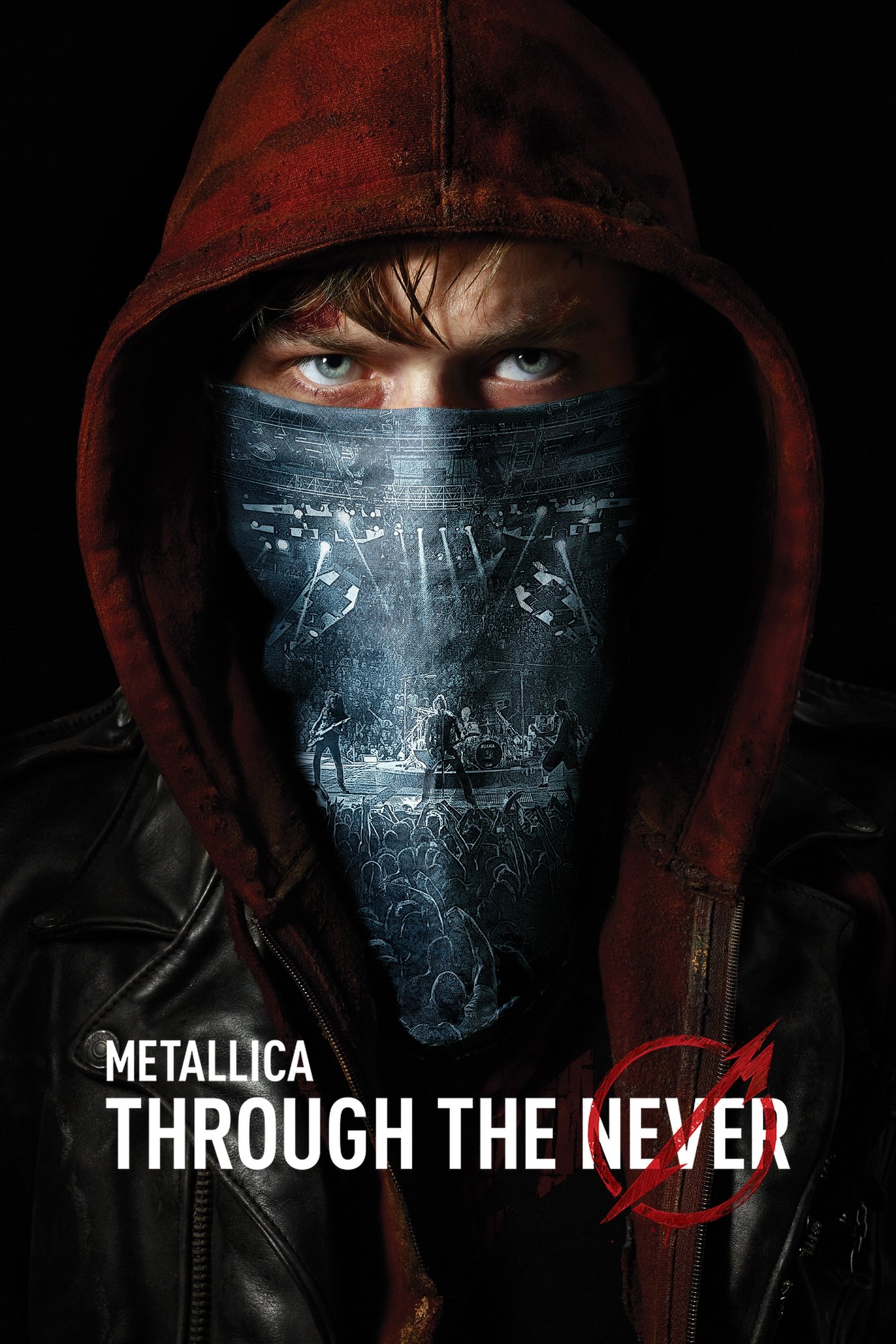
Trip, a young roadie for Metallica, is sent on an urgent mission during the band's show. But what seems like a simple assignment turns into a surreal adventure.
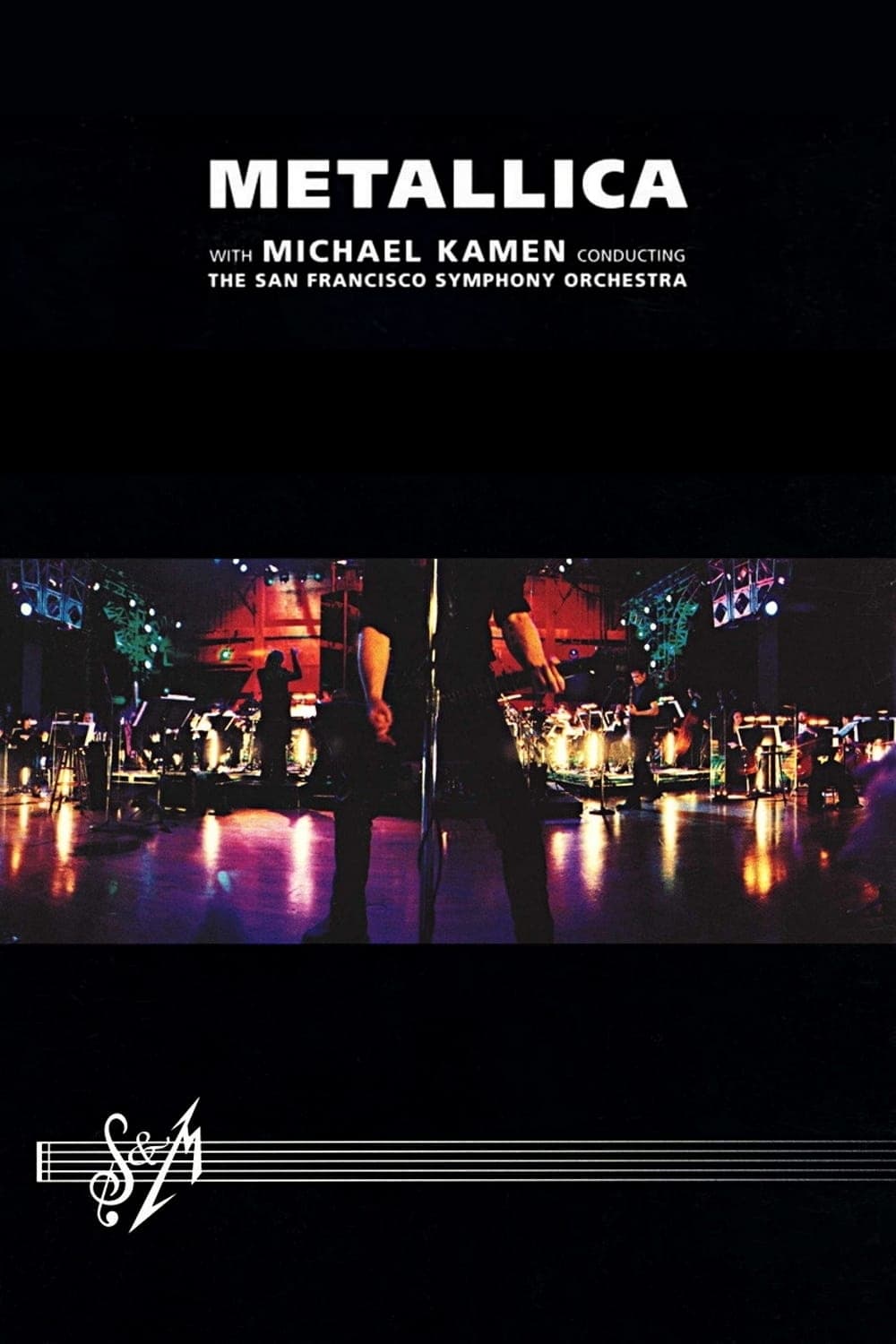
Michael Kamen conducts the San Francisco Symphony Orchestra in support of metal rockers Metallica in this 1999 concert performance.
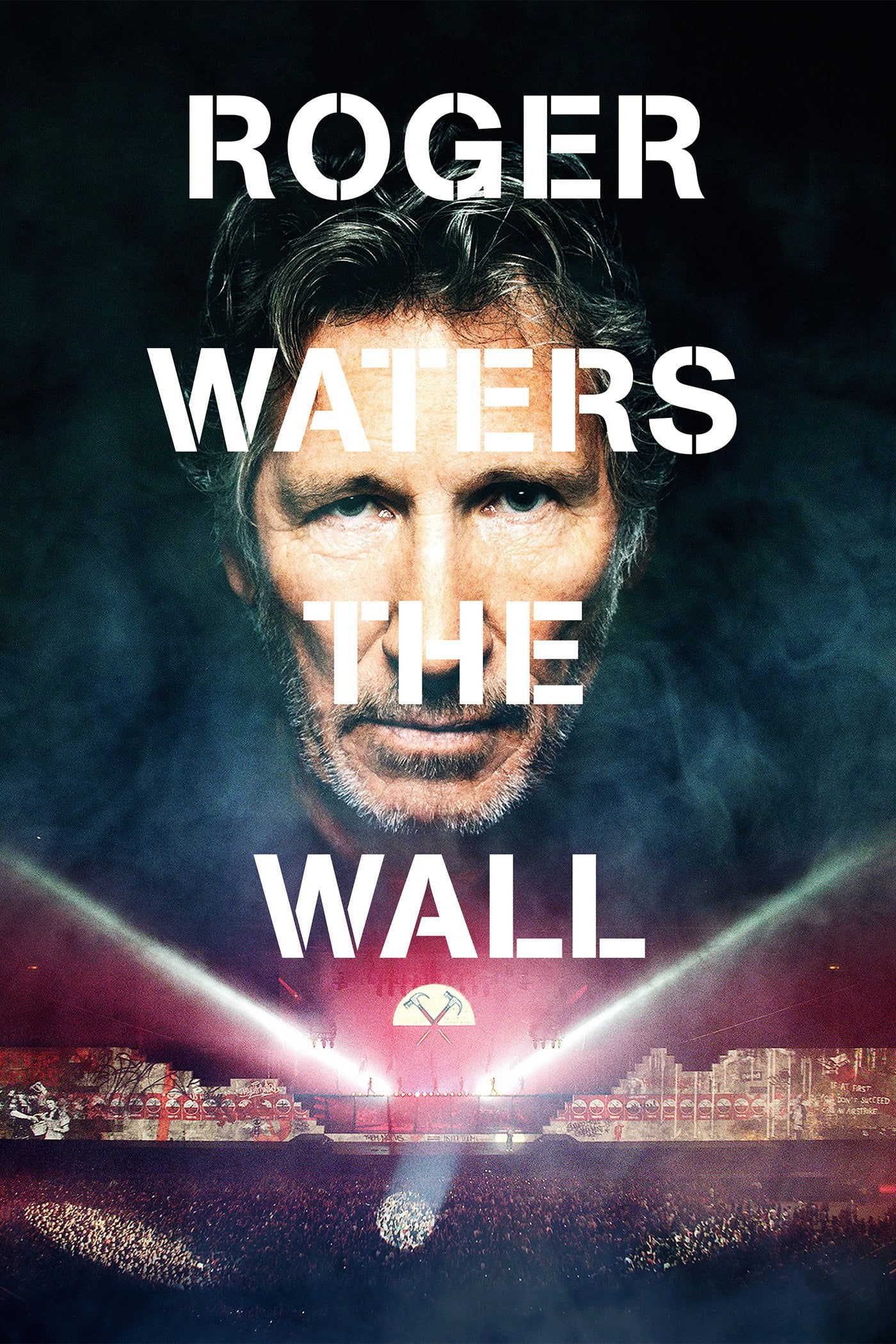
A concert film that the former Pink Floyd singer-songwriter made on various tour dates between 2010 and 2013, when he was playing his former group's 1980 double-album in its entirety.
In this concert film, 'Hannah Montana' star Miley Cyrus performs a slew of hit songs, including 'Just Like You' and 'Life's What You Make It.'
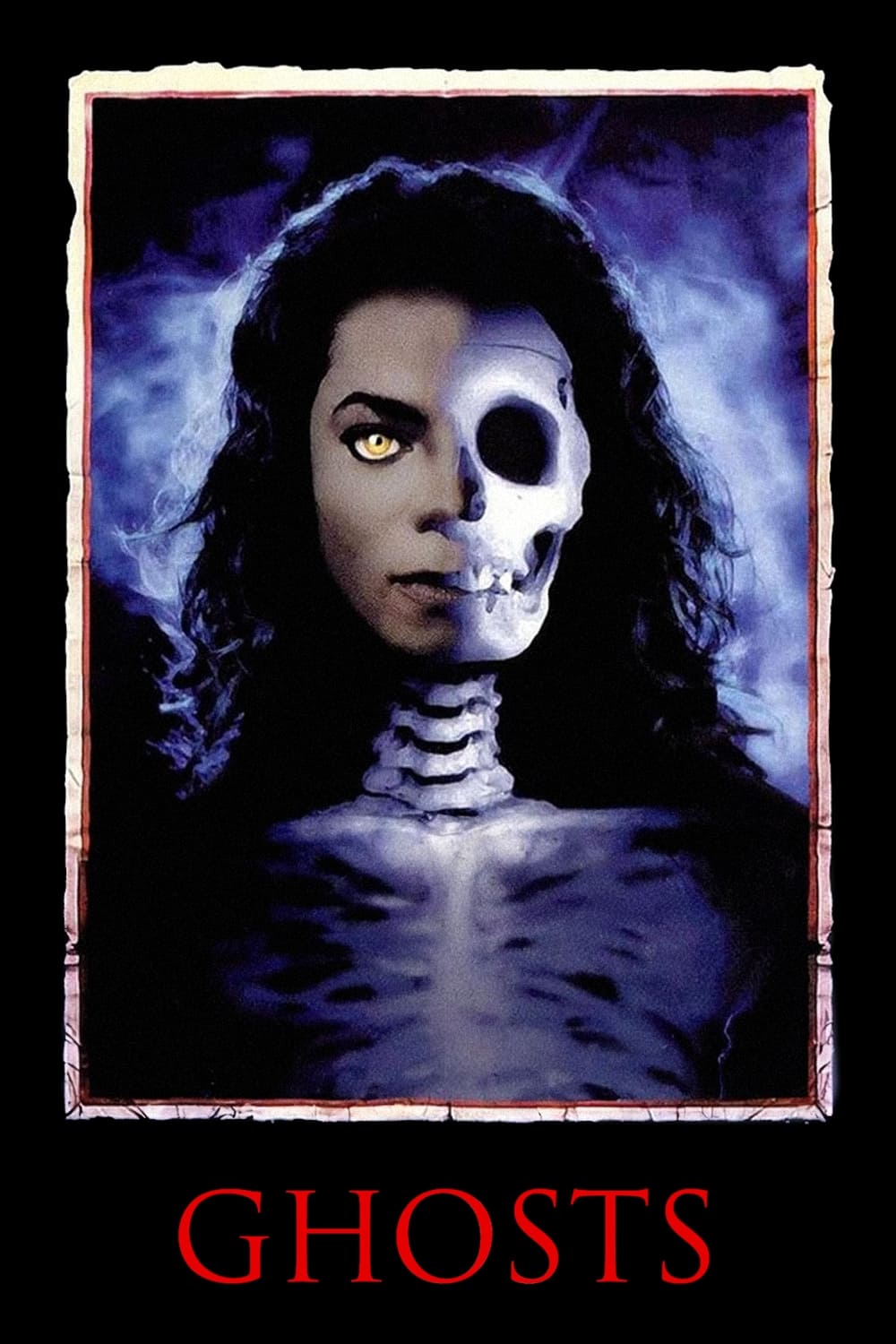
In the town of Normal Valley, an eccentric magician named Maestro entertains the local children every day in his spooky mansion. One stormy night, the town's mayor leads a group of angry citizens to the mansion in an attempt to run Maestro out of town.
A detective is hired to protect the life of a singer, who has recently inherited a department store, from the store's crooked manager.
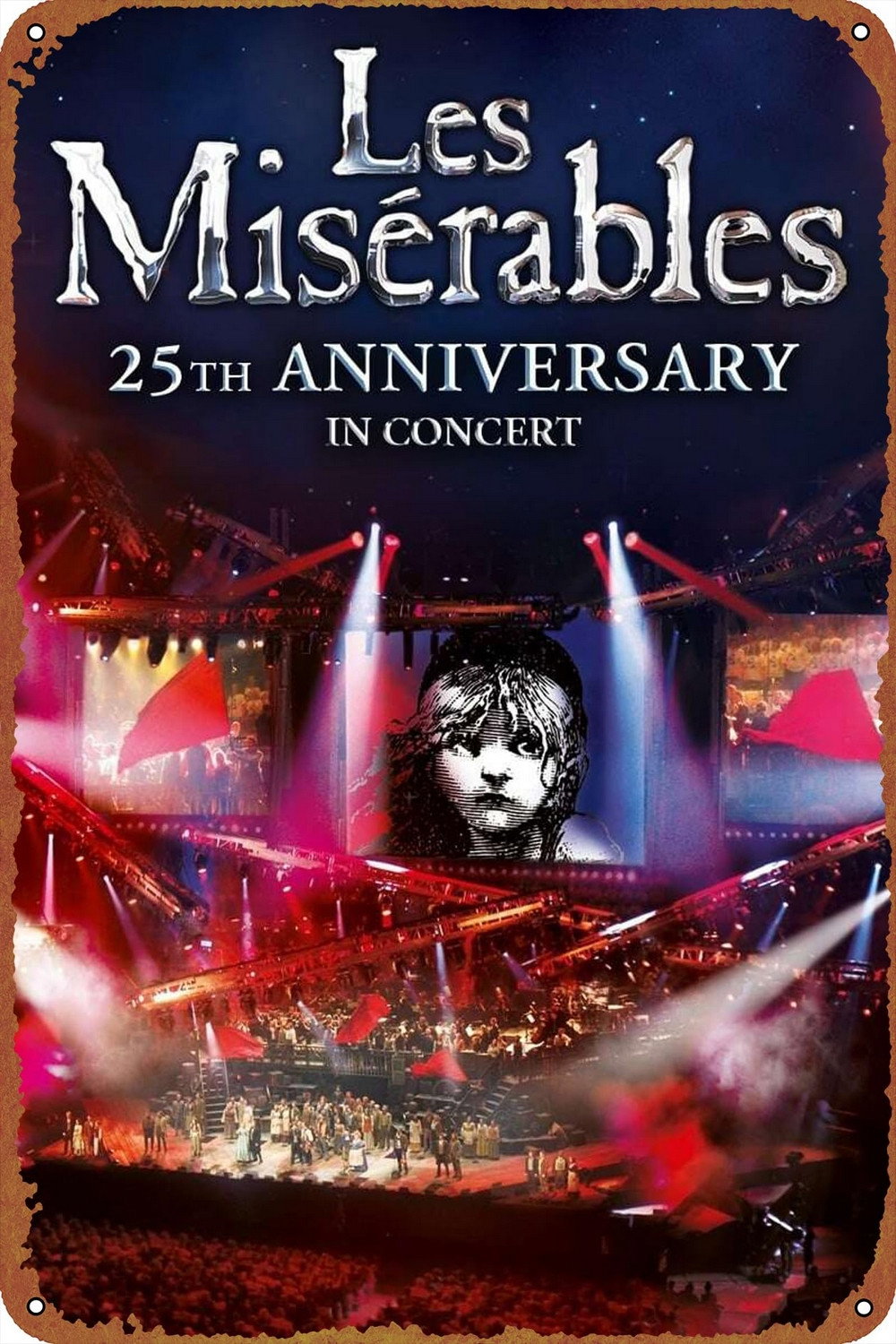
This concert, recorded to celebrate the 25th anniversary of the landmark musical Les Miserables, gathers the casts of the show's 2010 original production at the Queen's Theatre, the 1985 original production by the London company, and the 2010 production at the Barbican together for one performance. Together with talents like Michael Ball, Hadley Fraser, and John Owen-Jones, the performers present the play's musical numbers in a semi-theatrical style, fully costumed and with all the emotion of the musical's heyday.
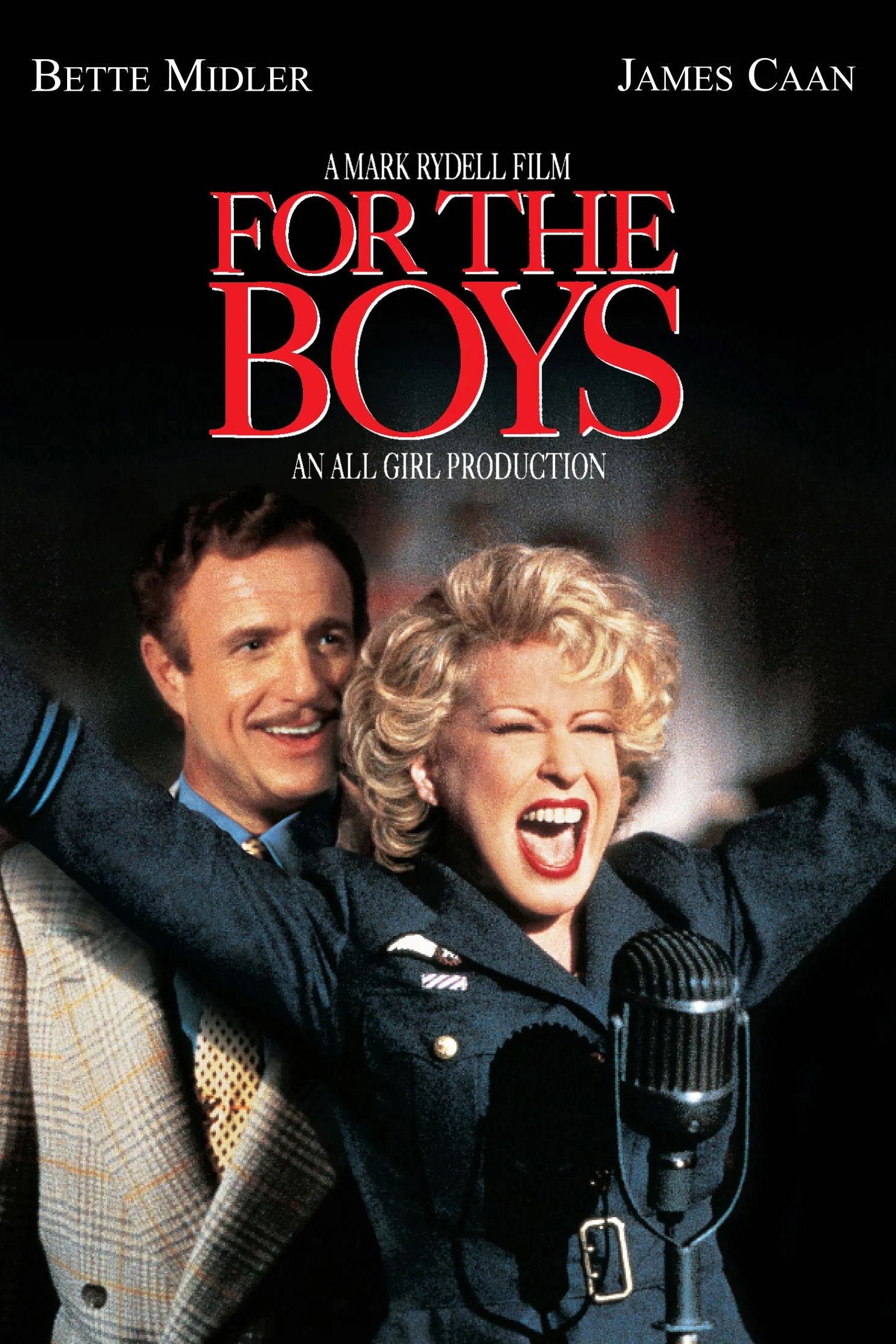
Talented USO entertainer Dixie Leonard and comedian Eddie Sparks deal with their relationship over the course of 5 decades from World War II to the Vietnam War era to their twilight era in the 90's.
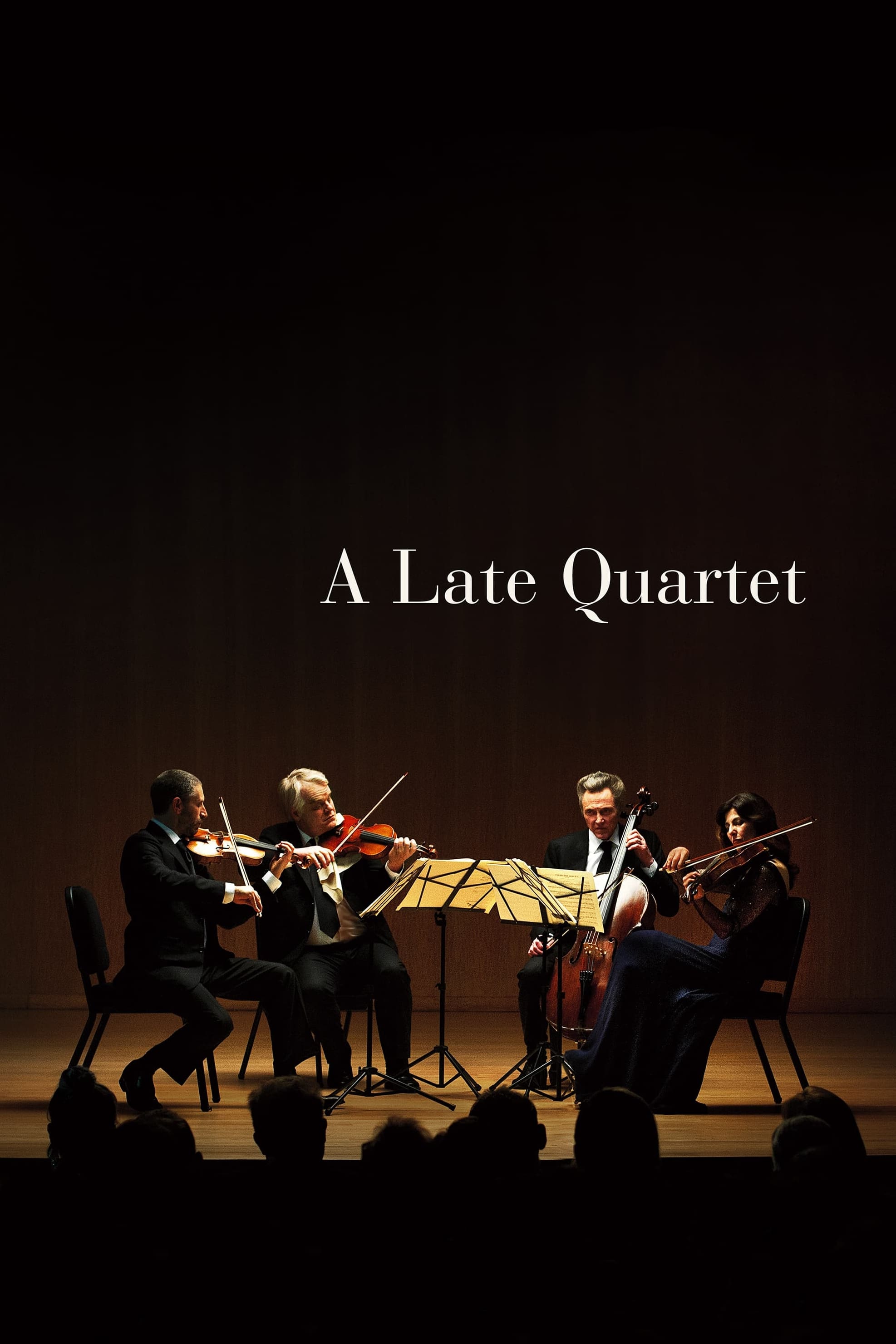
When the beloved cellist of a world-renowned string quartet is diagnosed with a life threatening illness, the group's future suddenly hangs in the balance as suppressed emotions, competing egos and uncontrollable passions threaten to derail years of friendship and collaboration. As they are about to play their 25th anniversary concert — quite possibly their last — only their intimate bond and the power of music can preserve their legacy.
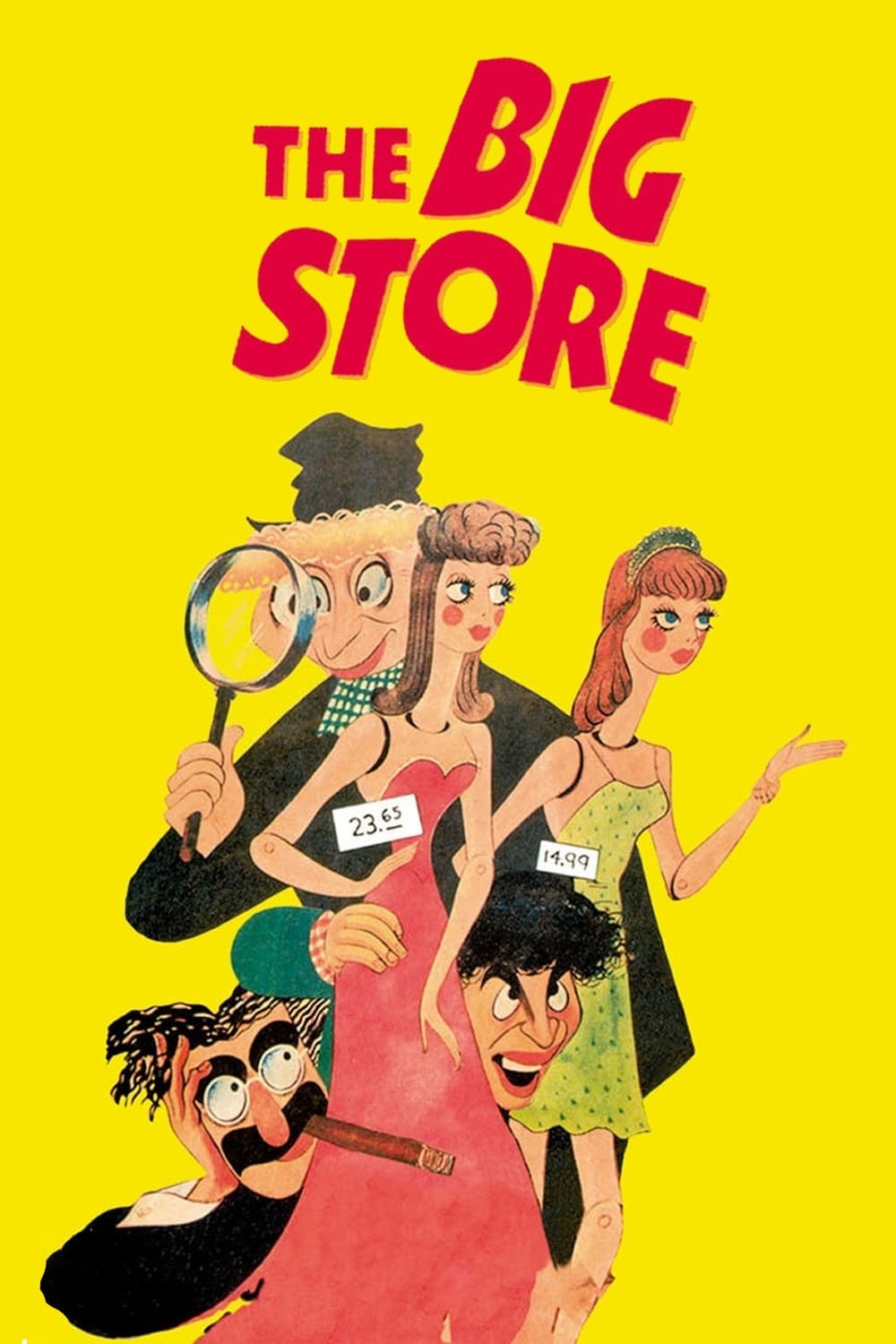
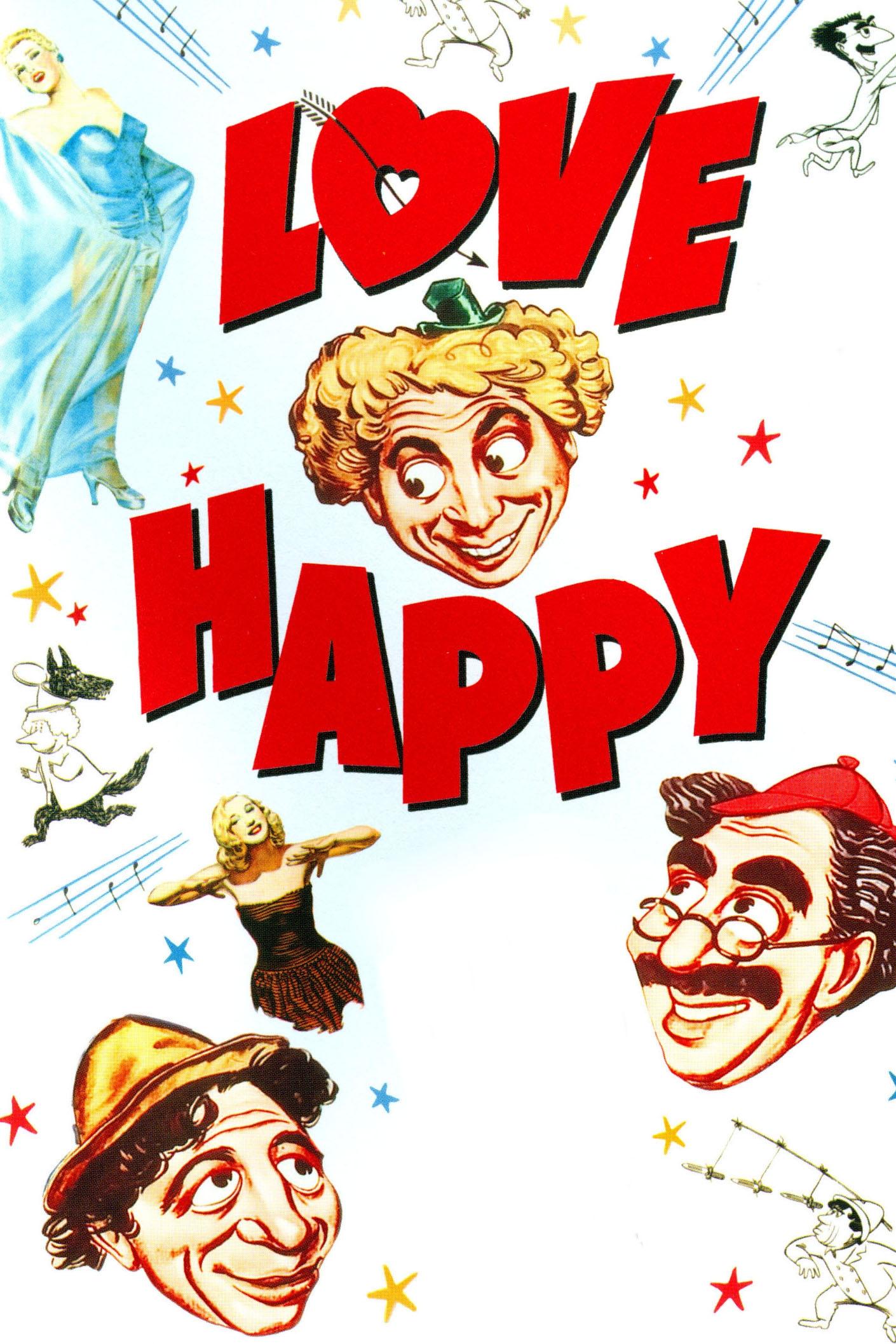
The Marx Brothers help young Broadway hopefuls when they get mixed up with gangsters due to a tin of sardines containing Romanoff diamonds.
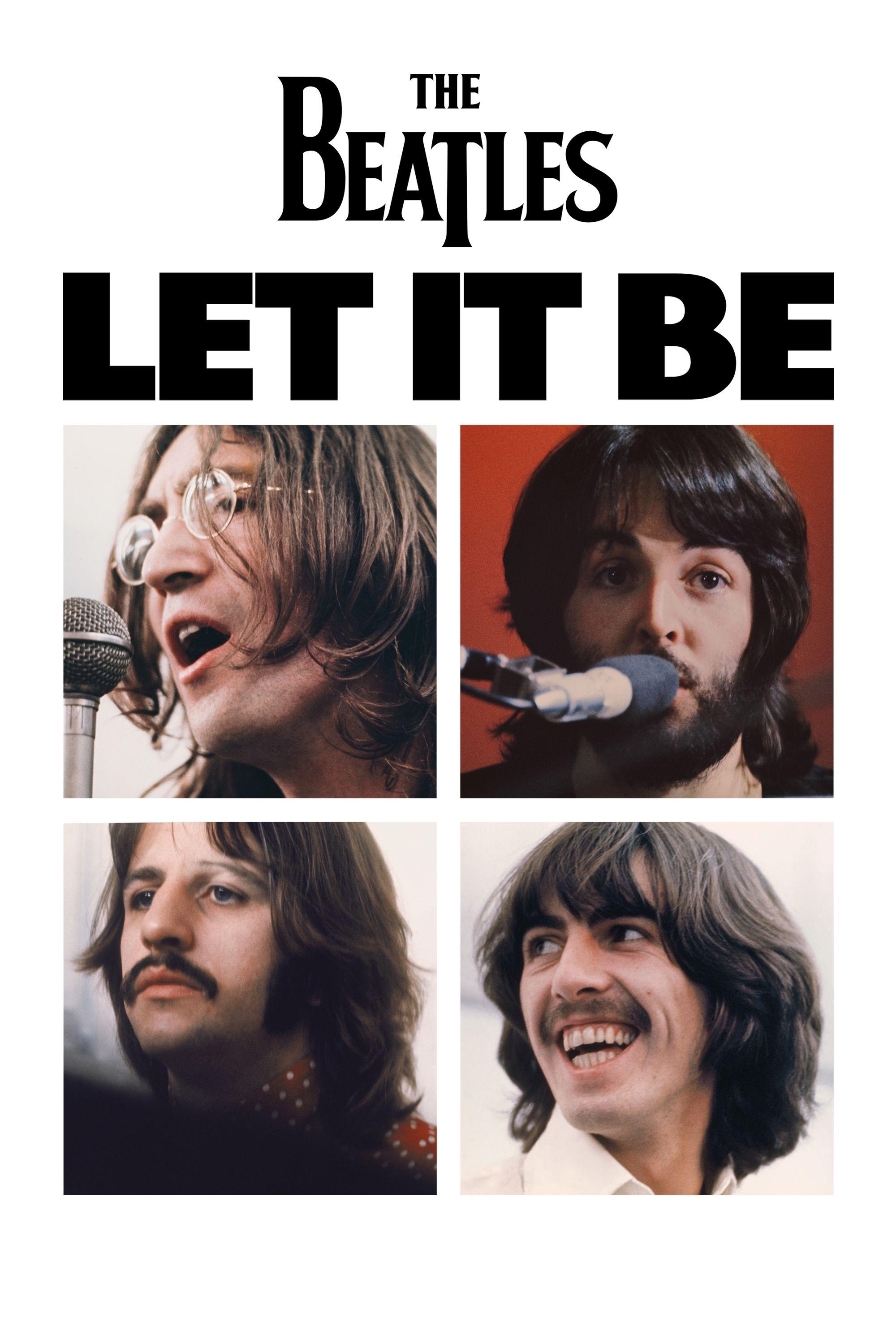
A documentary chronicling the Beatles' rehearsal sessions in January 1969 for their proposed "back to basics" album, "Get Back," later re-envisioned and released as "Let It Be."
A musical biopic of the Four Seasons—the rise, the tough times and personal clashes, and the ultimate triumph of a group of friends whose music became symbolic of a generation. Far from a mere tribute concert, it gets to the heart of the relationships at the centre of the group, with a special focus on frontman Frankie Valli, the small kid with the big falsetto.
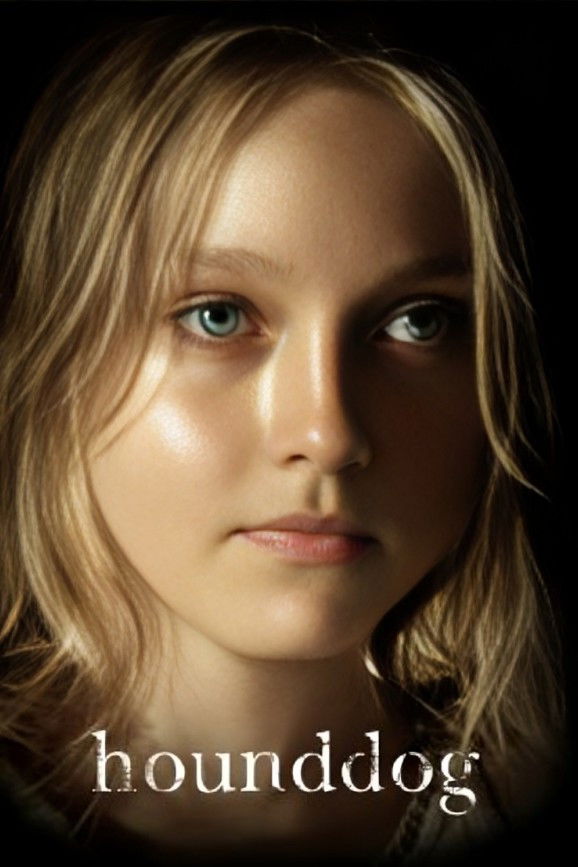
A drama set in the American South, where a precocious, troubled girl finds a safe haven in the music and movement of Elvis Presley.
Live Aid was held on 13 July 1985, simultaneously in Wembley Stadium in London, England, and the John F. Kennedy Stadium in Philadelphia, United States. It was one of the largest scale satellite link-ups and television broadcasts of all time: watched live by an estimated global audience of 1.9 billion, across 150 nations. "It's twelve noon in London, seven AM in Philadelphia, and around the world it's time for Live Aid...!"
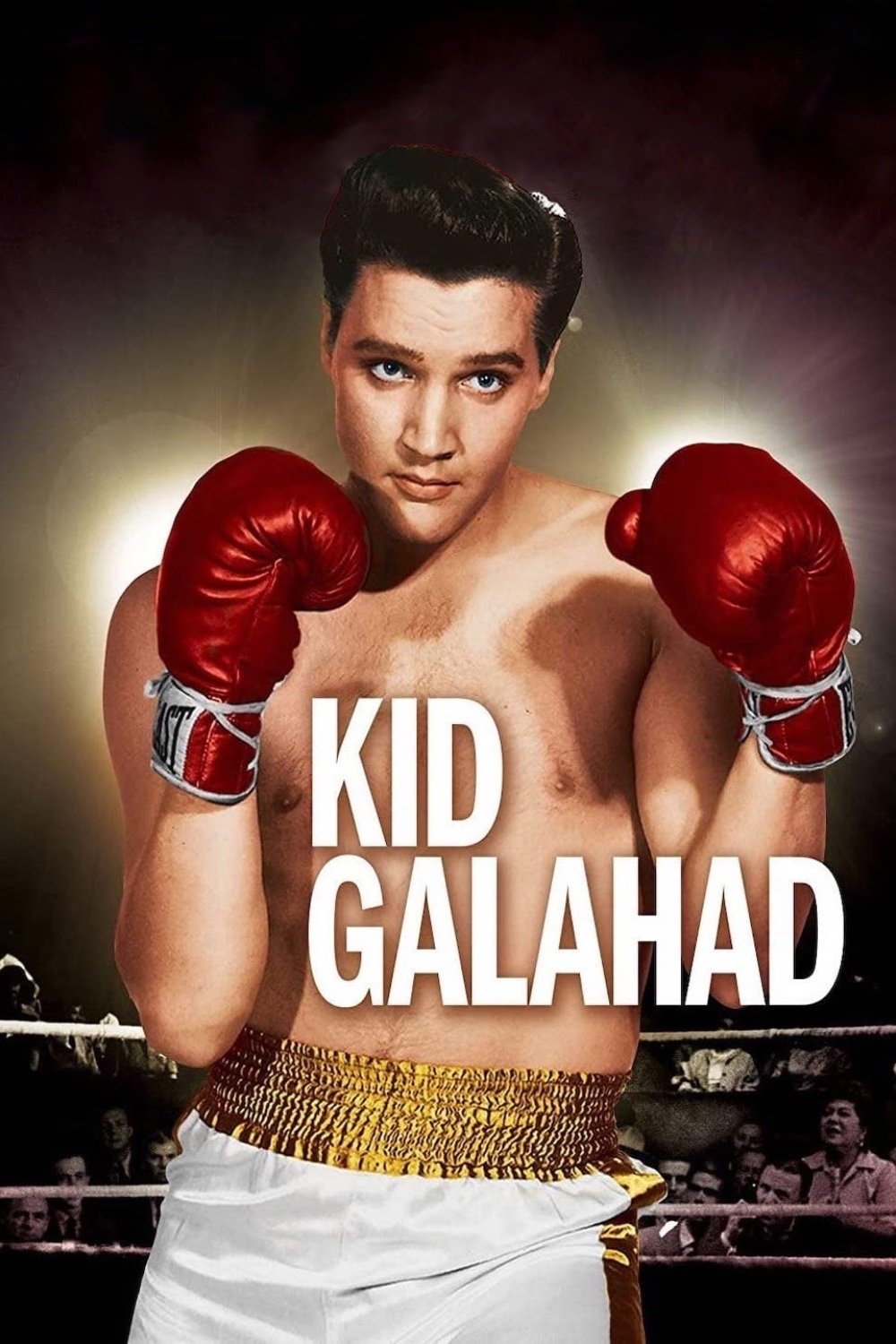
After completing military service, Walter Gulick takes a job as a sparring partner at a gym, the owner of which sees potential in Walter as a professional fighter—and takes him under his wing.
Hans Zimmer is one of the most successful film music composers working today. His multi-award winning career reaches back to the mid-eighties and he has developed close working relationships with renowned directors such as Ridley Scott, Tony Scott, Michael Bay, Ron Howard, Gore Verbinski and Christopher Nolan. His credits include some of the biggest blockbuster movies of all time along with acclaimed TV series such as The Crown and Planet Earth II. This concert was filmed on 7th May 2016 in Prague during Hans Zimmer’s hugely successful European concert tour. Hans was accompanied by a band, orchestra and choir, 72 musicians in total, including guitarist Johnny Marr. The staging was spectacular with a ground breaking light show, stunning visuals and a state of the art sound system. Hans Zimmer performs on multiple instruments and gives introductory insights to many of the pieces during the concert. This show is a treat for lovers of both great music and great movies.
Ghost is an ideological musician and leader of a jazz band who would rather play his blues in the park to the birds than compromise himself. His peripatetic performances lead him to cross paths with a singer, while his masculinity is thrown into question following a violent brawl.
Americans Jeff and Tommy, hunting in Scotland, stumble upon a village - Brigadoon. They soon learn that the town appears once every 100 years in order to preserve its peace and special beauty. The citizens go to bed at night and when they wake up, it's 100 years later. Tommy falls in love with a beautiful young woman, Fiona, and is torn between staying or going back to his hectic life in New York.