Social & External
The people behind it
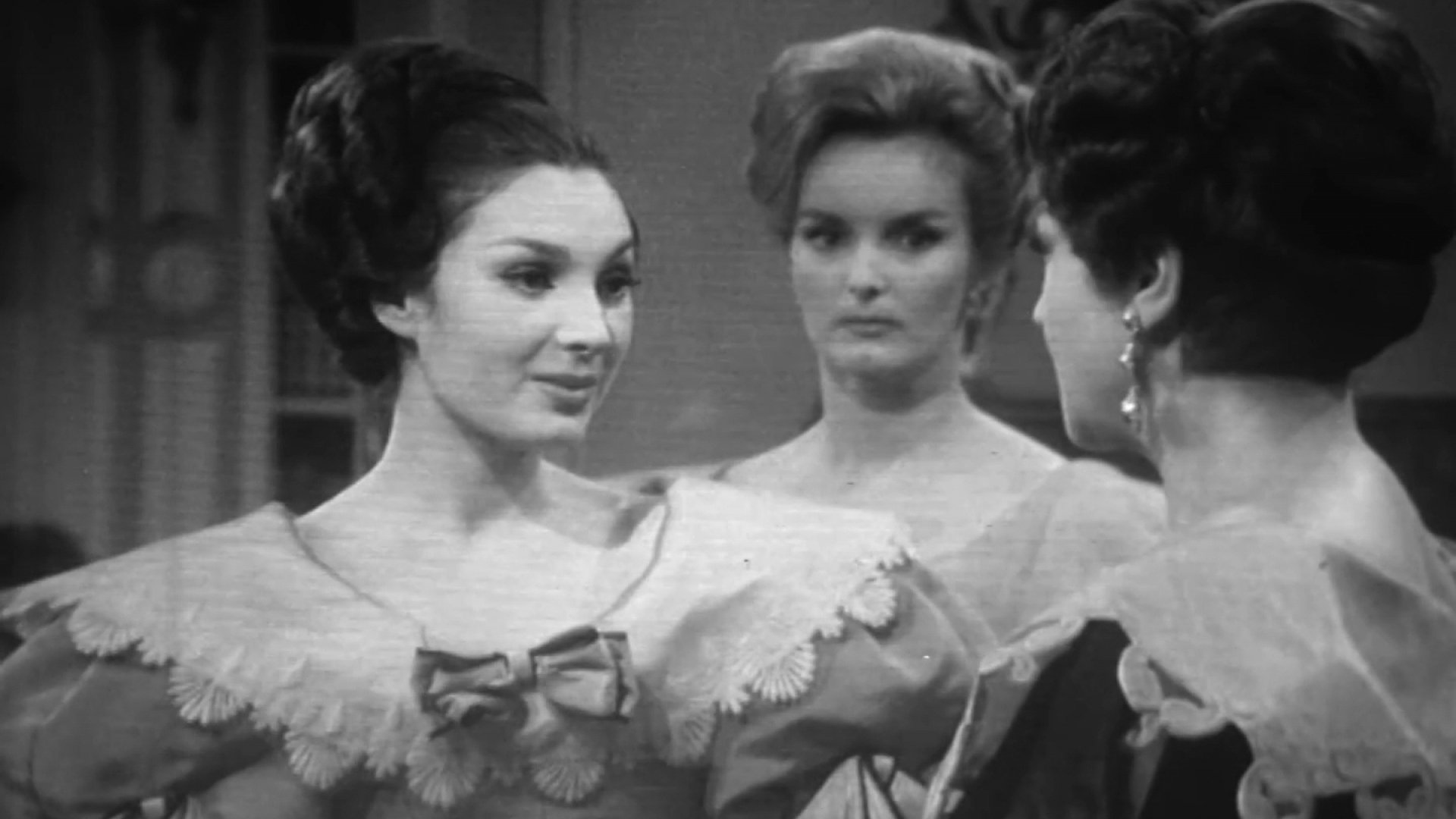
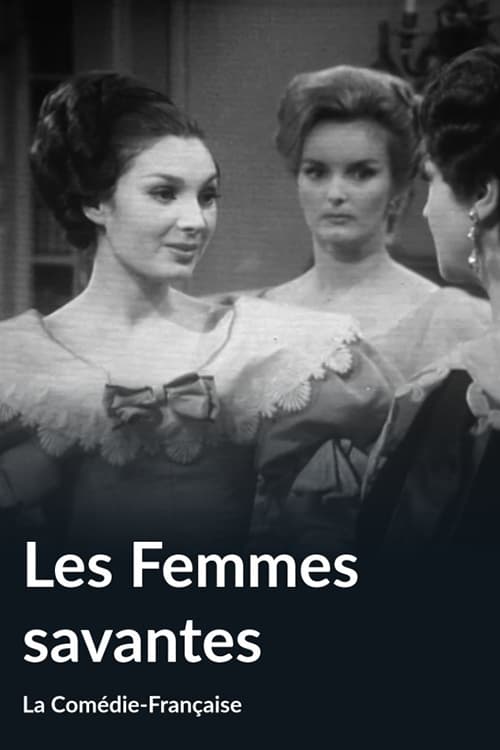
Georges Chamarat
Vadius
Jacques Eyser
Ariste
Jacques Toja
Clitandre
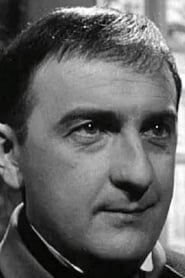
Bernard Dhéran
Trissotin
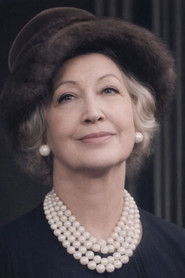
Lise Delamare
Philaminte
Claire Vernet
Henriette
Catherine Samie
Martine
Marthe Alycia
Bélise
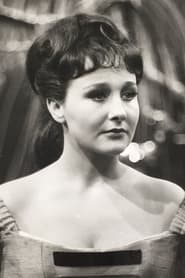
Myriam Feune de Colombi
Armande
In a theatre dressing room, a young woman talks to her lover, a successful actor
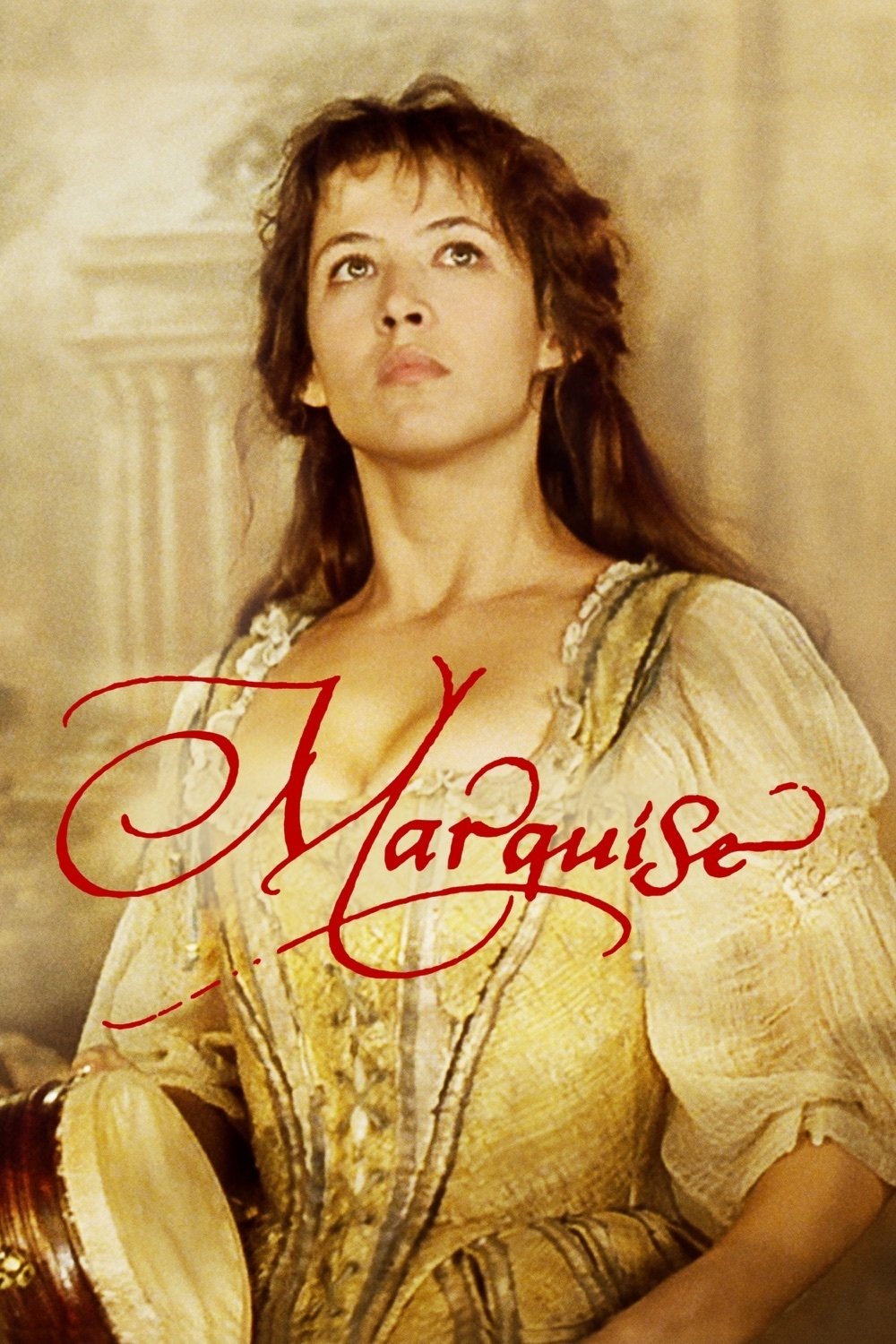
Marquise is a drama about the rise and fall of a beauteous actress. As cheerfully portrayed by Sophie Marceau, the eponymous heroine is an engagingly ribald, but perhaps rather too modern, character. She rises from an impoverished background to become a favourite of the Sun King, Louis XIV, and the mistress of the celebrated Racine, who wrote roles especially for her; but her fate, in the end, is a tragic one.
A return to its roots for Castor et Pollux, Jean-Philippe Rameau’s lyric tragedy first performed in 1737 at the Académie royale and inspired by the mythological episode of the Gemini. Rarely performed in its original version – the score was reworked by Rameau himself in 1754 –, this daring work plays on contrasts and expressiveness, as in the famous “Tristes apprêts”. The aria is sung by Télaïre mourning the death of her fiancé Castor, killed in battle, before his twin brother Pollux descends into the Underworld to ask his father, Jupiter, to bring him back to life. While this opera celebrates brotherly love, its prologue poses an essential question for director Peter Sellars: how do you stop a war and its attendant hatred and resentment?
Subversive hero or vile predator? Don Juan has appeared throughout history in many guises. Macha Makeïeff highlights the psychological and societal aspects of the character: desire, domination, and human darkness, which she contrasts with liberating and destructive laughter.
In the Garden of the New People's Theater Overview They wanted to create a theater that reflected their own vision, a freer theater, closer to its audience. So they built a wooden stage under the benevolent shade of a twisted church steeple, in the garden of a small village in Maine-et-Loire, Fontaine-Guérin. And the dream of a New People's Theater took shape amidst the fields. This is the story of a generation of actors in their thirties who have grown old together and who, ten years later, are realizing the audacity and fragility of their dream. For its tenth season, the company tackles Balzac's *Human Comedy* and plunges us into the torments and illusions of their lives as artists through the outlandish tale of Lucien de Rumbempré, a young poet who dreams of going to Paris. How can an artist avoid losing their soul? Therein lies the inner conflict. Xavier Liébard Director, Writer
The fortunes of a small theatrical company based in the Paris suburbs.
Praised at the Théâtre du Rond-Point, dedicated to Molières 2019 by Molière for directing for Mathilda May, and for female revelation with Ariane Mourier, Le Banquet is a singular, strong, surprising and universal show. A wedding where everything goes wrong, a banquet where everything suddenly shatters. Without words but in a universal language, the characters love each other, confront each other, meet again, and get lost in a funny and hectic whirlwind. After the immense success of Open Space and when Mr. X was created with Pierre Richard, Mathilda May continues to make us dream and presents us here with a unique fresco. An exceptional spectacle.
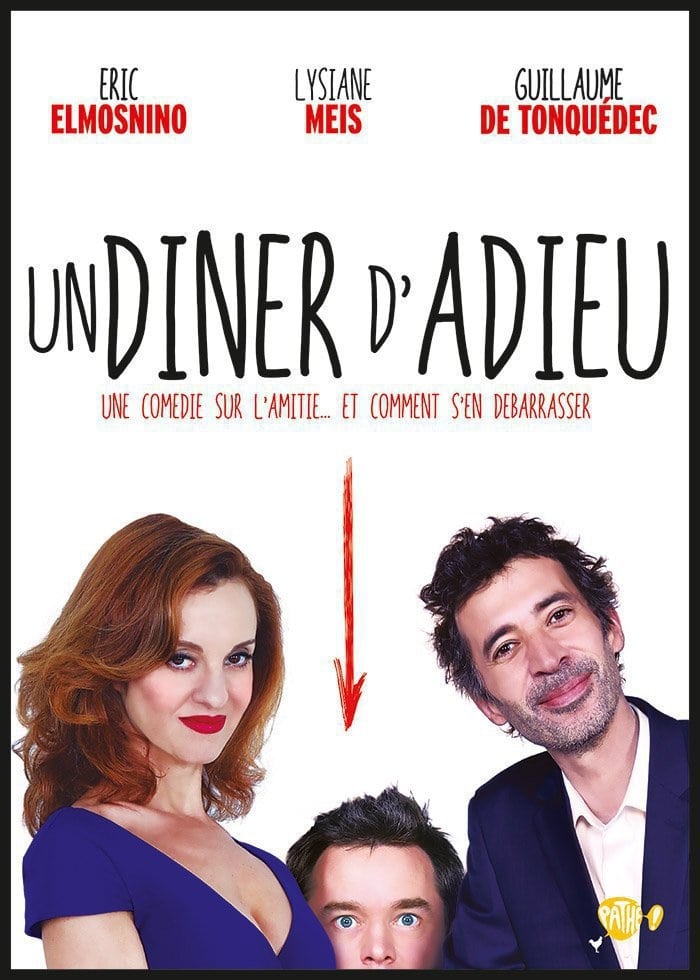
Why do we often go to dinners we don't want to attend, to see friends who aren't really friends anymore? Out of habit? Out of kindness? Out of cowardice? Intoxicated by the idea of tidying up their schedules by sorting through their old friends, Pierre and Clotilde Lecoeur (played by ERIC ELMOSNINO and LYSIANE MEIS) decide to organize farewell dinners, the ultimate form of friendly divorce. However, by choosing - as their first victim - Antoine Royer (played by GUILLAUME DE TONQUÉDEC), their oldest friend, Pierre and Clotilde are unaware that they are getting caught up in a downward spiral.
Charlie wants to present his first creation on stage, but the memories and comments about his choices run through his head.
Tartuffe is a hypocritical impostor who manages to manipulate Orgon, a wealthy widowed bourgeois, by feigning devotion. Orgon ends up offering his daughter Mariane in marriage to Tartuffe, while he disowns his son Damis and intends to donate all his possessions to Tartuffe. Elmire, Orgon's young wife, whom Tartuffe is courting, will attempt to expose him, while the royal family intervenes to prevent the ruin of Orgon's family.
Serge Tanneur is at the pinnacle of his acting career when he decides to turn his back on show business and become a hermit living off of France’s Atlantic coast. Three years later, Gauthier Valence, a beloved TV actor, shows up on the island to offer Serge a role in his directorial debut – a rendition of Molière’s classic play, “The Misanthrope”. Serge refuses at first, but then suggests that they rehearse the first scene and after five days he’ll decide if he wants to dothe play or not. What ensues is a battle of brawn and wits and peculiar encounters with a hotel maid who longs to be a pornstar and an Italian divorcée.
Molière, a down-and-out actor-cum-playwright up to his ears in debt. When the wealthy Jourdain offers to cover that debt so that Molière's theatrical talents might help Jourdain win the heart of a certain widowed marquise, hilarity ensues.
Hired to helm an Americanized take on a British play, director Lloyd Fellowes does his best to control an eccentric group of stage actors. With a star actress quickly passing her prime, a male lead with no confidence, and a bit actor that's rarely sober, chaos ensues in the lead up to a Broadway premiere.
At the end of the 1980s, Stella, Victor, Adèle and Etienne are 20 years old. They take the entrance exam to the famous acting school created by Patrice Chéreau and Pierre Romans at the Théâtre des Amandiers in Nanterre. Launched at full speed into life, passion, and love, together they will experience the turning point of their lives, but also their first tragedy.
In occupied Paris, an actress wed to a Jewish theater owner must keep him hidden from the Nazis while doing both of their jobs.
At the Comédie-Française, there is one golden rule: the play is never canceled. Unfortunately for Nina, everything else is—just three hours before the premiere of her first staging. An actor is stuck on a train, tensions explode, equipment breaks down, egos clash, and panic sets in. With no way out and time slipping away, Nina must hold the show together at all costs. Will she make it until the curtain rises?
After failing to make it on Broadway, April returns to her hometown and reluctantly begins training a misfit group of young dancers for a competition.
A broadway playwright is burning the candle at both ends. He is dealing with pressure from a production nearing premiere, a wife who is leaving him, and 5 children 4 of which belong to her.
Two delusional geriatrics reveal curious pasts, share a love of tuna and welcome a surprise guest in this filming of the popular Broadway comedy show.
A spirited heiress wishing to break into theatre on her own merit arrives at a boardinghouse where aspiring young actresses and showgirls are brought together through their cynicism and disappointments.
A sweeping multigenerational story set against the backdrop of the raw, roaring New York City of the late 1980s; adoption, teen pregnancy, drugs, hardcore punk rock, the unbridled optimism and reckless stupidity of the young—and old—are all major elements in this heart-aching tale of the son of diehard hippies and his strange odyssey through the extremes of late 20th century youth culture.
Humble Maria, who outfits top London theater star Ned Kynaston, takes none of the credit for the male actor's success at playing women. And because this is the 17th century, Maria, like other females, is prohibited from pursuing her dream of acting. But when powerful people support her, King Charles II lifts the ban on female stage performers. And just as Maria aided Ned, she needs his help to learn her new profession.
The film tells the story of two boys who become friends at the start of the Troubles in 1970. The boys share an obsession with Butch Cassidy and the Sundance Kid, with the consequence that they run away to Australia.
The Marx Brothers help young Broadway hopefuls when they get mixed up with gangsters due to a tin of sardines containing Romanoff diamonds.
When all Broadway shows are shut down during the Depression, a trio of desperate showgirls scheme to bilk a repugnant high society man of his money to keep their show going.
Filmed live on Broadway, the Tony Award-winning musical tells the remarkable true story of 38 flights grounded in a small Canadian town on September 11, 2001. As the locals host these “come from aways,” they come together and find hope.
Against the backdrop of 18th century England, a massive pox outbreak, and Jacobite uprising – Sir Chauncey Savage and Lady Savage blindly pursue a better life. It's not without a tinge of irony that their family name is the Savages, for this is a Savage House indeed, filled with duels, decadence, and bloodshed.
January 1942, in Nazi-occupied Poland during World War II. Thousands of Jews have been confined to the Warsaw ghetto for more than a year. Outside, life goes on; inside, they struggle to survive another day. Still, on a cold winter night, a group of Jewish actors manage to stage a lively musical comedy.
From the moment she glimpses her idol at the stage door, Eve Harrington is determined to take the reins of power away from the great actress Margo Channing. Eve maneuvers her way into Margo's Broadway role, becomes a sensation and even causes turmoil in the lives of Margo's director boyfriend, her playwright and his wife. Only the cynical drama critic sees through Eve, admiring her audacity and perfect pattern of deceit.
An aging King invites disaster, when he abdicates to his corrupt, toadying daughters, and rejects his loving and honest one.