The film records a middle-aged woman Han Mei who longs for life. In the fight against the disease, the experience makes her redefine the meaning of life...
Social & External
The people behind it
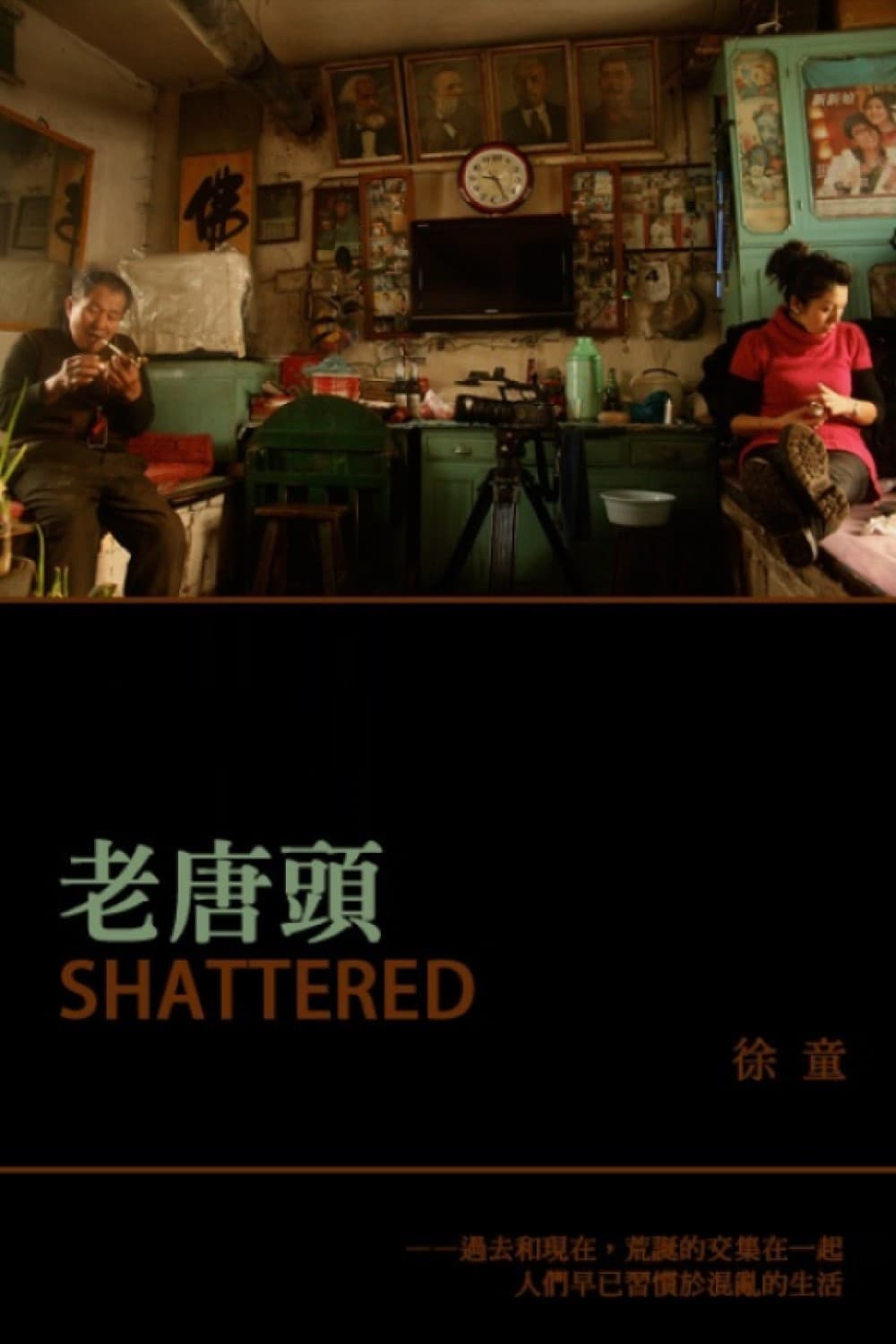
Hakka, a special and little-known ethnic group in Hainan, is a branch of the Chinese Hakka system that has been neglected. They are far from the mainland, and they are rarely mentioned. The relatively closed environment has allowed the Central Plains culture to be completely preserved. After that, it has formed a special change with the ethnic minorities such as Li Miao. However, this unique traditional culture is now fading away in the erosion of modern civilization.
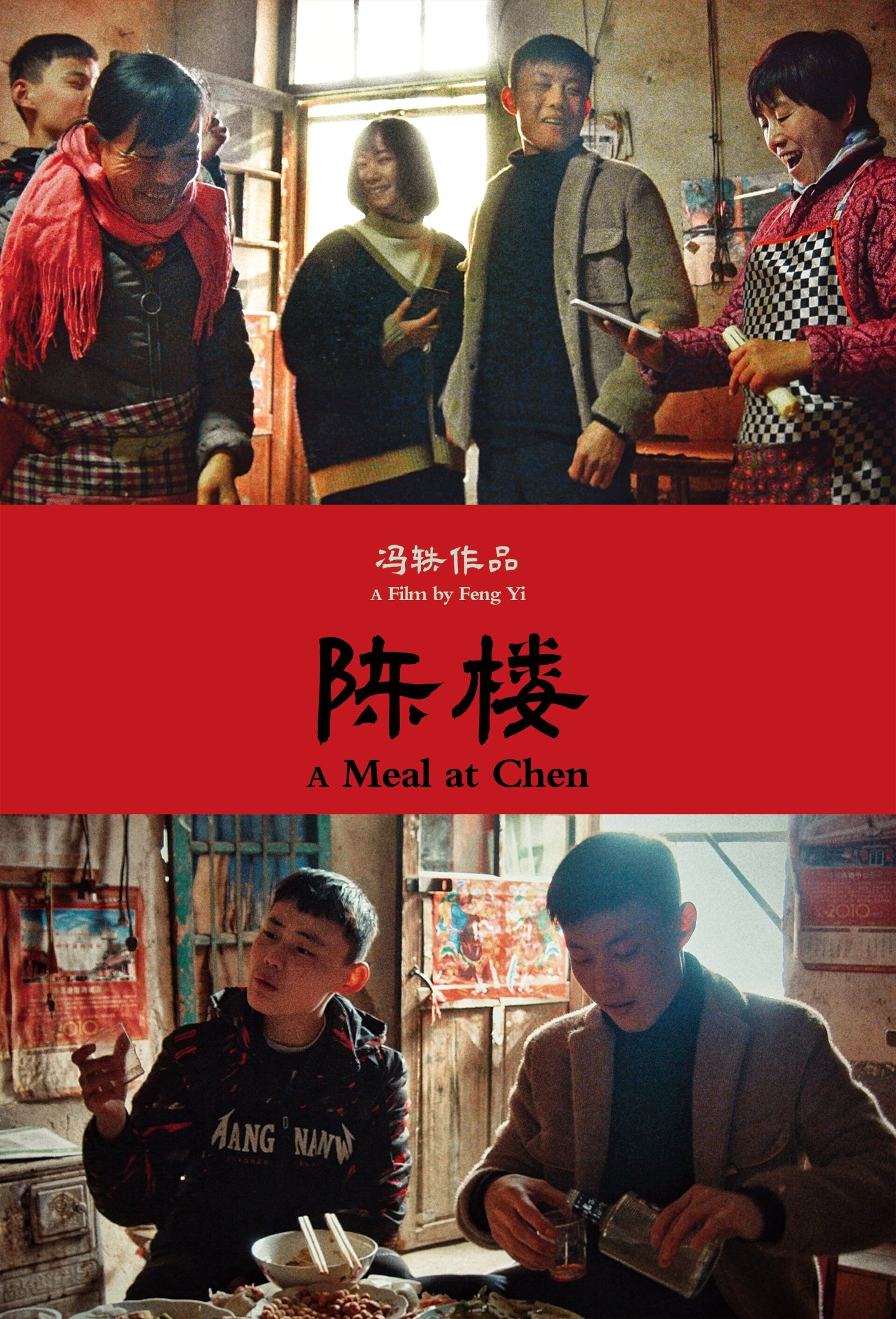
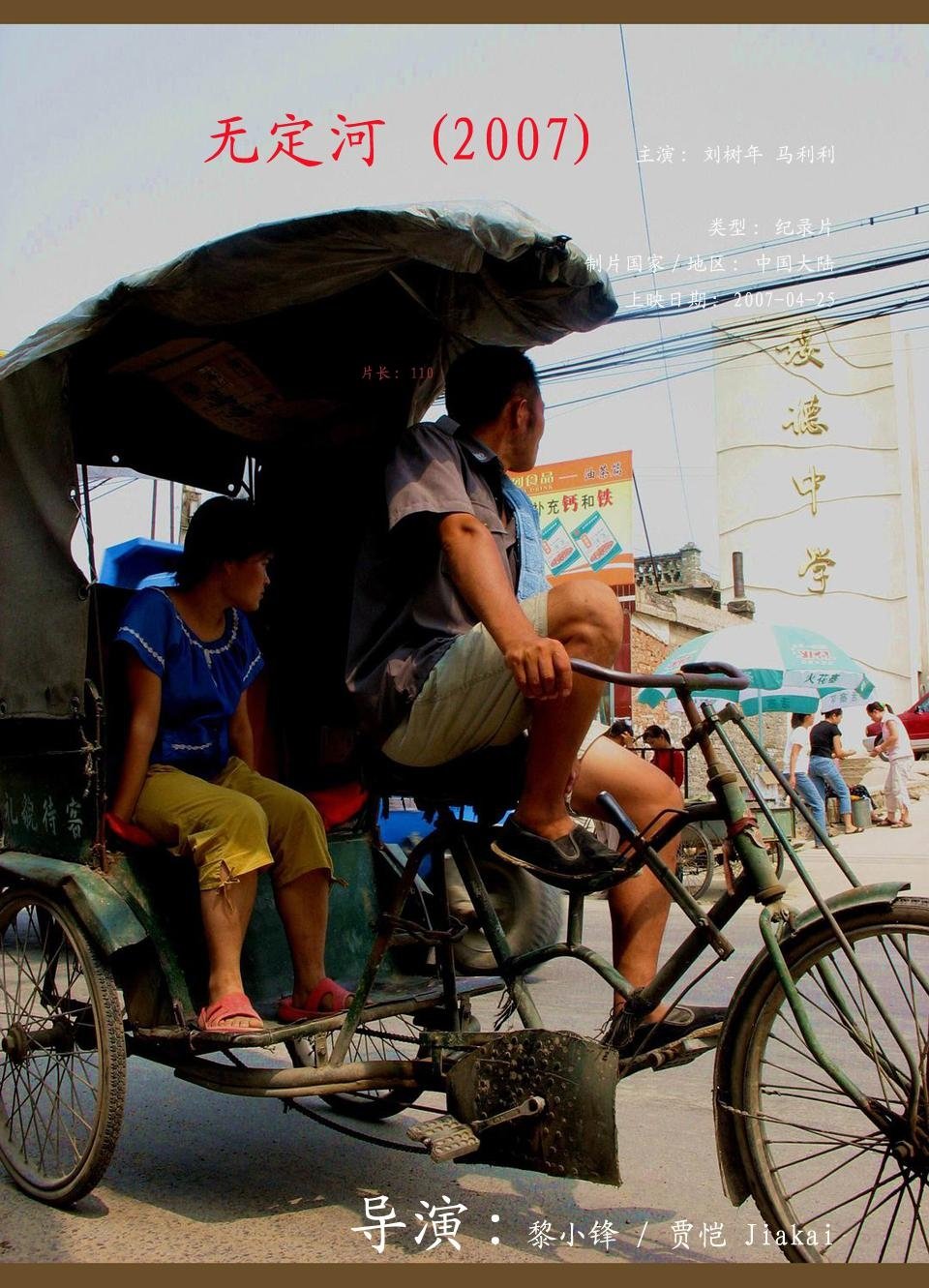
The story took place in 2008. Henan Guo Hui, who was a harvester, went to the provinces to harvest wheat for him. He and his father then invited a driver and set off. I went to Shanxi, Shaanxi, and also included Henan. They met other mairs to talk about the earthquake in Sichuan and talk about the difficulties of collecting wheat. Bargaining with the farmers, thinking of the law less to give the leader a little commission, sometimes to think of the way to get money, sometimes to think of ways to escape the control of the leader. The driver complained that the car owner was too bad, and the owner complained that the driver had eaten too much. In the middle of the road, I also encountered the need to collect the toll, and finally met the young and confused.
Xiayao Village, Youyu County, Shanxi ProvinceThe 7-year-old and big-footed Bai Nu and Liu Buhan, both of whom died because of their loved ones, were brought together with their three children more than 40 years ago. (Bai Danu 2 Men 1 Women) (Liu Buhan 3 (Daughter) Nowadays, the children have become grandparents, and most of them are not next to Bai Bainu and Liu Buhan. The children of both sides have differences over the old age of raising the two elderly people ... so despite the two They are all in their eighties, and still need to get up and return to the field to farm in the morning and night, and the old lady Bai is more because of her little feet, she has to stagger in the wind and rain, kneeling in the fields ... A foot-binding old lady faces the camera and talks to her little feet ...


This film is a realistic record of a sixty-year-old couple living in a remote village (Gurenay) in the Badain Jaran Desert of Alashan, Inner Mongolia plant thousands of mu of ammodendron and euphratica to fight against expanding deserts.
Li Shouwang is the leader of a blind storytellers team, learned storytelling at the age of 19. His childernare living hard in other cities. Li's money amost goes to his children's pocket every year. But with urbanisation, the storytellers have lost almost all their audience. As the conflict between the storytelling team and the village team intensified, his son, who was far away from home, became the only spiritual sustains... When he was excited that his son would be taking his family home for Chinese New Year, what's await is a sigh.
In Yuncheng County, Shandong, there is a girl born in the 90s named Han Wenjing who was paraplegic in a car accident in her childhood. As Han Wenjing gets older and older, she is worried about her future life. Marriage has become the biggest concern of parents. Han Wenjing got acquainted with a soldier online, but finally broke up under his father's opposition. The younger sister-in-law also had a dispute between the two over her marriage. When Han Wenjing was depressed, her father proposed to carry her to Liangshan. First, fulfilling Han Wenjing's wish was also compensation for Han Wenjing. Later, Han Wenjing met a dumb while studying e-commerce sales. The dumb liked her very much. Both parents were satisfied when they met. However, Han Wenjing felt that she still couldn't accept the disabled and wanted to try to combine healthy people, even if it failed. Under the pressure of her parents and sister-in-law on Han Wenjing, Han Wenjing still insists on her choice
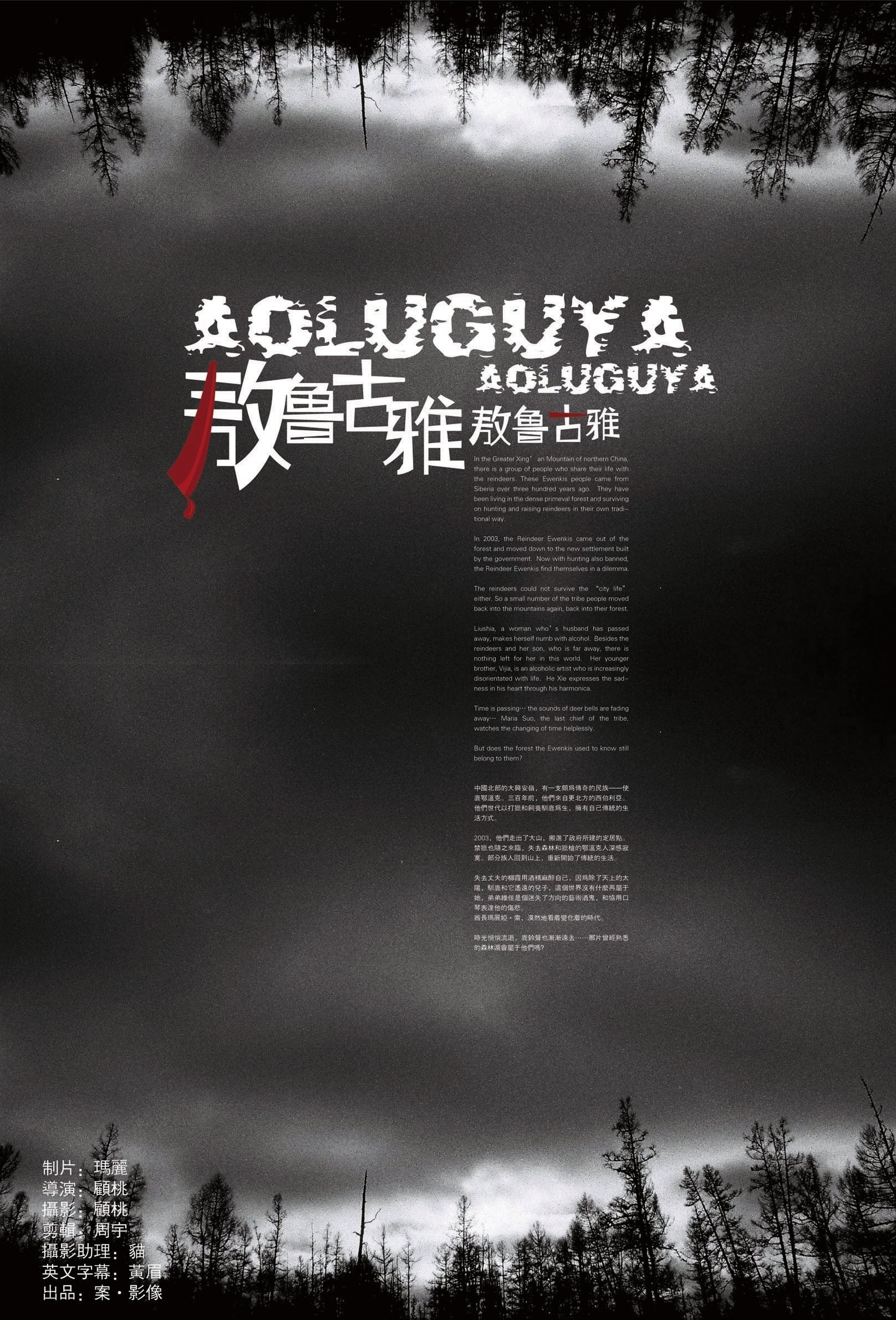
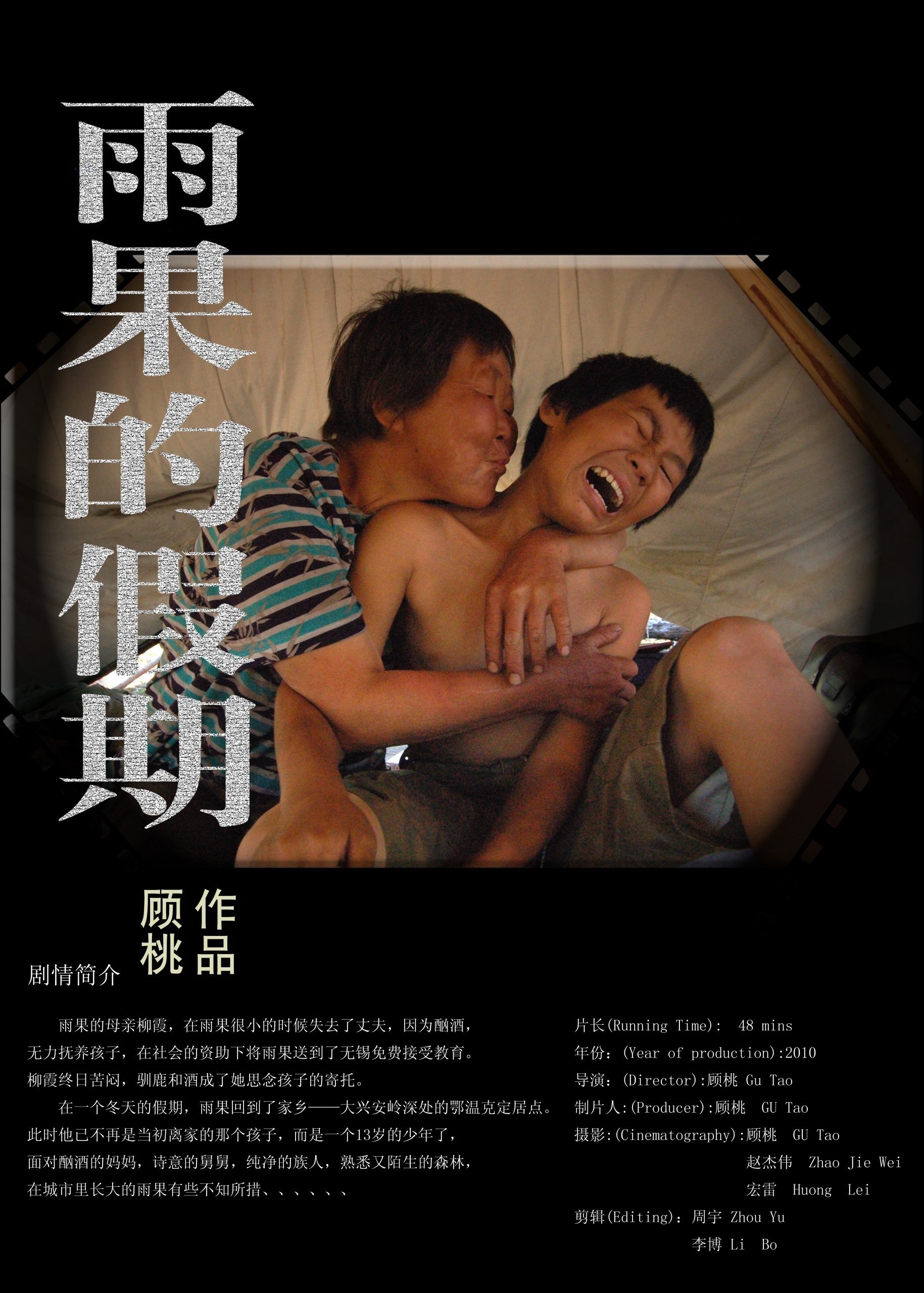
Aoluguya, Aoluguya is the first film in Gu Tao’s Ewenki Trilogy. A tale that unfolds in the Aoluguya forest, featuring such unique characters as a mother who dulls her sadness over the absence of her son, Yuguo, with alcohol; her brother; and Maria, the tribal chieftain who watches over them.
Yu Tian (played by Hu Tian) is a senior this year. He hasn't returned home for a few years while studying in a big city. The estrangement between him and his mother (Lin Jiehua) is somehow getting bigger and bigger. He is immersed in his artistic dreams and is not practical, but his mother, who has always been conservative, does not understand. His friends remained the same, still the same young people in the small town. Friends booed that he would be the most promising one among them, but he himself was convinced. He told his sister (played by Sun Nan) that he would go to the big city to make a fortune.
The year 2003 is a rather turbulent period for Hong Kong – the economy was in recession, the government constantly implemented futile policies, the SARS outbreak, and, on July 1st, 500,000 people went on strike opposing the adoption of Article 23 of the Basic Law. It was against this political atmosphere that YIN Zhao-Jian gave up his social worker job, a 10 year long and steady career, and joined the political circle and participated in the district councilor election, which he had no idea about.
Early in the morning, the priest read in the church at the disabled orphanage. At dawn, the villagers entered the funeral ceremony during the prayer ceremony. In disabled orphanages, there are babies in the youngest children. Two children attending school together did not attend the class normally. More children with reduced mobility can only be dazed and crawl on the ground. But they are also God's people and attend worship services in the church. The autumn mist was hazy, and a new cathedral was being built in the village. Insects, kittens, puppies, orphans, villagers who worship, all life is safe. At night, the tired priest went to sleep after finishing writing. In his dream, he reached a graveyard and remained silent with his dying mother. Seasons are changing, rainy days, winter snow, orphans wear thick winter clothes, making movement more difficult. The cathedral was built, and people celebrated the biggest Christmas day of the year.
New Castle is a remote rural village where houses and mountains have been distorted due to excessive mining. Under the "New Village" campaign, all the villagers will be moved into the nearly completed Luxury Buildings. The documentary depicts the life of two groups of people, miners and villagers. The miners who are from all over the country, lost their jobs because of the Olympic Games in Beijing - the mine was shut down to make the air less polluted. The villagers had no better luck. Granny Fan lost two sons and two grandsons in a mining accident. Old Han and Old Wang are still farming. Some youngsters are gambling in the house of Han Bin, who was crippled in another mining accident. In the film, you can also see the village election, the service of local Christians, and people worshipping for a better year to come.
A Yangtze Landscape utilizes a non-narrative style, setting off from the Yangtze's marine port Shanghai, filming all the way to the Yangtze River's source, Qinghai/Tibet - filming a total distance of thousands of kilometers. Experimental music and noise recorded live on scene are used in post-production, painstakingly paired with relatively independent visuals, creating a magically realistic atmosphere contrasted with people seeming to be 'decorative figures' right out of traditional Chinese landscape scrolls.
In the autumn of 2010, the poet Xiaozhao set off from Beijing and took a national tour of his personal poem collection "My Hope is on the Road" printed at a print shop. All the way up and down, full of ambition. Photographer Zhuang Ruijie went to Guangdong halfway to shoot. He recorded a trip to Guangzhou, Shenzhen, Chengdu, Shaanxi Shanyang, Huashan, Zhongnanshan, Xi'an and returned to Beijing for about 15 days.
“My Life Against Taiwan Sotofuku – 1891~1931” is Taiwan’s first biographical animated documentary. The film combines animation, archival photos, footage, and sound theater to recreate the heroic epic of CHIANG Wei-shui, the “the Savior of Taiwanese People,” during Japan’s colonial rule of Taiwan. Through first-person flashback narrations, Taiwan’s pioneer revolutionary CHIANG Wei-shui tells the turbulent tale of the rise and fall of Taiwan’s non-violent anti-Japanese movements, as well as a lifetime of remarkable resistance against Taiwan Sotofuku (Japan’s colonial government). Cast
This film mainly records the story of two adolescent children receiving primary education of Peking Opera in Shanghai Opera School in a documentary form. As they are in their adolescence, they gradually form their own plans and ideals for the future. On this unusual learning path, they face the problem of choice between reality and ideals, and gradually learn to accept and grow up.
"Mazu" or "The Sea God" has been the most important religious belief of ordinary people in my hometown for four hundred years. Along the coast of China and even in the Nanyang region, there is at least one temple dedicated to Mazu in various seaside cities-this geographical and historical distribution coincides with the contemporary economic or industrial area of Chinese society. It is frustrating that rapid economic development has led to global warming. The factories located on the coast of southern China from all over the world will eventually cause flooding and inundate these temples dedicated to Mazu. This is indeed a very ironic discovery for our civilization, "We", not only Chinese or all human beings, now or in the past, how can we Chinese avoid this upcoming tragedy?
Video essay ‘Rock and Cliff' investigates the creation of Horn Town, a new model village and centre of large scale tourist development, and the experiences of rural residents moved there through government-led displacement. Horn Town is located in Wulong, a rural district near the Three Gorges Dam administered by the Chongqing municipality (a city of 30 million people). Narrated in the style of a science documentary but using local Chongqing dialect, the video brings a geological and topographical perspective to types of 'rocks' found in the area,from mythological stones from a mountain cliff, to ruins of the original settlement, to a stone sculpture from a dubious 'Land Art Biennial', in order to address issues of land acquisition, top-down development and spatial politic.
This is the fourth film in my Zoujiacun series within the Folk Memory Project. In 2013, I came back to my village and faced the trash all over the village. The children and I tried to improve the environment of our village. This was a tough fight against the trash and ideas of villagers. I felt like that the trash was in my heart. The 95-year-old grandma Sha and her 49-year-old son Xizhu, their lonely solitary life is also in this film. This film is about the progress that I fight with myself.
This is my fifth time coming back to my own village, where I was born and brought up. After I graduated from college, when I was staying in my village, I was always suspected and judged by the village people. Xizhu grandpa was called ‘fool’ by other villagers, and Zengxiang aunty was looked down by others. They come into my life, and I stayed with them. Their naïve and strange thought made think about my village in a new way. In this quite ‘normal’ village, who are normal people? In those normal people’s eyes, am I another fool of this village?
Through deeply personal interviews with her siblings and an examination of the photographs, letters, and belongings left behind, Mariska assembles a new portrait of her mother Jayne Mansfield, an extraordinary and complex woman.
Over 35 years after Bob Lazar's revelations, this documentary exposes secrets of a facility the government still denies. Featuring Lazar's testimony, recreations, and new evidence, it reopens a case that continues to spark global curiosity
A documentary about the life and films of director John Ford.
A purely observational non-fiction film that takes viewers into the ethically murky world of end-of-life decision making in a public hospital.
Ranjit, a farmer in India, takes on the fight of his life when he demands justice for his 13-year-old daughter, the victim of a brutal gang rape. His decision to support his daughter is virtually unheard of, and his journey unprecedented.
In a crime-plagued neighborhood near Miami, brutal, bare-knuckled backyard fights give young men a chance to earn money -- and self-respect.
In the Realms of the Unreal is a documentary about the reclusive Chicago-based artist Henry Darger. Henry Darger was so reclusive that when he died his neighbors were surprised to find a 15,145-page manuscript along with hundreds of paintings depicting The Story of the Vivian Girls, in What is Known as the Realms of the Unreal, of the Glodeco-Angelinnian War Storm, Cased by the Child Slave Rebellion.
Alexander McQueen's rags-to-riches story is a modern-day fairy tale, laced with the gothic. Mirroring the savage beauty, boldness and vivacity of his design, this documentary is an intimate revelation of McQueen's own world, both tortured and inspired, which celebrates a radical and mesmerizing genius of profound influence.
Lyrical and powerfully personal essay film that reflects on the deaths of her husband Lou Reed, her mother, her beloved dog, and such diverse subjects as family memories, surveillance, and Buddhist teachings.
A string of threatening emails escalates into a revenge plot involving a newly married US marshal and his ex-girlfriend.
An inside look at one of the most anticipated movie sequels ever with James Cameron and cast.
Daniel Craig candidly reflects on his 15 year adventure as James Bond. Including never-before-seen archival footage from Casino Royale to the upcoming 25th film No Time To Die, Craig shares his personal memories in conversation with 007 producers, Michael G Wilson and Barbara Broccoli.
A documentary about ten very different lives connected by having appeared onscreen wearing masks or helmets in Star Wars.
The life and career of an actor, artist, and icon. His own journey through his own camera.
Using the book 'Fragments', which collects Marilyn Monroe's poems, notes and letters, and with participation from the Arthur Miller and Truman Capote estates who have contributed more material, each of the actresses will embody the legend at various stages in her life.
A night of drunken chaos rocks a quiet Dutch town in this shocking documentary about a teen's birthday invite that accidentally went viral on Facebook.
A visual montage portrait of our contemporary world dominated by globalized technology and violence.
Told through performances, TV interviews, home movies, family photographs, private letters and unpublished memoirs, the film reveals the essence of an extraordinary woman who rose from humble beginnings in New York City to become a glamorous international superstar and one of the greatest artists of all time.
A look at the origins, history and conspiracies behind the "Majestic 12", a clandestine group of military and corporate figureheads charged with reverse-engineering extraterrestrial technology.
The definitive 3½-hour documentary about the troubled creation and enduring legacy of the science fiction classic 'Blade Runner', culled from 80 interviews and hours of never-before-seen outtakes and lost footage.